The Alzheimer’s Prevention Strategy Nobody’s Talking About

What makes a good brain go bad?
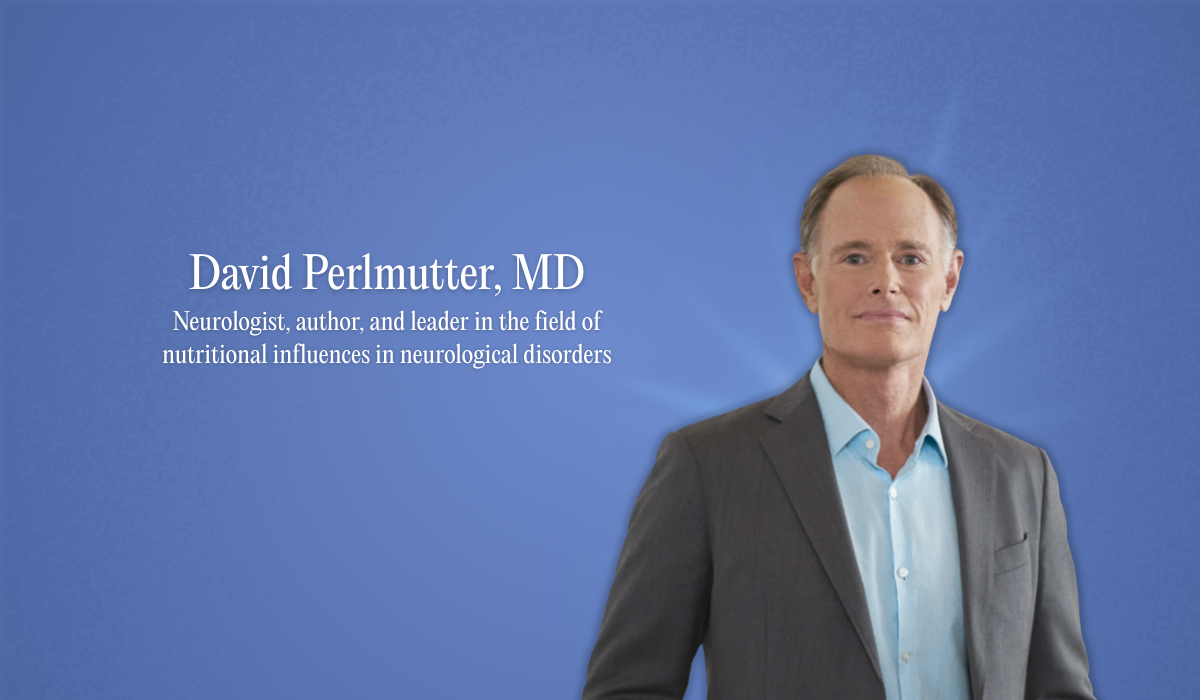
This is a question neurologist David Perlmutter, MD, has been trying to answer for decades, as rates of neurodegenerative diseases such as Alzheimer’s, Parkinson’s, and ALS rise rapidly and create a massive public health crisis.
For many years, experts believed these diseases were largely out of our control—inevitable consequences of aging or unfortunate genes. Now, we have a better picture of what’s really happening, says Dr. Perlmutter, and it could very well reframe how we think about brain health.
It all comes down to the brain’s immune cells.
Yes, the brain is filled with immune cells called microglia, which Dr. Perlmutter says are the real linchpin in determining whether our brains age well or develop disease. That’s because these immune cells can either defend brain tissue or damage it. The good news? There’s a lot we can do to make sure these brain immune cells stay on the defensive and keep our brains optimally healthy. Even better, they’re things we can easily start right now.
Are you ready to learn the brain mechanism that could make or break your cognitive future, and the specific steps you can take to reprogram your brain’s immune cells to set them up for optimal health?
Read on.
First, a little more about microglial cells.
Now that you know your brain has an immune system, it’s important to know just a bit more about those resident immune cells mentioned earlier: the microglia. The most important thing you should know about your microglial cells is this, says Dr. Perlmutter: They are not passive bystanders in the brain, but rather dynamic responders with their very own metabolic state that determines their behavior.
When the energy systems in these cells are balanced, they are in their healthy state and stay on their mission to defend and repair. Healthy microglial cells scan the brain for damage, pathogens, or plaques like beta-amyloid that accumulate between neurons; they clean up dead neurons, damaged synapses, and plaques; they help prune unnecessary synapses, which is essential for learning and memory; and they release growth factors and anti-inflammatory signals that nourish and protect the brain.
However, your microglial cells change based on the signals they receive. When those signals shift the microglia toward metabolic imbalance, they transform from healthy brain defenders to brain offenders. In their unhealthy state, microglia release pro-inflammatory cytokines that cause chronic inflammation in the brain; they produce reactive oxygen species that damage nearby neurons; they attack brain synapses, which can lead to an over-pruning that may contribute to cognitive decline; and all of this inflammation triggers more negative activation in the brain, which creates a self-perpetuating loop of inflammation.
Here’s the key: It’s not infection or disease state that turns these microglial cells from good to bad. It’s more about metabolic signaling. The same things you do for good metabolic health—for example, things like keeping blood sugar in check, getting plenty of exercise and sleep, regulating stress, and limiting environmental exposures—keep your microglia in good health, too. Which means each of us has the power to send our brain’s immune cells signals that help them remain protective guardians.
So, what’s the secret to keeping our microglial cells friendly and not turn into foes?
This is what Dr. Perlmutter wants all of us to do:
1. Exercise every day. Yes, you read that right. Dr. Perlmutter wants us to move our bodies seven days a week if possible, doing aerobic exercise at least three to four times a week as well as strength training to build muscle. “Exercise directly targets the microglia,” he says. “It creates chemicals in the muscles that make their way to the brain and help nudge microglia from their unhealthy state back to their healthy, supportive state. This sets us up for a better brain destiny.”
2. Avoid ultra-processed foods. Need some inspiration to help you say “no thanks” to those crackers, cookies, and other packaged snacks? According to a big study published last year in the Journal of Prevention of Alzheimer’s Disease, just one serving per day of ultra-processed foods (UPFs) increases your risk of getting Alzheimer’s disease by about 13 percent, and 10 or more servings per day is associated with a staggering 270 percent increase in developing Alzheimer’s.
This is because eating UPFs spike blood glucose and insulin, which increases systemic inflammatory cytokines, mitochondrial stress, and a shift in microglial metabolism toward the unhealthy, pro-inflammatory state where they’re more likely to cause damage in the brain. To protect your brain, aim to eliminate (or drastically reduce) UPFs in your diet and prioritize whole foods rich in fiber and phytonutrients instead.
3. Reduce your exposure to environmental toxins. Pollution, heavy metals, pesticides and herbicides, industrial chemicals, and mold-related toxins are some of the most underappreciated drivers of chronic microglial activation, says Dr. Perlmutter. These environmental toxins lead to chronic inflammation that keeps the brain’s microglial cells in their unhealthy state. While it’s impossible to eliminate all exposure to toxins, there are some steps you can take to reduce your risk.
First, focus on improving indoor air quality—particularly in the bedroom, since sleep is a key repair window for the brain. “Small particles created in the atmosphere that are less than 2.5 microns in diameter—called Particulate Matter 2.5, or PM2.5—can be inhaled deeply into the lungs, enter the bloodstream, and cause systemic inflammation that impacts microglial cells,” says Dr. Perlmutter, noting that PM2.5 may be one of the most underrated risks related to Alzheimer’s disease. All of us are exposed to PM2.5 via vehicle exhaust, wildfire smoke (even from fires hundreds of miles away), industrial emissions, and indoor sources like candles and cooking smoke. Using a HEPA (High-Efficiency Particulate Air) filter can help remove much of PM2.5 particles from the air. You can also reduce pesticide exposure by buying organic foods, being mindful of heavy metal sources (such as in certain seafood), and filtering your drinking water.
4. Prioritize and track your sleep. Getting a solid seven to nine hours of shut eye should be seen as a non-negotiable for your brain health, says Dr. Perlmutter, since sleep is one of the most powerful levers we have for keeping the brain’s microglial cells in their protective, helpful state. That’s because sleep is when the brain essentially cleans itself. During quality sleep, cerebrospinal fluid flows more efficiently and metabolic waste, including amyloid proteins associated with neurodegenerative diseases is cleared. When sleep is short or fragmented, debris can accumulate and microglia are more likely to shift into their unhealthy state.
To help you measure how much sleep you’re getting each night, Dr. Perlmutter recommends using a wearable, such as a Fitbit, smart watch, or Oura Ring. “It’s time everybody buys a way of monitoring their sleep,” he says. “It’s that important to know how much sleep you’re getting, because not getting enough adequate sleep is a powerful shifter of the microglia from being supportive to being destructive.”
5. Consider emerging, targeted tools. In his forthcoming book, Brain Defenders, Dr. Perlmutter looks at the leading edge of science and explores a handful of new technologies he believes will become available to all of us soon.
For example, exposure to 40 Hz light—flickering light or sound at 40 Hz, which is a gamma frequency—has been shown to alter brain immune responses, including switching microglial cells from their unhealthy, pro-inflammatory state back to a healthy, brain protective state. Hyperbaric Oxygen Therapy (HBOT), which involves breathing pure oxygen in a pressurized chamber, also holds promise when it comes to supporting the brain’s metabolic health.
However, keep in mind that while tools like these represent exciting potential, all of us can work on lifestyle fundamentals that really do improve brain health starting now.
“People are understandably fearful about brain degeneration,” says Dr. Perlmutter. “But it’s important to know that your brain’s destiny is not fixed. It is fluid. And you have the power to control it.”


Answer
Time.
Please note that we may receive affiliate commissions from the sales of linked products.