“Dr. King’s Message Is Not Confined to History. It Is a Living Guide.”

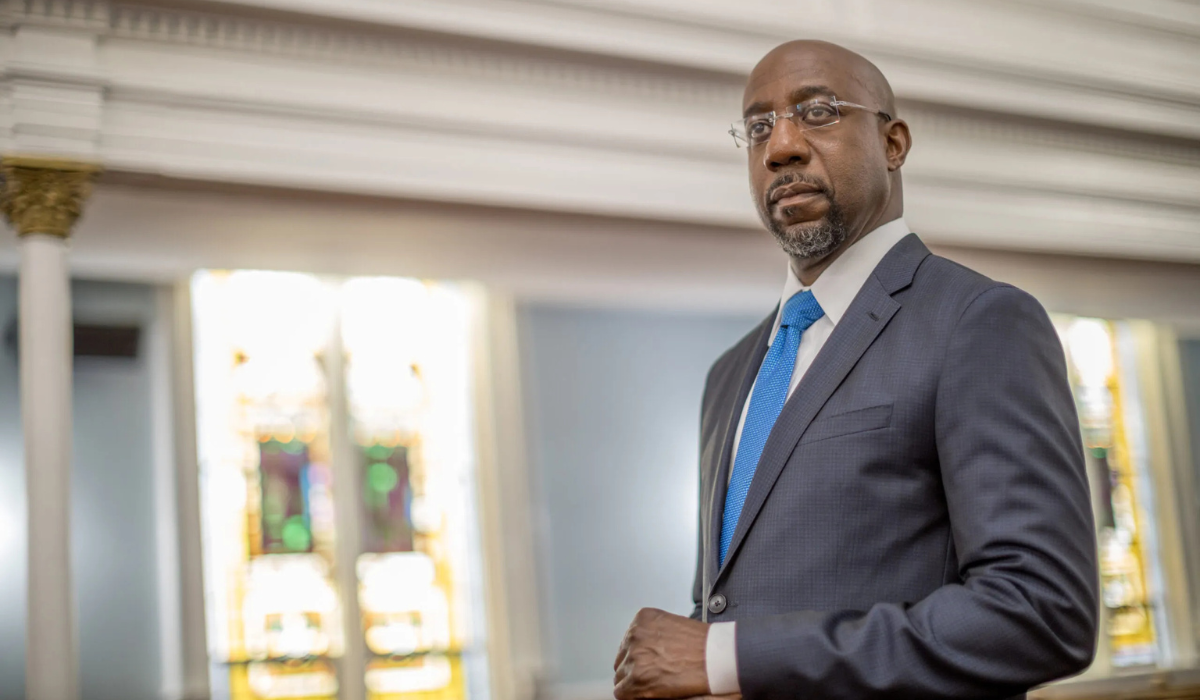
Senator Raphael Warnock highlights the possibility and capability of the human spirit. The US Senator for Georgia spends his time between political and spiritual seats, fighting for justice, equal rights, and peace. Every Sunday, the Reverend preaches at Ebenezer Baptist Church, the very spiritual home where civil rights leader Martin Luther King Jr. served as co-pastor. There, the Senator refuels his cup so he can serve “day after day, to give voice to the voiceless and justice to the powerless,” as he says.
The Senator also finds endless hope and conviction in Dr. King’s legacy. “Dr. King did not carry this work alone,” Warnock tells The Sunday Paper. “He was grounded in his community, his faith, and a profound belief that when ordinary people come together, we can create a beloved community where everyone is cared for.”
In honor of Martin Luther King Jr. Day, The Sunday Paper reached out to Senator Warnock to reflect on Dr. King’s message. His words remind us that while MLK Day is one day, Dr. King’s call for justice and equality endures every minute, reminding us all to uphold human dignity every day.
A CONVERSATION WITH SENATOR RAPHAEL WARNOCK
As we approach MLK Day 2026, what aspect of Dr. King's work feels most urgent to you right now?
Dr. King understood that the arc of the moral universe bends towards justice because We, The People, bend it. Sometimes we look back at the victories that were won during the Civil Rights Movement, and because we are on the other side of that history, too often we have a way of looking at it through the lens of inevitability. But it was quite improbable that they would win the victories that they won. When Dr. King was arrested and jailed, when people in his movement were beaten and bludgeoned, when it felt as if the world was against them, they felt the struggle, but they did not give in to despair. Right now, there are dark forces at work trying to weaponize despair so they can divide us, silence us, and make us throw up our hands and walk away from the fight. But I’m taking notes from Dr. King and I am not giving up–nor should the American people. I know it can sound trite to say we must keep the faith and stay the course, but I believe there is power in our persistence. If we keep peacefully protesting, keep making our voices heard, and keep showing up for our communities, we can build a beloved community that sees the dignity in all human life. And that is what is sorely needed in these difficult times.
You walk the same halls Dr. King marched to reach. What keeps you grounded in that legacy when the work feels overwhelming?
I return home to preach in the pulpit of Ebenezer Baptist Church every Sunday; it is my kids, my community, and my congregation that always keep me grounded and remind me why I do this work and put up with politics. So when I feel overwhelmed, I have people to lean on. We all need that. And I remember that Dr. King did not carry this work alone. He was grounded in his community, his faith, and a profound belief that when ordinary people come together, we can create a beloved community where everyone is cared for. Walking through the halls of power in Washington reminds me that this work is not about titles or accolades. It is about the people. It is about showing up, day after day, to give voice to the voiceless and justice to the powerless. Even when the work is daunting and bad news is overwhelming, I feel a deep sense of responsibility to my children and children across the country to keep fighting for a more perfect union they can inherit.
The administration eliminated free national park entry for MLK Day and Juneteenth, both honoring Black Americans, while maintaining it for June 14th, the president's birthday, which is also Flag Day, a non-Federal Holiday. What message does that send?
This administration is not even trying to hide their contempt for anyone that does not look or think like them. This is the same president who, when a plane crashed into the Potomac River after colliding with a military helicopter, said that the cause was “DEI”. So in this moment in which we're seeing attacks on the very idea of diversity, which I think is the secret sauce to America's strength, the work continues. I often say to people that if you are engaged in work that can be finished in your lifetime, it's not big enough. Your life's project should be longer and larger than your lifespan. And that's why I wake up every day trying to think about what I can do for working-class people, what legislation I can pass to give every kid in Georgia a chance and in America a chance. That is the message I am focused on sending to the American people. And if we all raise our voices against the hate, lies, and vitriol coming from this administration, we can instead extol a message of unity, love, and the belief that America is big enough and good enough for all of us to succeed and have a seat at the table.
If you could ensure every American understood one thing about Dr. King's legacy this MLK Day, what would it be?
Dr. King said, “We are tied together in the single garment of destiny, caught in an inescapable network of mutuality. And whatever affects one directly affects all indirectly.” It’s easy to forget the covenant we share with one another: our shared responsibilities to each other. In order to create the beloved community Dr. King talked about, we must start with the understanding that the destiny of other people’s children is connected to the destiny of our own children. As we reflect on Dr. King and his legacy today, I hope that more people can look into the eyes of other people’s children and see their own. Dr. King’s message is not confined to history — it is a living guide for addressing the challenges that confront each generation. His work reminds us that the fight for justice and equality is not only about policy debates or people in power; it is about recognizing the spark of the divine that exists within each of us. Dr. King used his faith not as a weapon to destroy people, but as a bridge to bring us together. This is the tradition I come from, and that I carry in the Senate. With every vote and decision I make in the United States Senate, I try my best to reflect the simple truth that we are in this together.
Dr. King understood strategic, principled resistance. We're seeing protests erupt over ICE enforcement and the fatal shooting of Renee Good in Minnesota. How do we teach young people, and all people for that matter, to distinguish between resistance rooted in justice vs. grievance?
On this day that we celebrate an actual king of a man, Martin Luther King Jr., we are reminded that it is not about the tyrants of history. Tyrants will do what they do — but Dr. King reminds us that evil does not have the last word in the world. I am thinking especially of Renee Good. The thing that inspires me in the wake of her tragic loss, is that here is a woman who could have stayed at home and minded her own business. But she understood that her neighbor’s business is her business. That action of standing up for what you believe in, despite the personal risks, is the best of the civil rights tradition that Dr. King stood for. That is what moral leadership looks like. To those who are protesting, I urge them to continue to do so nonviolently. Dr. King reminded us that the means and the ends are inextricably linked. There’s a moral power when you stand up with dignity and in a non-violent way towards the kind of tyranny that we’re witnessing from this administration. The President wants people to respond violently. That’s why he is threatening to use the Insurrection Act in Minnesota. He would love to have a pretext for bringing even more brutality than we’re already seeing in the name of our government. We must resist the urge to do his bidding for him.
Beyond commemoration, how do citizens actively preserve legacies like Dr. King's when they're being reinterpreted, diminished, or erased? What's our responsibility when institutions themselves seem to devalue that legacy?
We need ordinary people to stand up and speak out against these attempts. Dr. King died fighting for the struggles of ordinary people — garbage collectors, day laborers, working class people. And in this moment, sadly, we have Republican leaders in Washington that have decided to give their power over to a President who wants to take us back in time to an era where powerful forces can deny certain people’s very humanity. We have got to remind ourselves that it’s not about the people in power. It’s about the power that’s in the people. Even as I fight on the inside, I am encouraged because I know there are folks standing up on the outside. We cannot give in to those who are trying to convince us to lose faith in one another. The President’s decision to put military boots on our streets, using masked men to militarize public spaces, echoes the ugliest days of our past. We may not have lived through it, but we know in our bones what it’s like to face masked, unidentified people who are demanding you to show your papers and prove your right to exist. The President is trying to convince us that our neighbors are our adversaries, but the opposite is true. That’s why Dr. King and those who fought alongside him are so important. They remind us that our destinies are inextricably connected to those of our neighbors and their children. This is our time to show up, speak up and stand up.
Senator Reverend Raphael Warnock is a United States Senator for Georgia and Pastor of Ebenezer Baptist Church. Learn more at warnock.senate.gov
Please note that we may receive affiliate commissions from the sales of linked products.