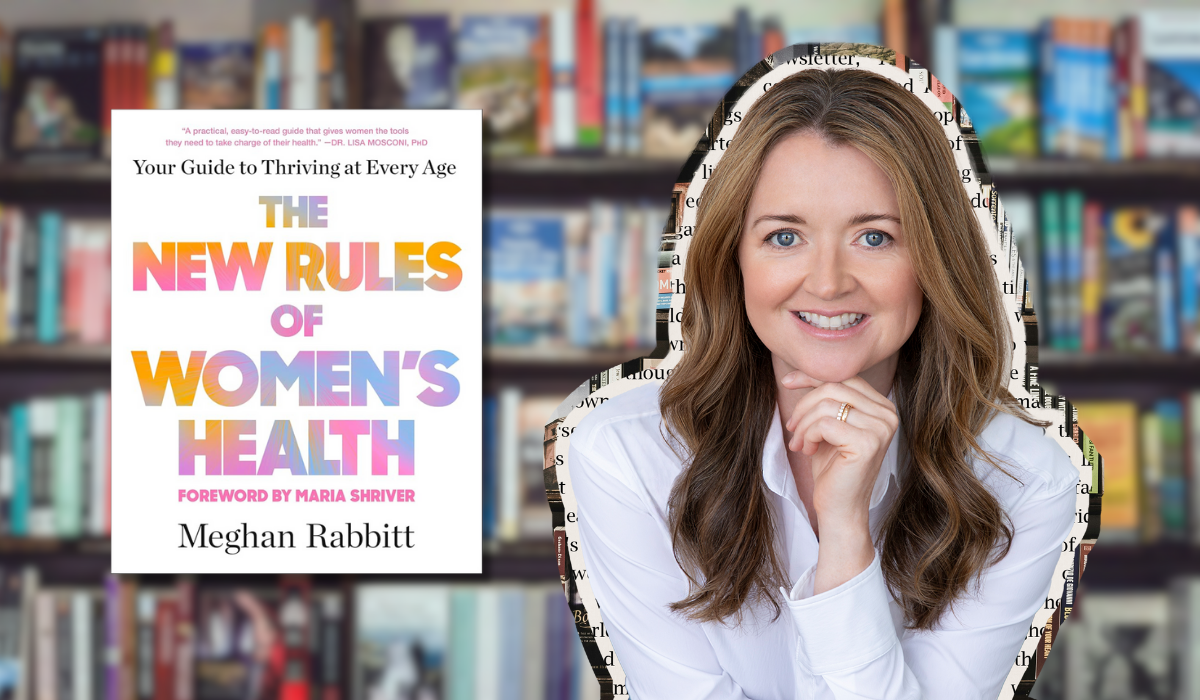
I Interviewed 132 Women’s Health Experts For My Book. These 5 Tips Changed My Life—and Could Transform Yours, Too

Over the course of the last three years, I spent more than 300 hours on calls with more than 100 experts to report and write my book, The New Rules of Women’s Health (out today!).
Even though I’ve been a journalist focused on health topics for the last twenty-five years, I lost track of the number of times I stared open-mouthed in surprise at the information I was learning. Again and again, these conversations revealed game changing insights that inspired me to make meaningful changes in my own life.
Here are five tips I’ve embraced. My hope is that they’ll also help you feel more informed, empowered, and excited to make changes that’ll impact your health for the better, too.
Tip No. 1: Stop bragging about your high pain tolerance. It could be making your pain worse.
Like most women, I like to think of myself as a tough cookie. I’m not a complainer. I can power through the tough stuff life throws my way—including physical pain. But after I interviewed Dr. Vonda Wright, an orthopedic surgeon and author of the bestselling book Unbreakable, I started to re-think my tough-it-out strategy. Dr. Wright told me she sees a distinct trend among her female patients who are in agony: They all brag about their high pain tolerance.
“They wear this identity like a badge of honor—as if the only reason they feel like they can finally come to see me to get some relief from their pain is because they’ve suffered a very long time,” she says. Yet in our effort to not seem like we’re complaining, we may actually be making our pain worse—and harder to treat. Here’s why:
If your pain is acute, you feel pain and then it goes away. However, if you’re dealing with intense, untreated pain or chronic pain that persists over a long period of time, the pain receptors in your spine get repeatedly stimulated. As a result, they become more sensitive and responsive to subsequent stimuli, even if those stimuli are harmless and shouldn’t actually cause pain. Over time, this extra excitability of pain receptors in the spine makes them more efficient at transmitting a barrage of pain signals, which heightens your body’s ability to perceive pain even more. This is often referred to as “central sensitization” and it’s why someone with untreated or chronic pain may become more sensitive to pain than the average person, says Antje M. Barreveld, MD, chief of pain medicine at Newton-Wellesley Hospital, Mass General Brigham.
Thanks to this information, I now pipe up about pain rather than powering through. And I talk about it with my family and friends. Sharing the truth about what we’re going through is an important step toward feeling fully seen in our pain. It can also help us shake off that “I have a high pain tolerance” identity and inspire the other women in our lives to do the same.
Tip No. 2: Don’t beat yourself up about some screen time before bed. Do think about what you’re watching on those screens.
You’ve heard the advice before: If you want a great night of shut-eye, eliminate screen time before bed. However, even more important than the blue light exposure you get from the TV and other screens before you hit the hay is what you’re looking at on those screens, says sleep specialist Shelby Harris, PsyD.
“If you’re doomscrolling or watching something that’s going to stress you out or keep you hooked in—like your social media feeds—it’s more likely to keep you awake longer than if you’re watching something that relaxes you,” she says.
I used to beat myself up for watching TV or being on my phone before bed. Now, I indulge—but I’m more thoughtful about what I’m watching. A feel-good show on TV or YouTube videos of baby sea otters on social media? Bring it on. I’m steering clear of the dark thrillers and endless Instagram feed though.
Tip No. 3: Doing a few simple things can help you get more out of short doctor visits.
Healthcare visits are shorter than ever, which can be frustrating for us and for our clinicians. After weeks (and sometimes months) waiting for an appointment, the last thing we want is to feel rushed. But here’s the truth: Doctors also feel frustrated, torn between providing good care and not running hours behind schedule.
I asked family medicine physician Shilpi Agarwal, MD, to share her thoughts on what she loves to see patients do to optimize a short appointment. Her No. 1 tip: Prepare for your healthcare visits by writing down a list of all of your concerns and questions and then prioritize that list in order of what’s impacting you the most. Then, at the start of your appointment, say something like, “These are the three things I’ve been struggling with that I’d like to talk about, but I understand you may not have time to address them all today. This is the one that feels most pressing to me.”
“Saying something along those lines creates a bridge between you and your clinician,” says Dr. Agarwal. “It lets us know that you realize we have limited time, and it also gives us the information we need to give you the best possible care in the time we do have.”
Tip No. 4: Midlife is a window of opportunity. The lifestyle changes you make now can lead to big health benefits later.
When it comes to things like cognitive decline and heart disease, it can be tempting to think that they happen to older women—and that in mid-life, we don’t need to worry about them. What’s more, our 30s, 40s, and 50s are decades when many of us feel spent juggling work, caretaking (often both young kids and aging parents), and staying connected to family and friends. Then, there’s the reality that during mid-life, many women don’t see the doctor as often as they should, says Lisa Larkin, MD, board-certified internal medicine and women’s health expert and founder and CEO of Ms. Medicine.
“You go from your reproductive years where you have great points of contact with your OB-GYN and then you turn 40, you’re done having babies, and you’re busy,” she says. “You don’t go to the doctor very much because—if you’re lucky and you feel pretty good—you don't need to.”
However, once you hit your 60s, that’s when health problems like hypertension, high cholesterol, or maybe even diabetes are more likely to strike. “There’s literally 20 to 25 years where women have very few points of contact with the health system,” says Dr. Larkin. “And the problem is that if I am going to help you live a long, healthy life well into your 90s, I need to take care of you when you're 40. That’s when lifestyle interventions can have the biggest magnitude of impact.”
I got off the phone with Dr. Larkin and immediately did a 5-minute assessment of my healthcare visits and cancer screenings. (Sure enough, I was behind on my annual physical.) I also considered how I was doing on the key lifestyle habits that are proven to prevent disease: exercise, nutrition, sleep, and social connections. I set some new goals for myself. And these days, when I notice myself falling off track in one of these areas, I gently nudge myself back into an ideal routine by reminding myself of the health payoffs I’ll reap years from now.
Tip No. 5: Menopause isn’t all doom and gloom. Focusing on its upsides can help us feel more empowered.
We’re collectively talking about the menopause transition a lot these days, which is awesome. This once-taboo topic is everywhere—on TV, in movies, all over our social media feeds—and it’s helping us feel more comfortable bringing up the many difficult symptoms of this major hormonal change with our doctors and with each other.
Yet with much of the focus on the hot flashes, insomnia, mood changes and other downsides of this transition, the upsides are often forgotten about. It’s time to change that, says Tanmeet Sethi, MD, integrative family medicine physician and author of Joy Is My Justice: Reclaim What Is Yours.
“There is an open field of possibility in the stark change that menopause ushers in,” says Dr. Sethi. “It can be a big emotional and spiritual transition—a time to reinvent ourselves and claim what we really want and need.” Where to start?
See change as possibility. Think back to other big changes in your life, whether it was a career pivot, a big move, or a breakup. When you were in the thick of the tough emotions those transitions prompted, it was probably difficult or maybe even impossible to see all the ways you were growing. Now, with some perspective, you can likely see how your most challenging moments helped you become the person you are today.
Focus on the ways your body’s changes are a good thing. No more periods or worrying about birth control are at the top of the list for many women, but the changes go far beyond that. There are also physical changes that happen in your brain that can lead to more emotional control, which often translates to feeling more self-confident and less reactive and being able to move through life with more empathy and emotional stability, adds Dr. Sethi—all of which correlates with more contentment.
Notice what’s happening inside your body. During this phase of life, it can be especially tempting to figuratively step out of our bodies because we don’t like what’s happening. After all, it’s uncomfortable to not be sleeping as well as you once did, or to feel some extra fat around your belly that never used to be there. However, being embodied—cultivating a connection and coherence between our bodies and minds—is how we step into our power, says Dr. Sethi. It’s how we listen to our bodies’ wisdom. It’s how we see symptoms we may be dealing with not as terrible pathologies but rather as part of a transition. And it’s how we listen to what change is telling us we really want—and go after it.
This piece was adapted from THE NEW RULES OF WOMEN'S HEALTH: Your Guide to Thriving at Every Age, on sale today!

Please note that we may receive affiliate commissions from the sales of linked products.