Nedra Glover Tawwab Says This Is How to Create Healthy Relationships
As a society, we pay a lot of attention to codependency and toxic relationships. We're eager to understand unhealthy reliance, find freedom from harmful connections, and honor our sovereignty. And while this is all important, we must also acknowledge that we still need connections, says Nedra Glover Tawwab. “We can't end the relationship with our mom and not have other people to support us," says the therapist, relationship expert, and bestselling author. "We need healthy relationships.”
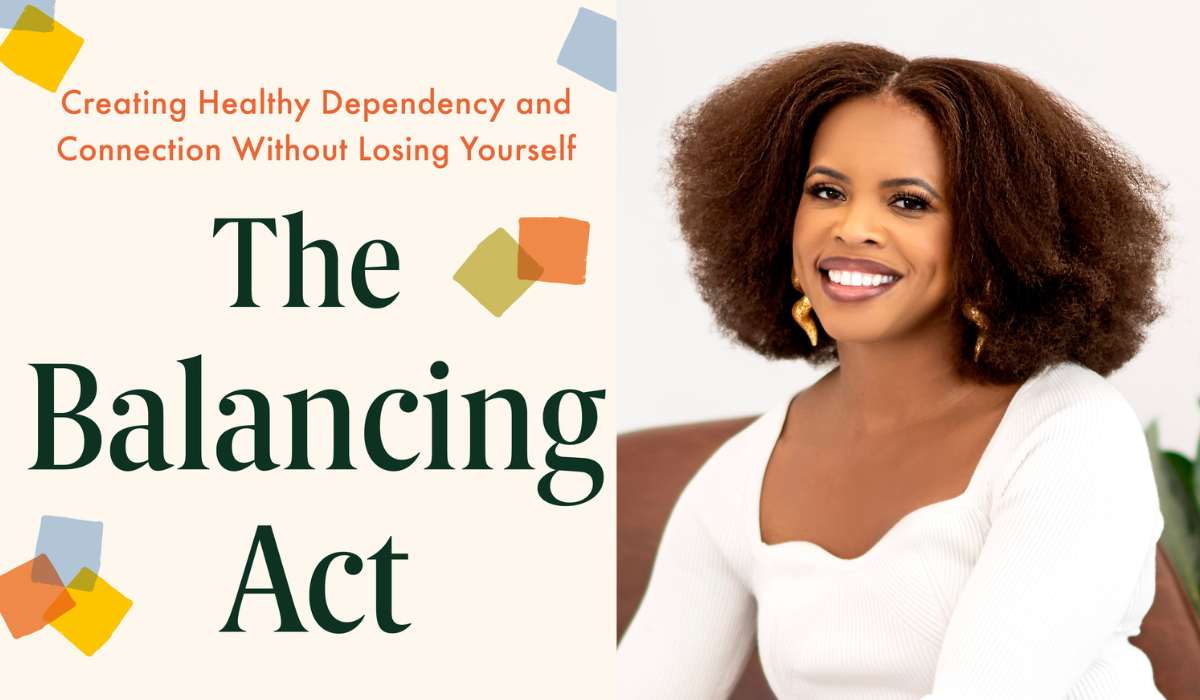
The critical question then is: Where’s the healthy middle ground? That’s the crux of Tawwab’s new book The Balancing Act. She sheds light on how we can attain “healthy dependency”— a place in our relationships that encourages closeness and connection, while honoring our individuality and autonomy.
We spoke with Tawwab about where to start, why we all need to be more “flexible” in our relating, and how we can, as she says, allow people to be there for us in the ways we need.
A CONVERSATION WITH NEDRA GLOVER TAWWAB
You believe there’s a spectrum of unhealthy dependency where hyper-independence is on one end and hyper-dependence on the other. Take us through those differences.
At the one end of the spectrum is hyper-independence, where people are counterdependent. They do everything themselves and have few, if any, connections. They tend to be more avoidant and do-it-yourselfers. They also tend to be overwhelmed and lonely.
At the opposite end of that spectrum is hyper-dependence. Those people are also lonely, but they're lonely because they are giving so much of themselves in relationships that don't give anything back. They have a higher incidence of enmeshment, codependency, and having no boundaries. On either extreme end of the spectrum, we are unhealthy.
Right in the middle is when we have healthy dependency, when we have people we can depend on. We can express our needs and have people who can help us. And that might not be all your relationships, but it needs to be a great portion of them.
Codependency has become a buzzword, of sorts. What is your definition of codependency?
Codependency is inappropriate helping of another person. Typically, in a codependent relationship, one person is getting their needs met, and the other person is not. It’s often where there’s a lot of support around unhealthy behavior, which could mean financial, substance use, or even the way that they treat other people. When you think about that [codependent] person, like they're not getting all of their needs met, and they believe that if I could just be here unconditionally for this person, eventually, something will come from this. It’s like they’ve almost bought into the idea that I am their only person, that they need me.
Codependency came from a wonderful book called Codependent No More, which is rooted in the substance abuse community and talks a lot about how people with addictions are able to continue in those addictions because of how their behaviors are sometimes upheld and supported by other people, either with addictions or by people who don't want to see them hit rock bottom. It’s not a clinical term, but it’s one we've embraced and expounded on to mean things outside of people with addictions.
So, what does healthy, sustainable dependency look like?
We think of dependency as a bad word. I was speaking with someone about this, and they said it sounds bad to even be dependent. Well, independence is not a bad thing. Being able to get yourself out of the house and support yourself financially are not bad things. But what if a friend wanted to pay for you to go to dinner with them? Do you reject that because you're so independent? There are levels to support, and sometimes we have to allow people to be there for us.
I've seen people abuse independence. I'm thinking of a person who sprained their ankle, then got on a chair to change a light bulb, and fell off. Well, why didn't you call a maintenance person or a friend? So sometimes, our hyper-independence is harmful for us, because we do depend on other people and it's healthy to. We've always been dependent in some ways, and we will always be. There is no self-made. There is no way to be this autonomous person without the other people in the world. Healthy dependency is about embracing that and allowing people to be there for us in the ways that we need.
What is a practice or mindset shift to help someone break from isolating, unhealthy independence, and lean toward healthy dependence?
Go back and think about who, within the last few weeks or months, has said, ‘Do you need help?’ or who has said, ‘Let me know if you need anything.’ That’s a person who's demonstrated they want to help you. So, go back to them with a request—and it could be small. Maybe you're moving. Can they come keep you company? Can they pick up a box? Sometimes, we have to recover the scenarios where we have dismissed help that was offered—because people want to help us. They want to hold the door for us. They want to be there in our big moments in life, and we have to make space for them. We have to let them know, ‘Hey, I do need help, and here's how you can show up.’
Is this part of this self-love?
Absolutely! Self-love is not in the absence of care from others. Self-love means that some of my needs can be met by other people. Self-love is recognizing your needs, figuring out which ones you can meet and which you can outsource.
How do you see the work of evaluating our dependency? Does it change as we grow?
It’s an ongoing process. I can't think of a time when we weren't learning new relationship skills. We've always been in relationships from infancy to being elderly, and we’re always learning how to navigate this new space. The way I show up in relationships now is not how I showed up for people in high school. It looks very different. So we have to be flexible with that. And unfortunately, we are in an age where a lot of people are losing relationships, and they're being estranged, and they're being cut off because they lack flexibility. If you're not flexible, people are willing to say, ‘You know, I don’t need this anymore, what I really need are more hugs!’ So we have to be flexible in our approach with people, and if we're not flexible, people will go on and find other folks to meet that need.
I don't think there's anyone out there today who doesn't need more hugs.
I don't think so either! I want us to get back to touch, not being so strange. There’s something very lovely about holding hands. The last friend I met was because we were speaking on a panel together. I said, ‘Oh my gosh, my hands are so cold,’ and this was my first time meeting her. She said, ‘Give me your hands,’ and she warmed them up. I thought, Are you an angel? It was the most appropriate, best thing that could have happened in that moment. And it was exactly what I needed.
Nedra Glover Tawwab is a licensed therapist, relationship expert, and best-selling author. Learn more here.

Please note that we may receive affiliate commissions from the sales of linked products.