7 Symptoms You Should Never Keep From Your Doctor

Most of us go to our doctors hoping to stay healthy or get healthier. But sometimes, the symptoms that worry us the most are ones we keep quiet about.
Maybe it feels embarrassing and we worry we’ll be judged. Perhaps we’re afraid that if we share the full truth about a symptom like forgetfulness, for example, it’ll lead to stress-inducing testing or worse, a diagnosis you watched a parent or grandparent grapple with.
Longevity expert Florence Comite, MD, understands this very human tendency to hide symptoms we wish we weren’t experiencing. After all, navigating new and unsettling symptoms as we age can be disorienting, uncomfortable, and downright scary. But having honest conversations with your healthcare providers is one of the most important things you can do for your health, says Dr. Comite, author of the forthcoming book Invincible: Defy Your Genetic Destiny to Live Better, Longer.
“I believe in my heart and soul that 99 percent of clinicians are trained to be non-judgmental,” she says. “We want to help. We want to put the pieces of the puzzle together. And we don’t want our patients to leave out an embarrassing piece of themselves because that can lead to an incomplete diagnosis.”
Here, Dr. Comite shares seven tough topics too many of us keep hidden from our clinicians, and why talking about them can be a game changer when it comes to living a longer, healthier life.
Symptom: Hearing Issues
If you’re like most people, you go to the eye doctor every year to check your vision, see if your prescription for glasses or contact lenses needs to be tweaked, and to get assessed for age-related eye conditions such as glaucoma or cataracts. Yet most of us don’t get our hearing checked and worse, we kid about hearing issues as we get older or don’t bring them up at all.
“I have a lot of patients who make jokes about not being able to hear their wives,” says Dr. Comite. “But the truth is that I’ve only had one patient whose hearing was intact in his 60s.”
Yet while a decline in how well you hear may feel common (hearing loss affects nearly two-thirds of adults over the age of 70) and like no big deal, research links it to a higher risk of cognitive decline and dementia.
“When hearing diminishes, you may end up losing your ability to distinguish words, which affects cognition,” says Dr. Comite. It can also keep you from participating in conversations and socializing, which can lead to isolation, loneliness, and depression. In fact, hearing loss is one of 14 modifiable risk factors for dementia, according to the 2024 Lancet Commission on Dementia Prevention, Intervention, and Care.
The good news: Hearing loss is treatable. But it’s essential you bring it up with your clinician and get an evaluation. In fact, this is something all of us should do every year starting as young as 35 or 40, says Dr. Comite.
Symptom: Falling
More than one out of four people older than 65 fall each year, yet less than half tell their doctor about it, according to the U.S. Centers for Disease Control. This needs to change, says Dr. Comite, mostly because many of the factors that contribute to falling can be modified to help you prevent future falls. For example, vitamin D deficiency and use of certain medications (such as sedatives or antidepressants, or even some over-the-counter medicines) can contribute to falling. So can vision problems, foot pain, weakness, or even environmental hazards such as throw rugs or clutter in your path. (Waking to use the bathroom is a big reason for nighttime falls.)
If you share that you’ve fallen (or that you’re worried about falling) with your clinician, it can prompt a conversation about potential changes that can help to prevent future falls. For example, you might change your medications or check vitamin D levels and supplement if you’re deficient. Even improving lighting (such as adding a motion-sensor nightlight along your path to the bathroom) and getting in the habit of standing up slowly (to avoid dizziness) can be powerful modifications.
Not every fall leads to injury, but many do, and the ripple effects can be serious. Broken bones or head injuries are common, and so is a fear of falling again. That fear often causes people to move less, which weakens muscles and increases the likelihood of falling again. Having an open conversation with your clinician can help you prevent this cycle.
Symptom: Painful Sex or Other Sexual Health Problems
When it comes to sex, many of us tend to think of it as a private matter—and one our primary care physician may not be able to help us with even if we do bring it up. There may be stigma attached to it, related to sexually transmitted infections (STIs), low libido, or a history of trauma and sexual abuse. As we age, it can also be tempting to not talk about this aspect of our lives because we assume there’s nothing to be done.
However, our sexual health is a huge part of our overall health and longevity, says Dr. Comite. “Sex still happens in our 80s and 90s if we encourage it,” she says, and if we get treatment when things don’t feel like they’re working well. For many women, especially after menopause, this can mean pain with sex (called dyspareunia). Other common sexual health concerns include low desire, arousal difficulties, and inability to achieve orgasm. For men, common concerns include erectile dysfunction, premature ejaculation, and low libido.
It’s important to know that many sexual health issues can be treated with a combination of behavioral changes, sex therapy, and/or medication. It’s also crucial to keep in mind that symptoms you may be experiencing in the bedroom may actually be linked to chronic health conditions, such as heart disease, diabetes, and metabolic dysfunction. They can also signal hormonal changes, which can be treated with hormone therapy—but only if you bring it up with your doctor.
Symptom: Incontinence
For something that happens to more than half of all women over age 20 and up to 15 percent of men (though after age 80, both sexes are affected equally), it’s surprising how many of us hesitate to mention incontinence symptoms to our doctors. Yet staying silent can mean missing out on treatments that can make a real difference, says Dr. Comite.
First, it’s important to understand the different types of urinary incontinence, which can help you explain in specific language what you’re experiencing:
- Stress incontinence is when urine leaks when pressure in the abdomen increases due to things like coughing, laughing, sneezing, lifting something heavy, or running.
- Urge incontinence is when you experience a strong, sudden, uncontrollable urge to urinate that’s often followed by leakage.
- Mixed incontinence is a combination of both stress and urge incontinence.
- Overflow incontinence is when you experience frequent dribbling of urine, caused by the bladder failing to empty completely.
It may feel vulnerable talking about these symptoms. They may even feel manageable if you’ve been dealing with them for a while. But talking about them with your doctor can help you find effective solutions. Pelvic floor physical therapy, medications, bladder training strategies, and in some cases, interventional therapies or surgical procedures are just some of the many treatment options that can improve your comfort, confidence, and quality of life.
Symptom: Changes in Memory
When it comes to symptoms we don’t want to talk about because we’re downright terrified of what it might mean for us, changes in cognition is often at the top of the list. Research shows a staggering 44 percent of adults between 50 and 64 fear developing dementia. In that same poll, twice as many of those with a family history of dementia reported thinking they were likely or somewhat likely to develop dementia than those with no family history of cognitive disorders.
In Dr. Comite’s practice, one of the most common complaints from patients in their 40s and 50s is “brain fog,” a non-medical term for a constellation of symptoms including an inability to think clearly, difficulty remembering names and facts, having trouble concentrating or paying attention long enough to carry on a conversation, or feeling mentally exhausted.
“Likely, you’re simply distracted, stressed, or fatigued when you misplace your keys or forget your nephew’s name. That’s common in busy humans who have a lot on their minds,” says Dr. Comite. However, when brain fog and memory loss become a frequent occurrence, don’t just chalk it up to normal aging, she adds, as these may be early indications that your brain is changing.
Keep track of your symptoms, ask your partner, a child, or friend to tell you if they start noticing any changes (and write those down, too), and talk to your clinician about all of it—even if it feels like no big deal.
“The heart and soul of my work is about being proactive,” says Dr. Comite. “When I see someone who’s just beginning to have questions about their memory or cognition, I can analyze why it might be happening and take steps to stop the decline in its tracks.” And before you go to the dark place, Dr. Comite wants you to remember that oftentimes, cognitive symptoms can have a simple treatment, such as suboptimal hormones, poor sleep, emotional stress, a too-sedentary lifestyle, and even a suboptimal diet.
Symptom: Digestive Problems, Such as Constipation, Bloating, or Stool Changes
Most of us would rather talk about almost anything other than changes to our bowel habits. Yet when it comes to our health, digestive health issues like constipation, diarrhea, bloating, or changes in stool are symptoms your doctor needs to hear about. That’s because they can offer important clues about your health that might otherwise go missed, says Dr. Comite.
“When it comes to digestive issues, the story is almost more important than the exam,” she says. “With colorectal cancer, for example, I can’t always examine the affected areas, which means describing your bowel habits in detail is very important.”
Can’t bear the thought of talking in detail about your bowels? Write your symptoms down on a piece of paper, suggests Dr. Comite, then say to the medical assistant or nurse who sees you before your doctor, “I’d like the doctor to read this before he or she comes into the exam room.” It can help take the pressure off, says Dr. Comite, and make it easier for you to share this important information.
Symptom: Mental Health Issues, Such as Loneliness
If you’re feeling lonely, anxious, or depressed, it can be tempting to say “I’m fine” when someone asks how you are. Talking about how we’re really feeling is vulnerable, and you might worry that feeling down or lonely reflects a personal failing. But it’s important to remind yourself that mental health issues are a common human experience. What’s more, they are increasingly recognized as having a significant impact on our long-term health.
Dr. Comite points to one study that found if someone has a heart attack and goes home to an empty house, they die sooner than those who go home to a loved one or a pet. (In fact, that research found that those who go home to a pet lived the longest!) Relationships are powerful medicine. “When you feel like you’re all alone in the world and no one cares about you, it’s more likely you’ll start wondering why you should care,” says Dr. Comite. “It changes you. It becomes easier to deteriorate.”
The antidote? Talk to your doctor about how you’re doing from an emotional health perspective. Share things like how often you see family, how frequently you spend time with friends, what hobbies you have and who you do them with. “This information gives me good insight into how someone is functioning in their relationships,” says Dr. Comite. “And relationships are fundamental to living a long, healthy life.”
Dr. Comite’s Tough Topics Checklist
If any of these apply, mark them down to discuss with your doctor:
- Vices: Changes in drinking or using other substances.
- Basics: Significant changes in sleep, appetite, or energy levels.
- Plumbing: Any new or persistent issues with digestion or urination.
- Mood: Feeling flat, unusually irritable, or having thoughts that scare you.
- Wallet: Trouble affording current medications or upcoming tests.
Florence Comite, MD, is a clinician-scientist, endocrinologist, and global authority on healthy longevity. Invincible is available for pre-order everywhere books are sold, and early readers can use this form after pre-ordering to unlock an exclusive digital workbook.

Answer
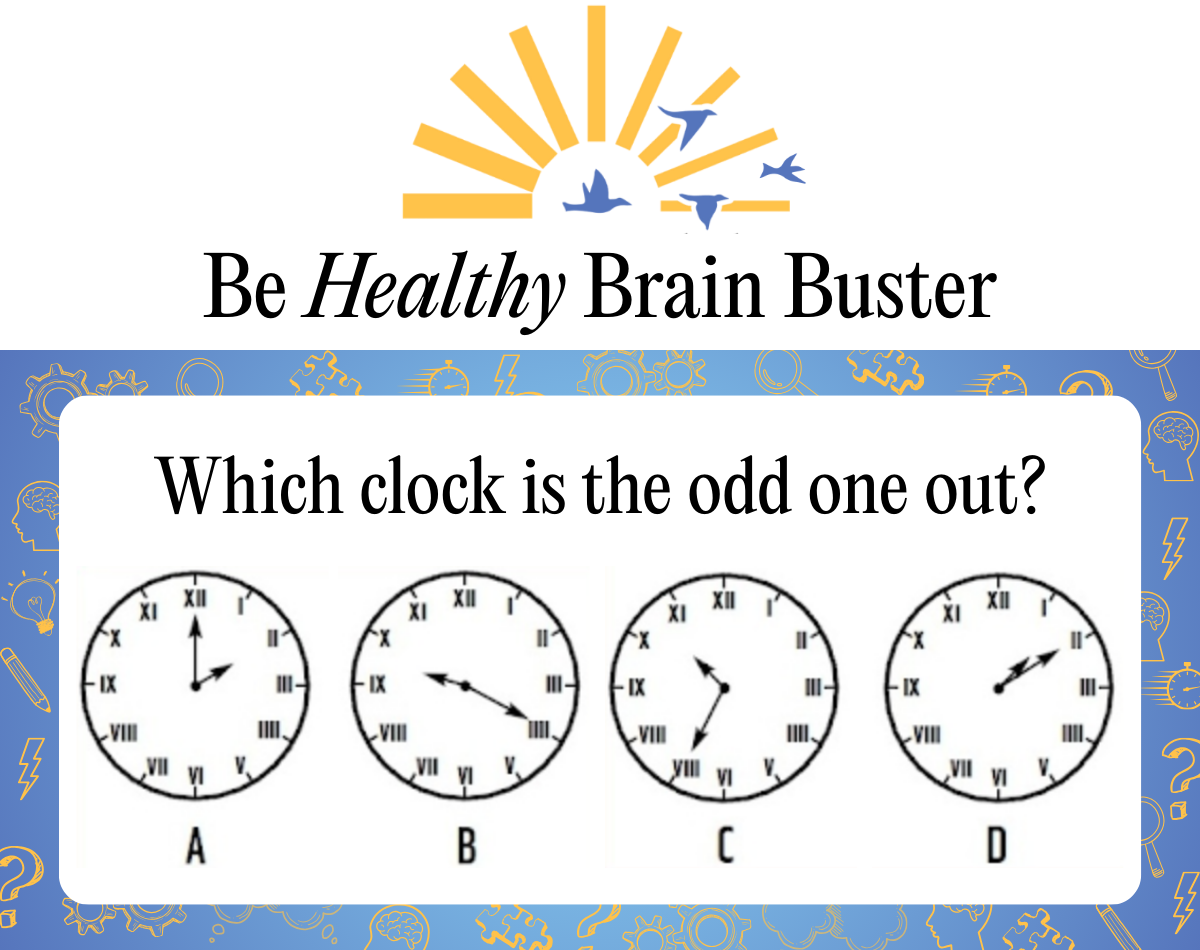
C, it is the only minute hand pointing to an odd number.
Please note that we may receive affiliate commissions from the sales of linked products.