Why I’ve Dedicated My Career to a New Way to Heal Pain

Here’s Your Look Inside
When I met Janet, she was scheduled to have surgery on her spine. She was one of the first people I treated in a new practice I established in 2003. She was sixty-five and had been suffering from debilitating back pain for almost a decade. The pain started suddenly one day while she was working on an auto assembly line in Detroit. It was so severe that she had to be carried off the factory floor.
Janet was evaluated by several doctors, and eventually an MRI revealed multiple issues with her spine, including flattened and bulging discs, compressed nerve roots, spinal stenosis, and other significant problems.
She underwent numerous physical therapy sessions over the years, along with massage therapy, acupuncture, electrode nerve stimulation, and medications. She had a series of injections at a pain management clinic. Despite these treatments, Janet’s pain had worsened. It spread over her lower back and radiated down her right leg and heel. Over time, she began to develop pain and numbness in her left thigh. She was forced to take early retirement.
Finally, Janet had met with a neurosurgeon who scheduled her for surgery to stabilize her spine at several vertebral levels. The notes from that examination said that her physical exam showed normal reflexes, normal muscle strength, and normal sensation. This meant that there was no clear indication of nerve compression and that her surgery was to reduce pain rather than to address a deficit in nerve function. After years of painful suffering, she was willing to try anything to feel better, even if it meant invasive surgery. At the same time, she dreaded having the operation and had heard that I had a practice for people with back pain and other chronic painful conditions, such as fibromyalgia, irritable bowel syndrome (IBS), migraine, and pelvic pain.
At the Detroit-area hospital where I had my clinic, I listened to Janet recount not only her medical history, but her life story as well. The eldest of ten siblings, she had had a harsh childhood. Her father was physically abusive, and her mother demanded that she do a great deal of housework and childcare. She recalls going into a closet as a teenager and screaming, “I hate my parents! I hate my parents!” Married and divorced three times, Janet had raised three children by herself. She struggled financially and felt trapped in a job that she could barely stand and in which she was mistreated by her foreman. By the time I met her, she had been sober for twenty-seven years and attended Alcoholics Anonymous meetings. She had been through so much. On top of it, she now had chronic pain.
When I examined Janet, I wasn’t particularly concerned about her MRI findings because, as I will fully explain, a mildly deteriorating back as one ages is commonly seen in people without pain, and it is not necessarily the cause of pain. I emphasized to her the adage that correlation does not imply causation—that is, a mildly abnormal MRI is correlated with back pain but is not causal most of the time. I also explained how the brain can create pain and that her pain could be caused by learned neural circuits in her brain. Together, Janet and I were going to investigate this possibility carefully.
This idea that physical pain originates in the brain rather than in the body is not easy to grasp. When you touch a hot stove, it is not your finger causing pain. Nerve receptors in the hand send impulses via the nervous system to the brain within milliseconds, and the pain that occurs is due to the activation of the brain’s neural circuits. Sometimes, the opposite may occur: the brain may not activate pain when an injury occurs.
With Janet, as with all my patients, I was extremely careful and methodical in looking at her test results and imaging to first rule out a physical disease or structural damage. Her neurosurgeon clearly felt that she had a structural condition. Her MRI did show several abnormalities to support that view. However, research shows that most people of Janet’s age also show the same findings: degenerative discs, bulging discs, and arthritic changes. I reviewed her MRI with a radiologist. She did not have a fracture or tumor. Her nerves were not being affected. Her MRI findings are often present in healthy people who are pain-free.
We explored the characteristics of her pain. Janet explained that her back pain frequently occurred when she bent over or turned sideways. But there were many times when the pain didn’t occur during these movements. This inconsistency was evidence for a neuroplastic (or brain-generated) condition, rather than structural damage. Janet also told me that changes in the weather, light touch, and stress caused her pain to ramp up, and that it often moved from location to location within her back and leg during the day. This was yet more evidence for a neuroplastic condition. Pain that is due to structural causes, such as fracture, tumor, or inflammation, is likely to be consistent. Structural pain wouldn’t move to different spots at different times, and it would occur consistently with movements that activate the injured area. Pain that is triggered by the weather, light touch, and stress fit into a pattern of neuroplastic pain as well, in the same way that the helicopter activated pain in the veteran.
There is a danger/alarm mechanism in the brain that is there to protect us from harm. When faced with a critical amount of either physical or emotional danger, the brain is likely to warn us, much like a smoke alarm warns us of fire. Janet’s brain became sensitized to threat during her difficult childhood, so her brain was primed to respond to new threats as an adult. This combination of factors led to her back pain. This was my conclusion after evaluating the totality of her life history, her medical history, her physical exam, her test results, and the characteristics of her pain. It was a conclusion that most doctors would not reach, but I believed it was supported by both neuroscience and medical science.
Janet’s symptoms and the potential for her recovery were due to neuroplasticity, which is the brain’s capacity to organize itself to change and adapt its structure and function in response to experiences, learning, and injury. The brain is constantly adapting to protect us and keep us safe. This occurs through the development of new neural connections or circuits based upon our experiences. It involves strengthening connections in the brain that are important, such as learning how to eat, speak, and walk as babies, and weakening connections that are no longer necessary, such as forgetting my high school French. The brain has immense power over us. When the brain creates pain or other symptoms, it does so to protect or alert us to danger. Understanding neuroplasticity gives us the power to alter neural circuits in the brain by addressing the actual underlying issues.
Janet had to decide if this model made sense to her as an explanation for her pain. This can be a difficult decision, because I was suggesting that her back pain was coming from her brain. This goes against everything we “know” about pain. It goes against what most doctors are taught about pain and how most doctors have developed their practices to treat pain. At some level, the chance for recovery without surgery may seem too good to be true. But Janet was desperate to avoid surgery if possible, and my explanations of this model rang true to her. After some careful thought, she decided to give this treatment a try.
Janet enrolled in a program to treat neuroplastic conditions. The program consists of five components:
1. Validating that the symptoms are real and not “all in their head” and learning that their medical diagnoses are not the actual cause of their symptoms.
2. Understanding that the brain can cause real symptoms due to learned neural circuits in
the brain, which are potentially reversible.
3. Altering those neural circuits by sending corrective feedback about the symptoms to the brain with a treatment known as pain reprocessing therapy (PRT), which is outlined in part 3 of this book.
4. Further altering those neural circuits by addressing any underlying emotional issues in one’s life with a treatment known as emotional awareness and expression therapy (EAET), which is also outlined in part 3 of this book.
5. Making any needed changes in their life.
Janet felt that these ideas made sense and applied herself to the techniques. In order to change the neural circuits creating pain, she started sending calming messages to her brain while beginning to move her back more freely. Within two weeks, she began to see improvements in the pain and numbness, which further strengthened her sense that this model applied to her situation. By four weeks, she was pain-free and canceled her surgery. She was astonished at these changes and incredibly grateful for having her body and life back. She was one of the first people I saw in this new practice, and I, too, was also amazed by her rapid recovery. It flew in the face of what I had been taught about pain. To be sure, there is variability in all my patients’ responses to treatment, but Janet’s was a rapid and complete response.
Months later, Janet experienced a sudden episode of back pain. This occurred seemingly spontaneously, without any precipitating injury. When she reflected for a few minutes, she realized that her daughter, who was in the military, was being deployed that day to a danger zone. Understanding that her brain was responding to this emotional stressor and not to a physical problem with her lower back helped Janet put it into perspective. She used the techniques she had learned to calm the danger signal in her brain and address her feelings, and the pain disappeared within a few hours. Janet told me, “In the past, pain would cripple me. But now I know what it is a result of. I look at it calmly, and it goes away.”
Not long after that, I ran into the neurosurgeon who had scheduled Janet for back surgery. I told him about Janet’s full recovery using the neuroplastic recovery approach. He nodded his head and changed the subject. I was disappointed in his response, but I realized that, in his mind, this was most likely a one-off, and that her rapid recovery didn’t fit into the traditional understanding and treatment of back pain.
In 2003, we had no studies to validate these ideas as scientific. His reaction—or lack of one—ignited a spark. We needed to conduct research to determine if this approach held up to scientific scrutiny. It energized me to learn as much as I could about this emerging field of study. Along with a committed set of colleagues in the United States and worldwide, I have spent the last twenty-three years doing exactly that.
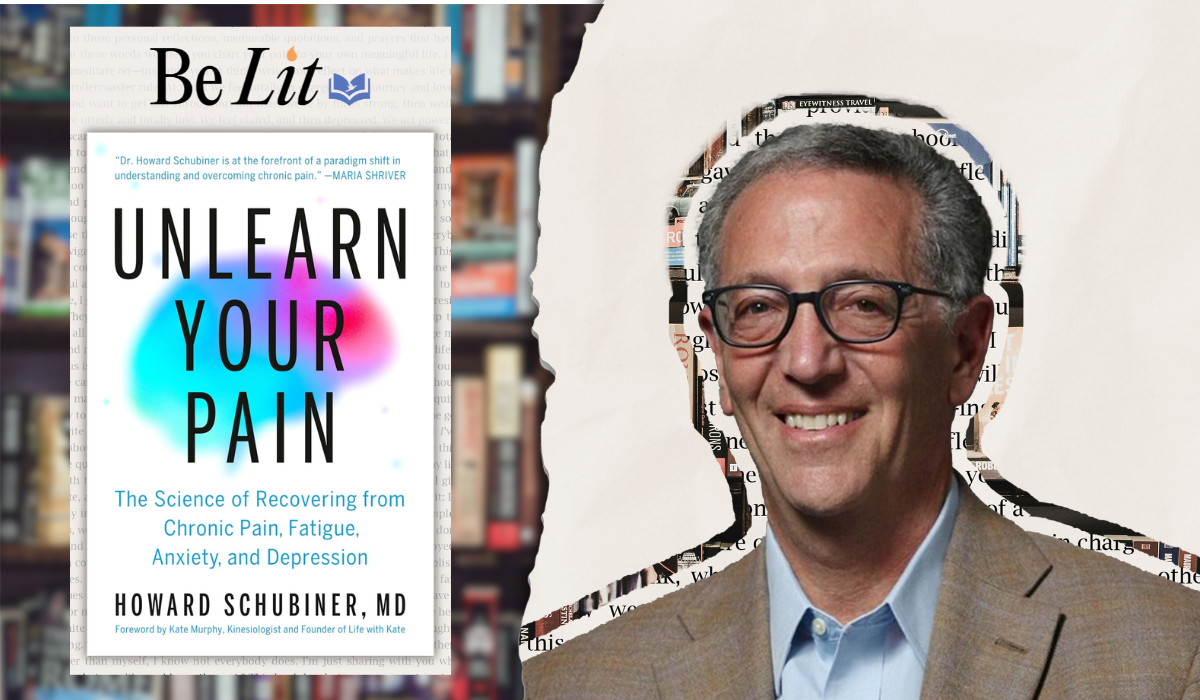
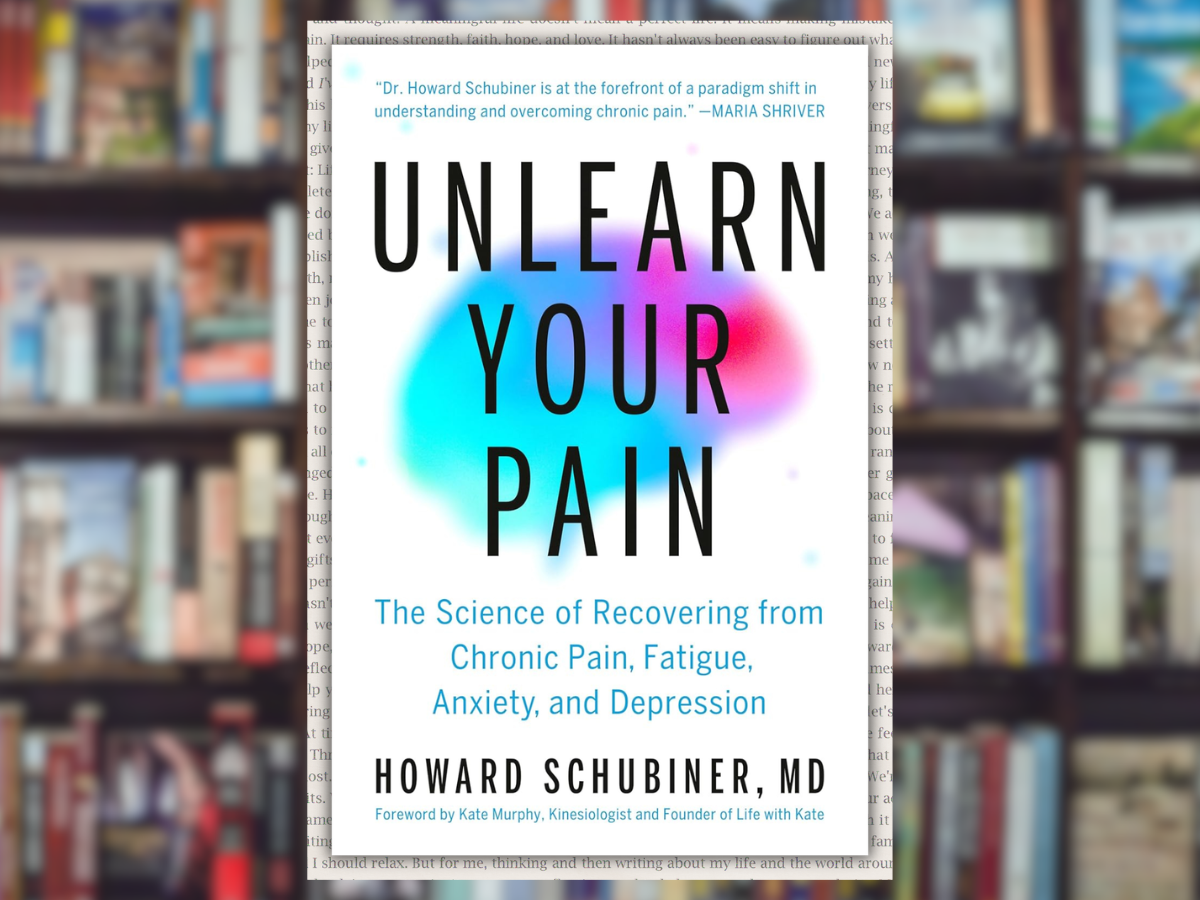
From UNLEARN YOUR PAIN by Howard Schubiner, MD, to be published on May 26, 2026 by The Open Field, an imprint of Penguin Publishing, a division of Penguin Random House, LLC. Copyright © 2026 by Dr. Howard Schubiner.
Download the reading guide here!


Answer
Emily Brontë
Fun Fact: Emily Brontë was so skilled at piano that she taught music lessons before becoming a published novelist.

Please note that we may receive affiliate commissions from the sales of linked products.