An Invitation to Listen

Good Sunday morning to you.
Spring has just arrived, and every year around this time, we expect renewal. Predictability. A sense that things are turning. But lately, the weather, like so much else, has been anything but predictable.
In ancient times, people expected the unexpected. Resilience wasn’t a buzzword. It was a requirement. Ralph Waldo Emerson is famous for writing about self-reliance, and the Stoics taught us that while we cannot control external events, we can control our reactions, calling us toward logic, virtue, and acceptance.
Spiritual leaders across traditions have long reminded us to lean on faith when the world stops making sense. So if you find yourself wondering about everything from the weather to your neighbor’s take on world events, know this: you are not alone. And you already have the tools you need to navigate these unpredictable times.
Years ago, when politicians considered a run for president, they would go on what they called “listening tours.” They traveled to key states, held town halls, and answered questions from voters. They were, of course, signaling where they stood on the issues. But they were also listening.
Then came the book tour, which was a similar idea, just packaged differently. Candidates would present their life stories, their values, their character. And now, once again, many are out there talking, sharing, testing messages, and gauging reactions. They are speaking, shaping narratives, and listening for what resonates.
All this got me thinking about my own, much smaller, listening tour. Mine isn’t built around a campaign, though. It’s simply built from what I’m hearing when I’m on the road and in conversation with you here.
Last year, I traveled the country on a book tour and met people in coffee shops, supermarkets, hotel lobbies, and airports along the way. And now, week after week, I still hear directly from those of you in this community. People write in with their hopes, their fears, and their questions about how to live in these complicated times. What I’m hearing now is very much what I heard a year ago on my book tour, and it’s all worth sharing because I believe it tells us that we are more alike than the algorithms want us to believe.
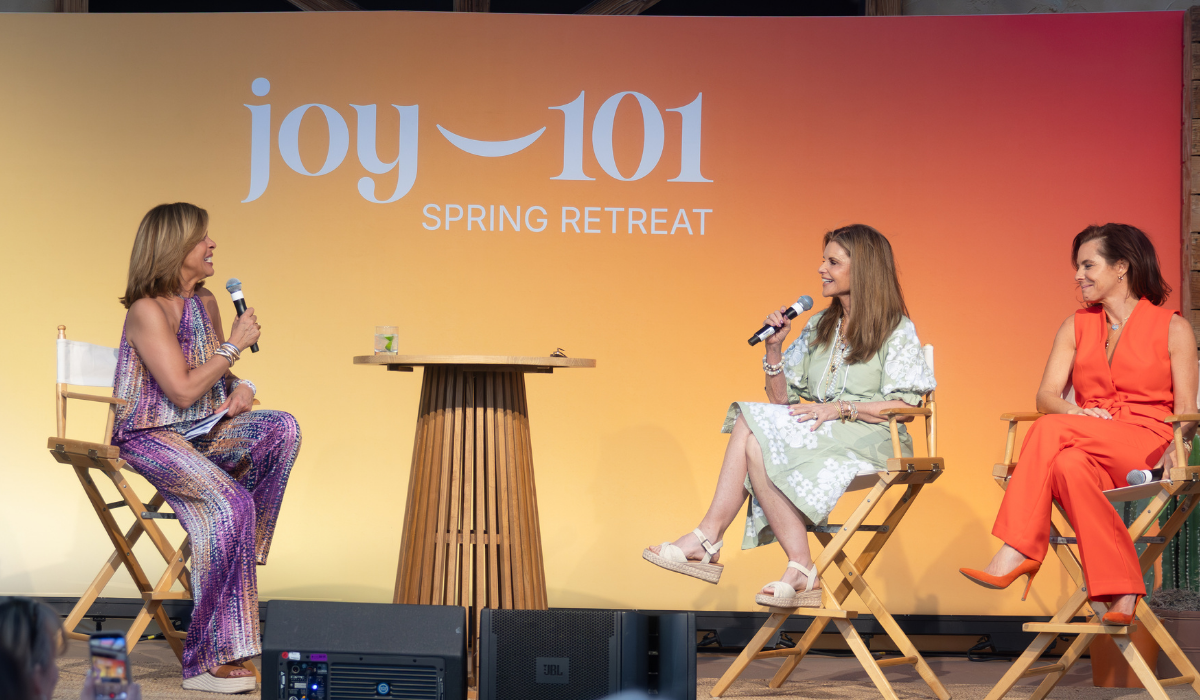
Last weekend, I spent time at my friend Hoda Kotb’s Joy 101 retreat. I went there to be in community with Hoda, my friend Stephanie Ruhle, and more than 250 women from across the country of all different ages and backgrounds, and in all different phases of life. What struck me first was how many of them came alone. When I asked why, these women said: I need to find my joy. I need hope. I need reassurance. I need to get away from the noise. I need community. I need to know I’m not the only one who feels overwhelmed… discombobulated… scared.
These women came looking for connection and to see if anyone else was carrying what they were carrying: divorce, caregiving, adult children struggling, mental health challenges, estrangement, grief. No one there wanted to talk about politics. They wanted to talk about life.
In one breathwork class at the retreat, participants were asked to look into the eyes of a stranger. Many began to cry.
Because before their joy could be accessed, something else had to come first—the pain, the pressure, the exhaustion, the sorrow. All the things we carry. All the things we tuck away so we can keep going. All the things we keep hidden from others.
I met women at the retreat from all walks of life. Some were running companies. Some were CEOs. Some were the primary breadwinners for their families. Some were semi-retired but still kept plenty busy as grandparents and servants in their communities. Many were holding everyone else up, while quietly wondering who might hold them.
I saw myself in so many of these women because, not that long ago, I was the one with tears streaming down my face as I cared for an ailing mother, watching her struggle with the loss of her independence. I cared for a father who no longer knew who I was. I navigated divorce, an empty nest, and an overwhelming sense of grief. I was the woman wondering if I could rise. The woman searching for joy, unsure if I could ever find it again, wondering if I could resurrect myself again as well.
So I understood all too well as I talked to these women about caring for aging parents, about being full-time caregivers for loved ones with Alzheimer’s or dementia, about raising young children or worrying about their adult children. I felt them when they talked about divorce, widowhood, betrayal, loss. So much loss.
I share this because I don’t believe these women are unique. I believe they are a window into what millions of people are carrying right now: caregiving, grief, identity loss, financial pressure, health concerns, parenting challenges, questions about purpose, questions about how to go on when life no longer looks the way you thought it would. If you are also someone who is feeling this way, I want you to know that you are not alone.
I share this as well because this is the basis of a political platform, which at its core is meant to improve the lives of as many people as possible. Today, millions identify as caregivers. Millions are struggling with the cost of their mental and physical health care. Millions struggle to adequately care and provide for their families. Millions feel alone, unseen, uncared for. Millions are exhausted by the political division, the lack of civility, and are terrified of the political chaos. This isn’t red or blue, my friends—it’s purple. And it’s, for lack of a better word, the foundation of a “humanity platform”: real people dealing with real issues in real time.
So if these concerns and/or issues are what you find yourself thinking about, you are not alone. In fact, you are the majority of people. I hear you, and if you listen, you will hear others say the same.
Next Saturday, millions will march all over this country in massive No Kings rallies. They will rally for a variety of reasons, but the main one, I believe, is to be in community, to reassure themselves they are not alone, and that when we, the people, gather, talk, and listen, the conversation shifts, the landscape moves, and life gets better.
What people are looking for isn’t another argument, or another slogan, or another talking point. They are looking for help navigating the reality of being human. How do I raise children and work full-time? How do I survive divorce? How do I live after losing a parent or both? How do I keep going? How do I access joy again? Why don’t I feel like I’m enough? Will our democracy survive? How do I maintain a sense of hope when story after story tells a tale of conflict or tragedy? (Speaking of which, I felt sick to my stomach this week after reading the allegations that Latino labor activist César Chávez abused Dolores Huerta, the woman who co-founded the United Farm Workers union with him, and multiple young girls, for years. This heartbreaking revelation reminds us that even our democracy’s most celebrated narratives can hide profound shadows.)
Wrestling with these difficult truths is the work of a lifetime, and it is work we simply cannot do alone. This collective reckoning is at the very core of why "moving humanity forward" is not just a phrase to me. It is the mission of this publication and of my life. But what does that actually mean in practice?
Last week, someone in our community told me that where she lives, the concerns people carry are very different from what I might hear where I live. Same country. Different realities. And yet, at that retreat I attended last weekend, women came from everywhere—red states, blue states—and it didn’t matter. No one asked how anyone voted. What came up instead was something much deeper: A fear that no one really sees them. That their state doesn’t represent them. That their workplace doesn’t know them. That their lives are unfolding without anyone truly understanding what they carry.
And yet, in that room, they saw one another.
So perhaps moving humanity forward begins here: by dropping, even for a moment, the instinct to categorize each other, and choosing instead to encounter the human being in front of us. To ask: how are you, really? What is weighing on you? What is giving you joy? What are you afraid of? What are you hoping for? How is that fragile, tender heart of yours?
Because our hearts are moved when we feel seen—not as labels, not as roles, not as political identities, but as human beings, carrying both joy and pain.
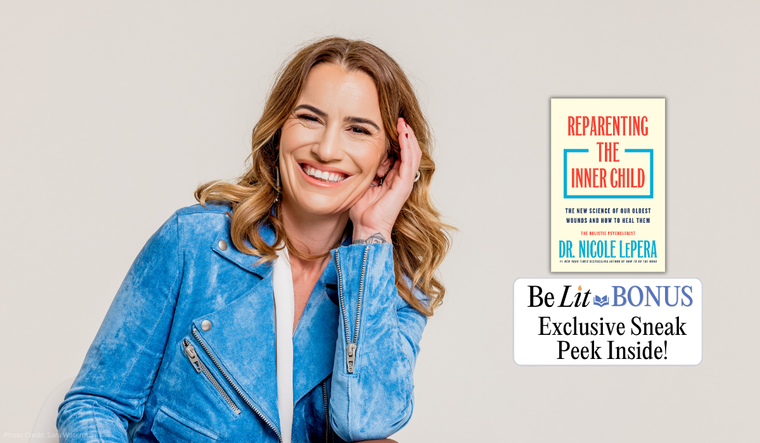
Dr. Nicole LePera, a.k.a. the Holistic Psychologist, joins us this week to talk about healing our inner child. We all have an inner child within that’s longing to be seen, heard, and healed. In Nicole’s new book, she explores how we can each better understand our pain and grief, and she gives us some tools that can help us navigate our adult lives so we can be better partners, parents, and people. I’ve long admired her work and her mission to help us each understand ourselves better, and I’m grateful she shares her wisdom with us today.
Our great-grandparents used to say that politics and religion divide us. But they forgot to tell us something just as important: what unites us. And what unites us are the shared experiences of being human. Getting older. Losing people we love. Watching our children build lives of their own. Wondering if we are still needed… still relevant… still enough. Falling down, and somehow, finding a way to rise again.
So as we head into spring, a season that calls us to renewal, to reflection, and to rising, perhaps the invitation is both simple and profound: to listen. Not just to the noise around us, but to the people in our lives… and to the quiet voice within ourselves.
What if each of us took on a small, personal listening tour? Not across the country, but across our own lives. Check in with a friend you haven’t really spoken to in a while. Sit a little longer with someone you love. Ask a question and stay long enough to hear the real answer. Put the phone down. Make eye contact. Listen without trying to fix, advise, or move on.
Because in that kind of listening, something shifts. Walls soften. Hearts open. And for a moment, the divisions that feel so loud begin to quiet. And maybe, if we are still enough, we will hear something else, too: a reminder that even in uncertain times… even when life feels heavy or unclear… we are not alone. We are connected. We are capable of rising together.
Moving humanity forward doesn’t begin somewhere out there. It begins right here. With how we show up, with how we listen, with how we choose to see one another.
So this week, listen. And if something stirs in you—something true, something honest, something worth sharing—then tell me what you’re hearing.
Prayer of the Week
Dear God,
Help us to listen with open hearts, see one another with compassion, and find the strength and hope to rise together in love and understanding.
Amen.
Also in this week’s issue:
• Everyone Is Talking About Reparenting Right Now
• An Exclusive Excerpt from “Reparenting the Inner Child”
• A Sneak Peek at Maria's Next Life Above the Noise with Arthur C. Brooks
Please note that we may receive affiliate commissions from the sales of linked products.