
Jennifer Levi Tells Us How One Family Grieves Differently Under One Roof

No one tells you what happens when everyone under the same roof is grieving differently. When one person wants to talk, and another cannot speak. When one person moves forward loudly, and another disappears inward. When one needs action, one needs silence, one needs anger, one needs faith, one needs distraction, and one can barely breathe.
Pain does not arrive neatly. It does not hand your family a shared script.
Trust me, I wish it did. And too often, that is where families break.
You may have heard the statistic that 80 percent of couples don’t survive the death of a child. It gets passed around in grief circles like a warning, or an inevitability. But it isn’t true. Research from the Compassionate Friends, the largest organization supporting bereaved parents, found the divorce rate is closer to 16 percent, lower than the national average.
But here is a statistic no one tracks. How many couples stay together and still feel alone under one roof? How many families feel intact on paper while quietly fracturing in the living room, the car, the dinner table, in the middle of the night when everyone is home, but no one can reach each other?
That is the harder number to measure. That is the story no one tells.
In the beginning, there is often only one language: survival.

We lost our 18-year-old son suddenly and tragically to an alleged drunk driver in 2025—just months after losing our home of 23 years in a wildfire. In those first few days, we were a united front. We held each other. We cried. We moved through shock together. We were stunned, broken, and somehow still breathing under the same roof.
But as the days turned into weeks, it became clear we were not walking the same path.
We were all grieving the same loss and the unfair card life had slapped us with. But we were not grieving the same way, and there were a lot of “dust-ups” (a term my Grief Coach taught me that I love), messiness, anger, temper, resentment, moodiness, and loneliness.
I went face forward. Loud. Determined. I needed to make my grief move. I needed to give it volume, shape it, and give it a job. I needed to turn pain into impact because standing still felt impossible. My grief wanted to speak, fight, write, advocate, build, remember, and scream. And my family did not always like this.
For my husband, his grief moved differently. He carried his pain in quiet ways. He did not need to say as much for me to know how deeply he was suffering. Sometimes I wanted to tell him how much I missed our son. How sad I was. How angry I was. How unfair and cruel the world felt. But then I would look at him and know he already felt every bit of it. There was no reason to say it.
So, sometimes I stayed quiet. Not because I had nothing to say. Not because my grief had softened. But because I worried that saying it out loud would pull him back into the darkest hole. I worried my need to unload would become his burden to carry.
That is one of the hardest parts of grieving under one roof: the people closest to you are the people who understand most, yet when tragedy hits, you don’t understand them the way you thought you did.
It’s called “incongruent grieving”: When you process on different timelines with different needs. It’s not a failure of love; it’s one of the most human things that happens and is often universal.
Then there is our daughter.
Before she turned 21, she lost her childhood home to a wildfire and then her brother, her best friend, and lifelong playmate. What young person should have to endure that much pain so early in life? When I look at her beautiful face, my heart doesn’t just ache; it howls from the deepest, most guttural place inside me. And yet it is also her right to keep living. To build a life that was not defined by loss. To step away from us when she needed to. To laugh without guilt. To be with friends. To become her own person in the middle of devastation.
It is incredible how resilient children can be when given the space.
But giving that space is not always easy. It’s heartbreaking.
There are so many times I want to pull her close, hug her, smother her with love, and hold on to her as if holding her tightly could keep anything else from happening. But that is my need, not hers. And the cost of that grace is a loneliness I haven’t found words for yet.
So I have to ask myself painful questions:
How do I love my family now? It’s different. How do I honor independence without feeling abandoned by it? I don’t know yet. How do I keep living beside the people I love without becoming resentful that they cannot always grieve the way I need them to? It’s very hard, and some days I have more grace than others.
How do we give each other space to walk our own paths, while still somehow holding hands?
That may be one of the greatest challenges a family can face. Not just the loss itself, but what happens after the loss moves in and rearranges all your trusted dynamics. Suddenly, the same kitchen, the same bedrooms, the same car rides, the same holidays all feel different. Everyone is carrying something, but the weight is not distributed evenly or visibly.
One person needs to talk. One person needs to move. One person needs quiet. One person needs normalcy. One person needs to remember out loud. One person can only survive by looking forward. And it's all so confusing and messy.
The heartbreaking truth is that no one is necessarily right or wrong. Grief is not a group project where everyone gets the same assignment. It is more like wind moving through a house. One room may freeze. One room may be still. One person may be standing in stale air while another is desperately trying to open a window and breathe.
The danger is when we start judging each other’s coping mechanisms. Why are you so quiet? Why are you so angry? Why are you going out? Why are you staying in? Why do you want to talk about him all the time? Why can’t you say their name? Why are you moving forward? Why are you stuck?
How we cope may be different, but different does not mean wrong. Different does not mean less love. Different does not mean someone is forgetting, avoiding, exploiting, dramatizing, or failing. Sometimes, different is simply the only way each person knows how to survive.
Another part of grieving under one roof is realizing that the roof extends beyond the people who live inside it. It includes the friends, relatives, and people closest to you who you assume will know how to show up, and then when they don’t, that can feel like another kind of loss.
In the beginning, I wanted to believe that the people who loved us most would instinctively know what to do, what to say, how to help. But grief makes many people uncomfortable. They do not know whether to bring it up or stay quiet. They do not know whether to call or give space. They
are afraid of saying the wrong thing, so often they say nothing at all. And doing nothing can feel safer for them, but it feels devastating to the person who is grieving.
The painful truth is that even the people closest to me cannot fully carry my grief for me. Some may disappoint me. Some may surprise me. Some may love me deeply and still not know how to help me.
My grief is mine. That does not mean I have to carry it alone, but it does mean I cannot demand that everyone know how to hold it.
The work, then, is not to force everyone onto the same path. The work is to braid the paths together.
A braid is not made from one strand. It is made from separate strands crossing over and under each other, each one keeping its own shape while becoming part of something stronger. That is what a family must learn to do after loss: Not merge into one identical grief but stay close enough to remain connected. Make your braid strong enough to hold the weight of life’s unexpected messiness. It means learning to say, “I may need something from you, but I also understand you may not always have it to give.”
The details of life’s challenges change, but the question is often the same.
The question is not, Will we survive this? The research says most of us will.
The question is, How do we stay braided while we all grieve differently?
There is no perfect answer. There is only the daily practice of making space for pain, coping, disappointment, and tenderness. Space for the truth that love does not always look the way we wish it would.
Maybe the goal is not to walk the same path. Maybe the goal is to keep looking for each other along the way. To forgive the moments when someone cannot reach back.
And maybe that is how a family survives the unsurvivable. Not by grieving the same way. But by refusing to let different griefs become separate lives.
Under one roof, we learn the hardest kind of love: the love that gives space without letting go.
Under one roof, there can be many kinds of grief and somehow, still, one family.
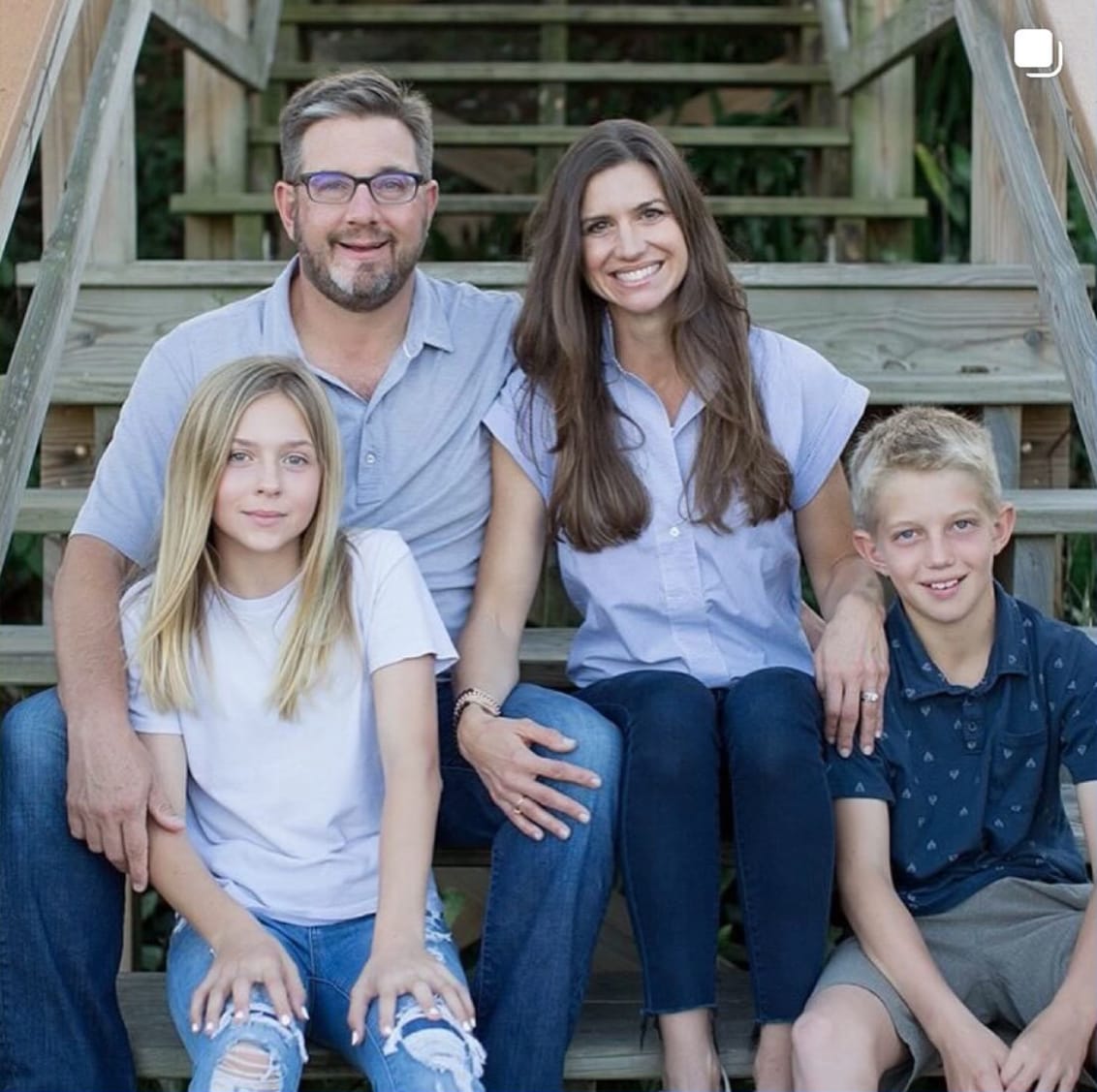
Jennifer Levi is the founder of the Live Like Braun Foundation, which celebrates the spirit and legacy of her son, Braun Levi, whose life tragically ended at the age of 18 by an alleged drunk driver. The foundation keeps Braun’s legacy alive through scholarships, the repair and building of public athletic centers, and raising awareness about impaired driving risks. She is also the author of the forthcoming children’s book, The Braunicles, and is advocating for and running a new bill SB 907 in California.
Please note that we may receive affiliate commissions from the sales of linked products.