“I Believe in Telling the Truth Out Loud”
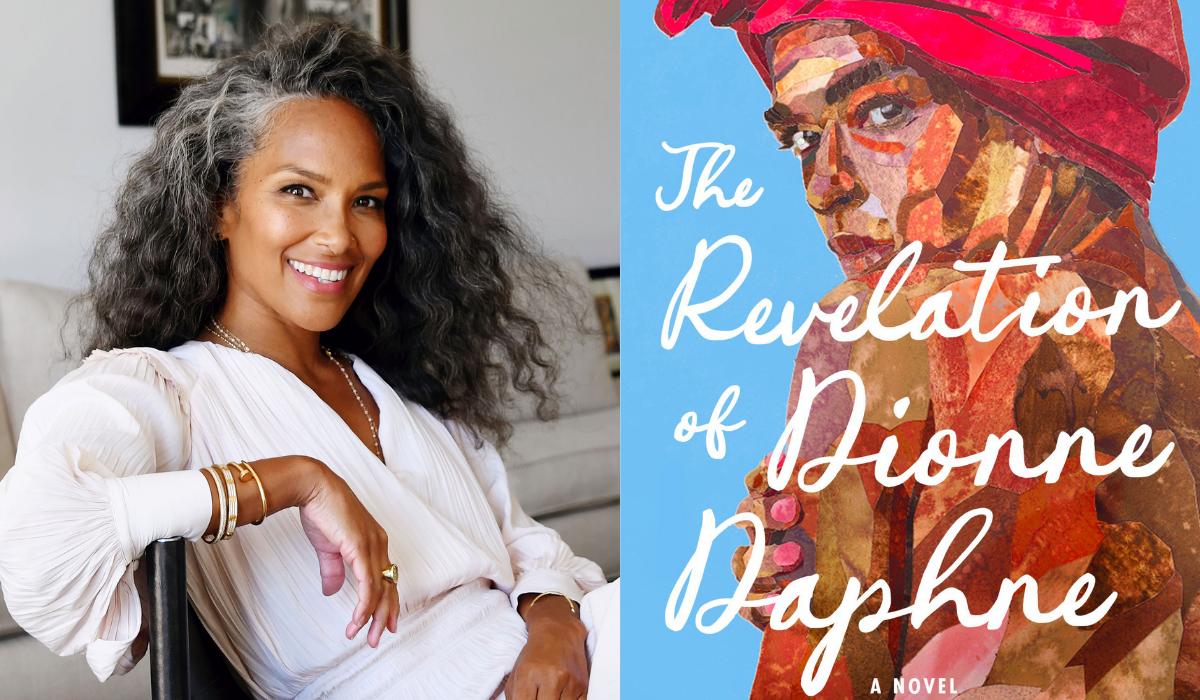
Mara Brock Akil has an almost supernatural ability to conjure inner strength in her characters and audiences. As one of television’s most revered producers and showrunners, she has spent decades creating stories for the screen, centering Black women, many young, and their journeys toward finding their voices and selves. Fans of Brock Akil will likely name “Girlfriends,” “Being Mary Jane,” or the Peabody-winning “Forever…,” which she adapted from Judy Blume’s beloved YA novel, as series that made them feel seen and capable.
Because to watch a Brock Akil production is to feel fortitude.
Now Brock Akil is bringing that same fortitude to the literary page. The Revelation of Dionne Daphne is her first novel, released in June. The story brings us back to 1991. The main character, Dionne, has the world seemingly at her fingertips, including a coveted job and a boyfriend. Then life takes an unexpected turn, leaving Dionne reeling as she faces her past and the truth that she was sexually abused.
The novel is complex. Brock Akil writes about heavy topics—assault, sadness, pushing down trauma when it doesn’t fit others’ narratives. Yet, as in her past creative projects, she reveals Dionne’s deep inner strength, and, in turn, her own. Since publishing her first novel, which she did in her mid-50s, Brock Akil has opened up about her own journey of healing from past abuse—and, as she tells us here, the catharsis found in putting pen to paper.
“I believe that, and as soon as you speak to your shame, it loses its power over you,” she tells us.
The Sunday Paper asked Brock Akil to share more. Here, she tells us about the company she found in writing her novel, how she deeply cares for herself while in the throes of writing, the books she returns to for strength, and the one bit of advice our inner creative must hear.
A CONVERSATION WITH MARA BROCK AKIL
What has been a constant through-line in your work?
Honestly, it's always been the same question underneath everything: Who gets to tell the truth out loud, without apology? Whether that was Joan on “Girlfriends,” or the women on “Being Mary Jane,” or now Dionne on the page, I'm chasing the same thing. I want to give my characters the interiority we don't always get, the needing more canvas, the mess and the contradiction, the parts of us that don't resolve neatly by the end of the episode or bottom of the page.
What has creating Dionne given you in terms of your own healing?
Writing her didn't heal me so much as it kept company with the healing I was already doing. I gave Dionne a piece of myself. There's something different about putting language to it in a character versus yourself, it gave me distance and closeness at the same time. I could look right at it without it swallowing me, because it was Dionne's hand shaking, not mine—except it was mine too. I think a lot of survivors know that split. And I believe that, and as soon as you speak to your shame, it loses its power over you. Writing her didn't close the wound, but it did make me less alone in it, and it let me hand something to other women still carrying theirs in silence. That's its own kind of grace.
You weave friendship into your novel in a deep and true way. In describing a moment between Dionne and her friend Farrah, you write: “Love is witnessing, and she has signed up to see me at what could be the lowest point of my life.” What guided you as you developed these friendships, and what do you hope readers take from them?
What was paramount for me was making sure the friendships did the work that romance usually gets credit for. We're taught love is the man who shows up. But some of the most rigorous, unglamorous love I've ever received has come from women who just stayed in the room with me, didn't try to fix it, didn't flinch, just witnessed it. That's what I wanted Farrah to be for Dionne. Not a rescuer. A witness. I hope readers close the book and go call the friend who's seen them ugly-cry on the bathroom floor and just say thank you.
Why did you set the story in the 1990s?
Because that's the decade we were told to keep our business to ourselves. Before therapy was in, before "trauma" was a word you'd hear on a Tuesday. I wanted Dionne looking like she had it all in that world, money in her pocket, a great job, our politics, our style, everything, and still have no language for what she was carrying underneath it. That contrast is the whole book to me. It's also just true to me. I was becoming who I am in that decade, and I wanted to be honest about how little permission we had then to name any of this out loud.
Writing is a colossal part of your life, and so is encouraging others to write. What do you say to a woman who may be middle-aged or older and is yearning to tell her story but is scared?
I'd tell her the fear doesn't mean stop, it means you're standing near something true. Think of it like a table full of people you love, and capitalism thrives off our shame, off all of us keeping our plates polite. What if you laid it down? Start small. You don't have to write the memoir, write the one paragraph you're most afraid of and put it in a drawer. Nobody has to read it but you, at first. And I'd remind her: you are not too late. Your life has been collecting material this whole time, whether you called it that or not. It's not behind you. It's your inventory.
How do you care for yourself—spiritually, emotionally, physically—when you write?
I have a deep love affair with sleep, that's the real trick nobody tells you. Beyond that, it's simple. Lemon water first thing, then green tea or matcha depending on the day. I move my body, yoga a couple times a week, weight training, and I love tennis, which is an unexpected joy, a place I go where I'm not thinking about anything but the ball. I'll sneak in a hike when I can.
And I believe in therapy the way I believe in telling the truth out loud. I grew up in a generation that debated whether therapy was even for us, and I watched us do it, quietly, because we needed to. So for me it's not separate from the writing, it's what lets me go back into a character like Dionne and not lose myself in there. God is in it too, honestly. Gratitude is a practice for me, not just a feeling.
What is one book you’ve returned to that’s fueled your spirit?
Waiting to Exhale. I go back to that book because it reminds me our heartbreak and our becoming were never meant to be carried alone, they're communal. Those women weren't actually waiting to exhale, they were learning how to breathe on their own terms, and that lesson doesn't expire. Dionne had to learn it too, just 40 years later and in a different key. I'll also say Toni Morrison's The Bluest Eye lives in me the same way, it's not an easy read, it's not supposed to be, it's a mirror. And I always come back to Nikki Giovanni's poetry. Not every relationship in your life is meant to last, but some of them leave you something you get to keep, and that book is what I got to keep.
Mara Brock Akil is an award-winning writer, producer, director, and showrunner. In 2021, she launched her own LA-based writing residency, The Writers’ Colony, which supports underrepresented writers to strengthen their craft. Follow her at @inthelandofmara

Please note that we may receive affiliate commissions from the sales of linked products.