If I Hadn’t Read That Book, I Don’t Know Where I’d Be
I don’t recall why I first picked up the book. I do remember feeling a kinship with the author as soon as I opened it.
At first, I couldn’t explain why. Our lives were so different. She was raising a young daughter while facing homelessness. I, on the other hand, was not a mother and had a place to call home. The author’s writing was matter-of-fact but stunning. She detailed how she watched her daughter take her first steps in a shelter, and how she tried to secure government assistance while treading the waters of poverty. I pictured her chest rising and falling rapidly as she fought to keep her daughter safe.
Something about the author’s story reached a deeper part of me. As I said, our lives were different. I was facing intense issues in my life, but nothing seemed to match the magnitude of what she was navigating. Yet, as I read on, I found myself clutching her story as if it were my passport.
Then boom. That paragraph. I read it, and electricity raced through my veins.
Me too, I thought, when the author, Stephanie Land, detailed in her memoir Maid how she suffered verbal abuse from her partner. Abuse that “didn’t leave bruises or red marks,” she wrote. Then one day, her partner punched a hole through the door. That act physically validated to the outside world the agony Land had long suffered on the inside.
“This I could point to,” she wrote. “I could ask someone to look at it. I could say, ‘He did this to me.’”
Land called the police and left her relationship, honoring the voice inside her that knew her situation was wrong for her and her daughter.
As I kept reading, a knot that had anchored my stomach for years started to loosen. I was in a horrible relationship. Years of navigating war games for the mind and heart. Any ability to trust my gut had vaporized. Even worse, I’d grown to think I was the cause of my partner’s rage and fabricated his outbursts, as he’d suggested. Land’s words broke the shadow of calamity that had been keeping me in the dark.
I fell asleep holding the book and finished it the next morning. The following week, at the age of forty, scared but determined, I left my relationship.
And I have been moving toward myself ever since.
***
What would have happened if I hadn’t picked up that book?
When I consider this question now, shivers run through me. Then warmth takes over, grounding me in the present. I did pick up that book, and because of it, I am here.
We reach for books for obvious reasons—to be entertained and swept away; at other times, to be edified and educated. Like nature, books nourish our minds’ lives. But their pages also offer us a beacon of something much larger: A portal of possibility. A salve for our pain. An example of our endless capacity to evolve.
Books literally save us.
These days, as so many aspects of modern life assault our morale and unlawful armies wreak havoc on our safety, reading a book is the ultimate revolutionary act. It’s a way to reaffirm our tenderness, understand ourselves, and remember what is moral and just. Reading a story allows us to confront power, see the social forces that shape our lives, and realize a different way of being in the world.
When we are desperately trying to find our way in the dark, reading can point us toward that flicker of light.
Steve Almond, a writer I’ve long turned to, put it best: “To focus on the inner life today—to read books, to imagine with no ulterior agenda, to reflect on painful or confusing experiences—is to defy the clamoring edicts of our age, the buy messages, the endless pleas for followers and likes.”
I’ll add to Almond’s sentiment: To read is to care.
Because true care is deeply witnessing, both our own lives and those of others. Reading stories, whether fiction or nonfiction, offers us a lens into what people have faced and how they have persevered. It’s to hear the cries of a grieving mother, to know the obstacles of someone facing poverty, to gain access to the fear felt by a refugee, to see the scar tissue racism embeds in a society.
“Resident in the rhythms of words and sentences and paragraphs” are life’s meaning and fragility, as the late Joan Didion wrote.
To hold a book is to see this—and to hear, to support, and to rally for our fellow humans.
It is to quietly yet fiercely declare: I will persist. We will persist. No matter what.
Just a library card away, books grant us front-row tickets, letting us live lives fully considered.
And they propel us into unexpected strength, often before we can even see it.
I certainly didn’t when I was in my scribble of pain. But word by word, page by page, author Stephanie Land bestowed upon me a reminder of possibility.
Her book gave me a lifeline—a testament to the fact that we can always find hope and transformation, even when we least expect it.
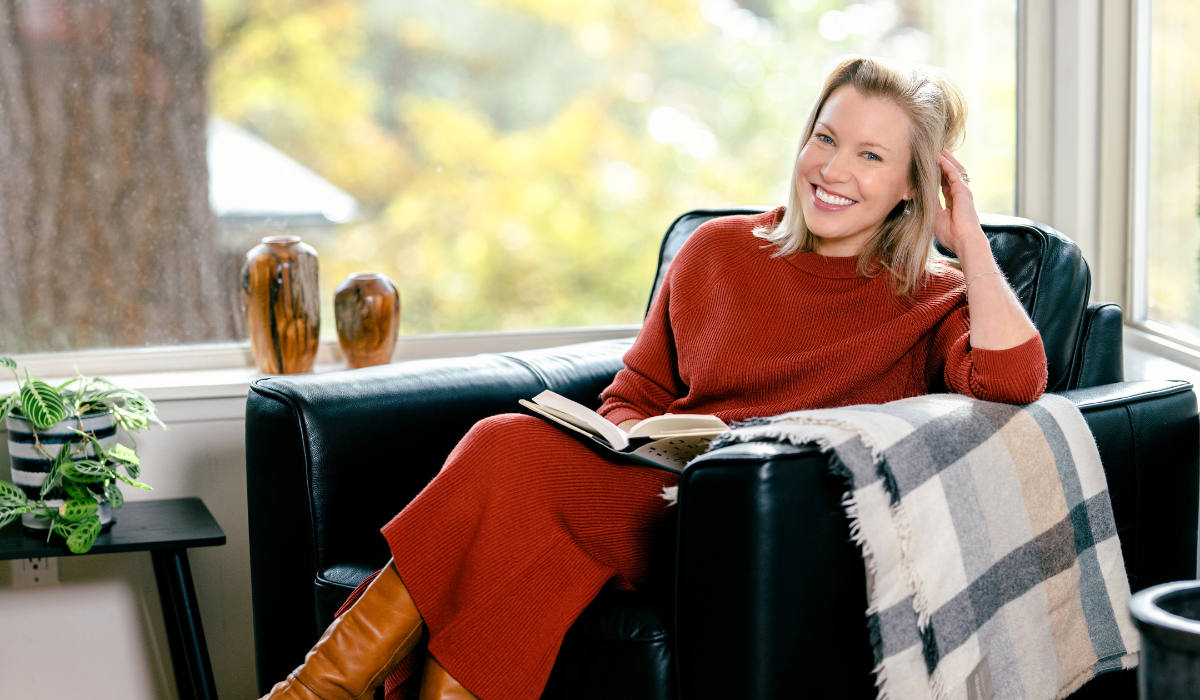
Stacey Lindsay is a journalist and senior editor of The Sunday Paper, and the writer behind the women's newsletter ANDI. Her forthcoming book, BEING 40: The Decade of Letting Go—and Embracing Who We Are comes out May 5th from The Open Field and is available for pre-order here.

Also in this week’s issue of Be Lit:
Please note that we may receive affiliate commissions from the sales of linked products.