“People Will Get to Know My Mother in a Way They Haven’t Before.”

Ethel Skakel Kennedy’s fortitude and grace were always evident. When her husband, Robert F. Kennedy, was killed in 1968, Ethel remained steadfast in carrying on her husband's work in human rights, all while raising their 11 children and navigating her own grief. The world witnessed unparalleled resilience.
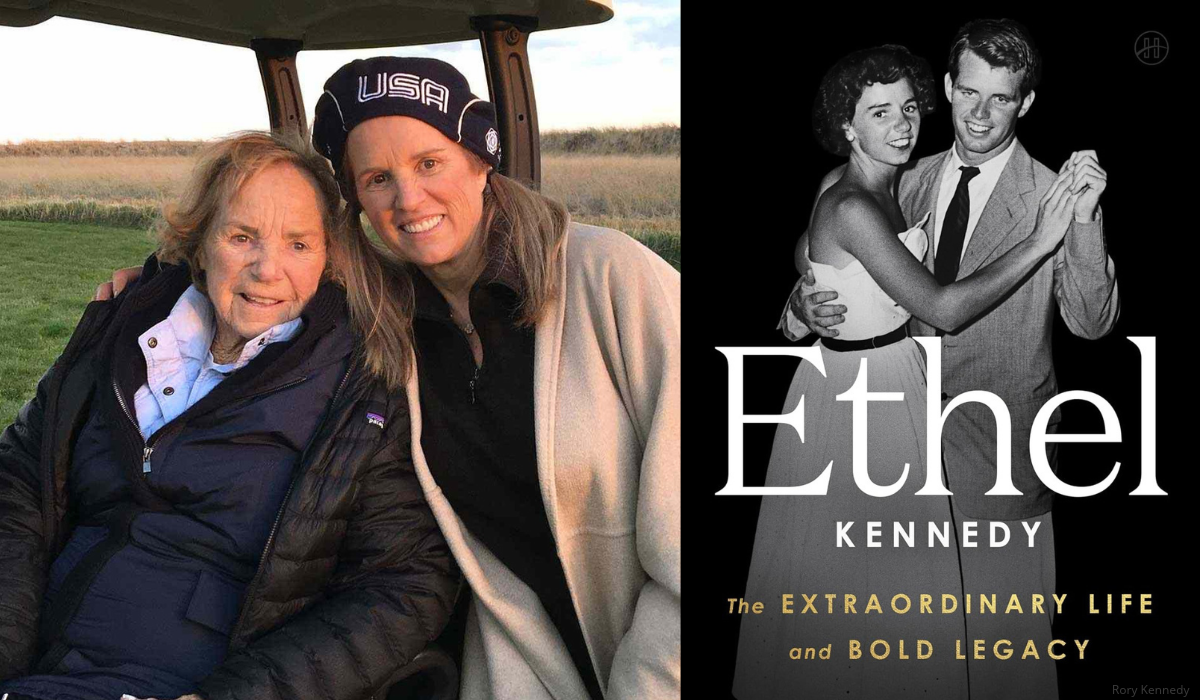
Now, we can see the countless more layers of Ethel, who died in 2024 at 96. In her new book, Ethel Kennedy, her daughter, human rights lawyer and activist Kerry Kennedy, blends personal reflections, family memories, and stories from her mother’s private papers to shed light on a woman who contained multitudes. The book follows stories of defiance and speaking up in the face of injustice, with moments of hilarity and folly. It is as much a moving portrait as a rallying cry to live life to the fullest, no matter the obstacles.
“I'm thrilled people will get to know my mother in a way they haven't before,” Kerry Kennedy tells The Sunday Paper. “It’s a story that is relatable in many ways, full of fun and laughter, as well as the seriousness of pain and trauma.”
A CONVERSATION WITH KERRY KENNEDY
Kerry, you write about how your mother was “courageous, curious, resolute, compassionate, athletic, and poetic, with huge helpings of humor and heart.” Will you tell us more about Ethel’s huge helpings of humor?
One of my earliest memories is going to the Justice Department when my father was Attorney General and J. Edgar Hoover headed the FBI. Hoover had said the two biggest threats to America were Martin Luther King Jr. and Robert F. Kennedy. My dad was his boss then, so my mom would always take us to see Daddy, then down to the bottom of the Justice Department, and then over to the FBI buildings to watch the shooters at practice. One day, we did all that, and as she gathered up all the kids, she saw a little suggestion box, so she wrote a suggestion and put it in. An astute FBI agent took the suggestion and brought it to J. Edgar Hoover, who immediately sent it back to Daddy's office. When we walked in, Daddy was reading the suggestion, and it said, “Get a new director.” She was defiant and funny.
In Washington, DC, the main highway to the airport is the George Washington Parkway, where one of my favorite sculptures stands: an enormous wave. On Halloween in the 1960s, my mother climbed to the top and put a surfboard on the wave—totally anonymously. She was just always doing these funny things.
Your mention of going to the DOJ shows how rare that was in those years, when husbands usually kept work and family separate, as you write about. But your mother was never constrained by social norms. What have you learned from her defiance?
The big television show at that time was “Father Knows Best,” and it was about a father who went off to work, while the wife lived in a completely different world, taking care of the children. That is how much of America was divided at that time. But not my parents. My parents had a real partnership, and I think it was because of my mother's courage, her adoration of my father, and their ability to work together that he was able to be so successful, because he was kind of shy and bookish. She really brought out the best in him.
In the 1950s, my father investigated an organized-crime infiltration of the Teamsters Union. A New York Daily News journalist was also investigating this, and somebody threw acid in that journalist's eyes and permanently blinded him. A few days later, my mother got an anonymous letter saying, "Your children will be next.” That day, she gathered her children to watch Daddy's hearing in the United States Senate, with the kids sitting in the front row. She had that kind of defiance and bravery in saying, ‘You cannot intimidate me, and you cannot intimidate my husband.’ She had a comfort level with confrontation that was very, very unusual for people in general. That's why so much bullying happens: the rest of the gang doesn't want to confront, so they let it happen. But she was never like that. I saw it when she spoke to the dictator in Kenya, Daniel arap Moi. I saw it in Caracas, Venezuela, when she spoke to Fidel Castro, who was there from Cuba. I saw her do it in Haiti and in Mexico. She would never let an injustice stand. She was going to stand up.
What is also fascinating in the book is how she did all these incredible things but never spoke about them publicly.
She would not talk about herself at all. Not about her private life or public life. She was going to do these things, but she didn't necessarily do them in front of the camera. She did not do it for the accolades. She did it because that was the right thing to do. She felt she had the wherewithal and capacity to do it, which I think is one of the most important lessons of her life.
She died in 2024, and three United States presidents showed up at her funeral, along with Stevie Wonder, Sting, and Kenny Chesney. Who was she? She was not a cabinet member. She wasn't a United States senator. She wasn't a social media influencer. She wasn't a well-known journalist. She wasn’t an actor people know. She was a woman who, when she saw something wrong, wanted to do something about it. And she was also fun and funny and charming and fabulous.
I remember going with her to the White House when she had a wonderful relationship with Bill Clinton and Hillary Clinton. A nun was protesting outside the White House, and the next day she went and sat with the nun. She could hold both in her hands at the same time, and I think so many people feel you have to be on one side or the other. But that wasn't how she walked through life. And I think so many of us, especially women, but so many of us in general, think about all the reasons I can't. That wasn't the conversation going on in her head. Her conversation was, “That's wrong. I'm going to do something.”
How has witnessing your mother’s gumption inspired your work as a lawyer and as a human rights activist?
It’s been such a wonderful ride for me. My relationship with my mother went through several different stages. When I was a kid, she was a mom and a general. She had 11 kids to raise. Lunch was at 1. Dinner was at 7. Everybody lined up not at 6:59, but at 7. All us kids lined up, and we showed her our fingernails, our face, our clean shirt, and our brushed hair; if one of those was off, you were excused to change and come back down. Then dinners were very prescribed. We went around the table, talked about a current event, played a history game and a spelling game, read the Bible out loud, said our prayers, and were excused.
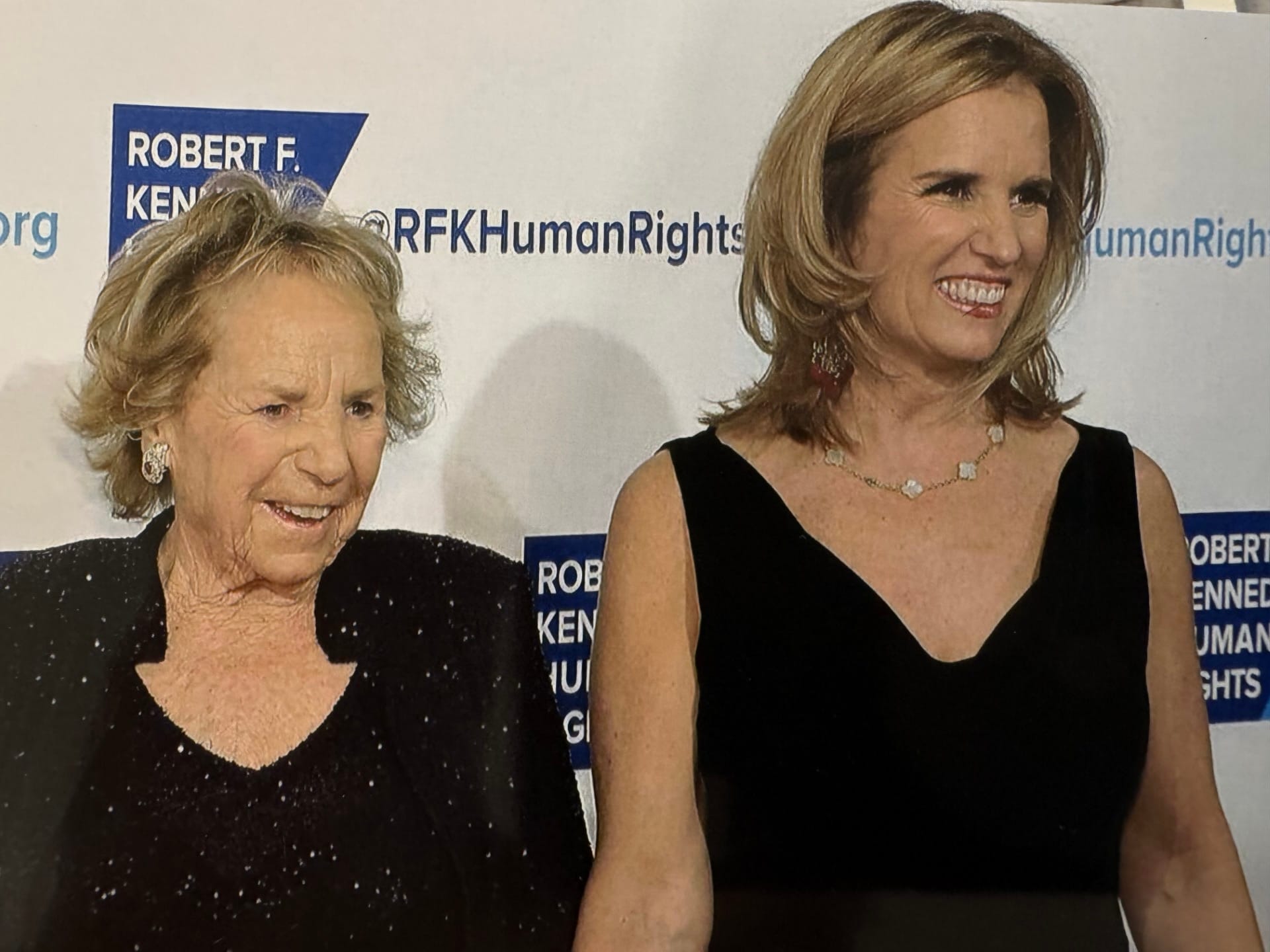
Later, I graduated from law school, and I knew I wanted to work in human rights. I wanted to do it at what was then called the Robert F. Kennedy Memorial [later the Robert F. Kennedy Human Rights Center and then the Robert & Ethel Kennedy Human Rights Center], and she welcomed me, and she mentored me. She wanted to make sure I understood how she wanted things done. We spoke two, three, four times a day. Then, at one point, she stepped back, and I took over; the transition was seamless.
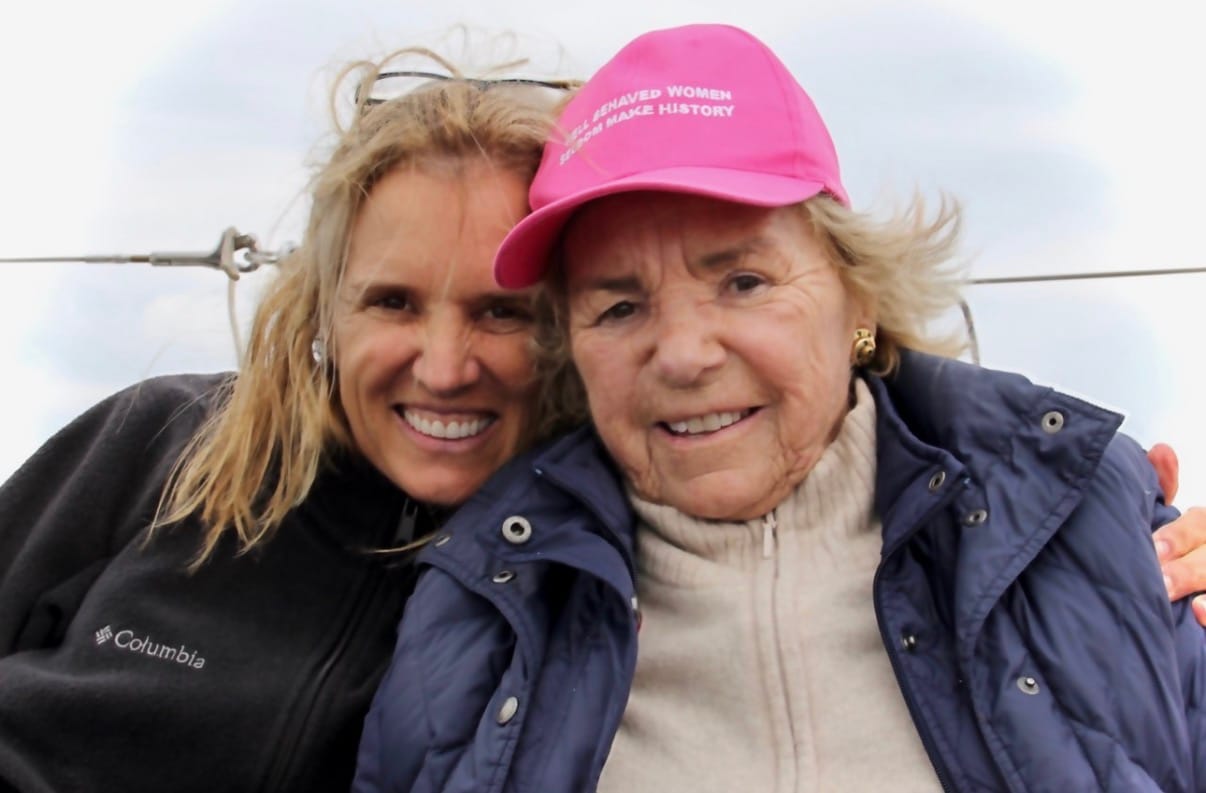
Then, in these last years, during COVID, she moved to Hyannis Port, and I lived there full-time, so I got to have dinner with her almost every night. And I realized, during that time, it was the first time I had dinner alone with her in my whole entire life. How about that? She was always surrounded by people, which was great, fun, and wonderful. But in those last years of her life, in so many ways it was so special and meaningful. It was a whole other dimension to our relationship.
As you worked on the book, did you learn anything new about your mother, or something that surprised you?
What I find so interesting is how you hear these stories as a child, and they roll off your back because you hear them again and again. You don't really reflect on them because you've already heard them. They're sort of ingrained in you. But then you go to write them down, and you say, wait a second: How did she do this? She told this story so many times, and people would roll on the floor when she told it, but these stories were just so extraordinary. She kept everyone going; she kept everybody going.
You write that this book is like a Valentine to your mom…
I hope so. I hope so.
What do you hope readers take from your mother’s story?
I hope you feel a sense of the capacity of true romance to transform lives and the world. I hope it helps people deepen their sense of faith, because that's really what got my mother through her trauma. And I hope they walk away saying, ‘If she could do it, I could do it.’
When my own kids, my twins, were two years old, and we were living near each other outside Washington, my mother would call me up and say, ‘There’s a protest at the Chinese embassy. Want to go?’ So she was just like that. She wouldn't miss a chance to be out there, using her voice and her body to make the world more just and peaceful.
Our country is in such turmoil right now, and so many people feel a lack of agency. I think one of the book's most important messages is that we all have agency. Just go out there and do it.
Kerry Kennedy is a human rights lawyer, activist, and New York Times bestselling author. She is the president of the Robert & Ethel Kennedy Human Rights Center, the organization Ethel founded in 1968 to continue Robert's unfinished work, and served as chair for the Amnesty International USA Leadership Council for over a decade. During her forty years working in human rights, she has led hundreds of delegations and negotiated with leaders around the globe.

Please note that we may receive affiliate commissions from the sales of linked products.