My Son Opened My World to What Matters
There was a time when my life fit neatly inside a map I had drawn for myself.
I was a lawyer in Chile, working in the judiciary, in a world of rules, procedures, and predictable careers. I knew who I was there. I knew what came next.
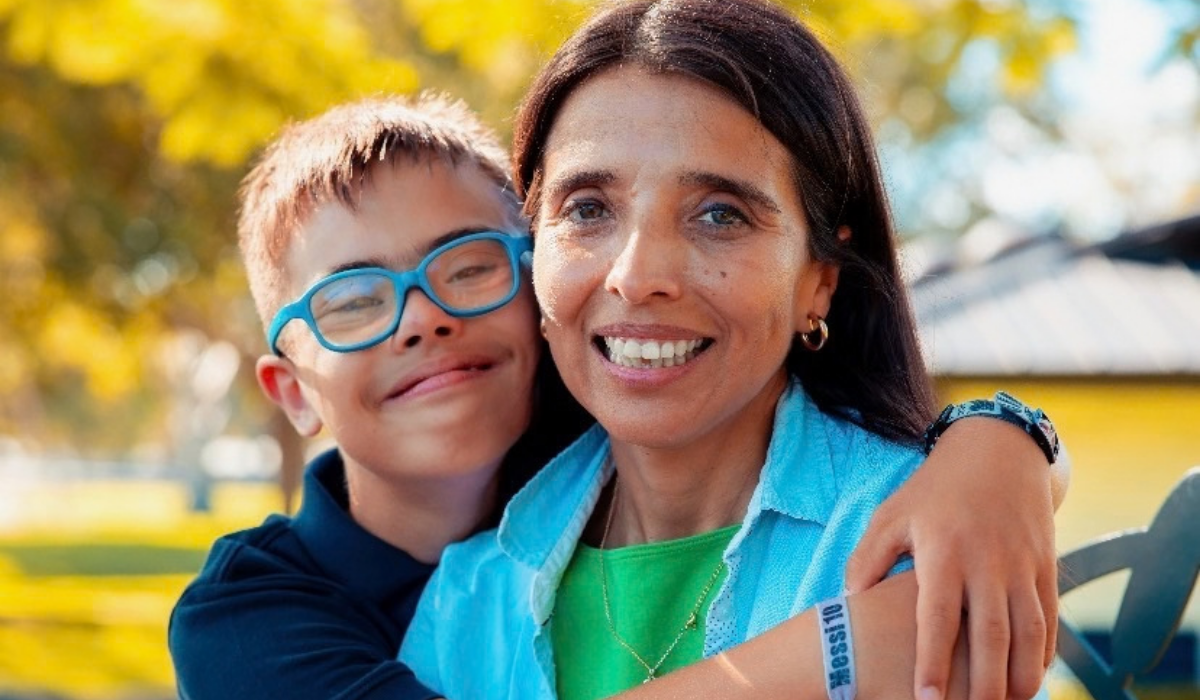
Then Noah came into my life.
Noah has Down syndrome.
He showed me that I had a lot to learn, and even more to unlearn: ideas about achievement, independence, and success I had absorbed long before my son was born.
Noah, simply by being Noah, made me question these ideas.
He opened my world to what mattered.
Leaving the Map Behind
Leaving your comfort zone became our way of life.
We left Chile for California. Then we moved to Scotland. Eventually, we returned to the United States and made a home in Miami.
Each move meant more than a new address: a new school system, new services, new rules, new people. I became a student again, an immigrant again, a stranger again—and each time, I had to explain Noah to people who did not know him yet.
Our family was changing too. Noah’s father became less present in our daily lives, and more and more of the responsibility for navigating Noah’s world fell on me.
Then came that moment in a New York airport.
I was traveling for work. Somewhere in that airport, I said goodbye to my father for the last time. He was dying, and I could not be with him. When it was over, I stood in the middle of a terminal full of people rushing somewhere, with Noah beside me, and one thought arrived:
It is just the two of us now.
I had always been proud of being the person who could handle everything. Standing in that airport, I realized that I no longer could.
It took me a long time to understand that this did not make me weak; it made me human. And even longer to understand that the answer—our answer—would not be more strength. It would be other people.
The People Who Appeared
During our early days in Miami, the homeroom teacher at Noah’s new public school waited for me at the entrance and asked me to take Noah out of his class. He said he didn't know how to teach a child like Noah. He was afraid.
I didn’t argue, and I didn’t take Noah anywhere. Noah stayed, and over the months that followed, he showed his teacher who he was.
But something else happened during those years. People appeared.
Teachers who saw Noah before they saw a diagnosis. Parents who understood without needing a long explanation. Neighbors, colleagues, advocates, mentors, people who began as strangers and stayed.
At one point I signed Noah up for a new activity, thinking I was simply looking for something for him. Instead, I found something for both of us.
Normally, when Noah enters a new place, part of me is immediately alert: Will I need to explain? Will he really be included? This time, nothing needed explaining. He was simply Noah. And I could simply be his mother.
It took me a while to name it: We belonged.
That room became one of our happy places, the rooms where neither of us has to advocate in order to be welcome, where families like ours are not explained, but expected. Rooms like that give energy back instead of taking it. They take care of you. Once you have known one, you want every family to have one.
I had spent years worrying that Noah might one day be alone in the world. I did not realize that, for a time, I was the one who felt alone, and that Noah would become one of the reasons I found my way back to community.
As I rebuilt my life and reorganized my career, many of the people who helped me arrived through doors Noah, without knowing it, had opened.
Nothing to Overcome
Noah is a teenager now, and he has plans.
He is going to have a girlfriend. He is going to get married and have children. He is going to travel the world.
He doesn’t present any of this for my approval. He informs me. Nobody prepared me for the day my son would calmly brief me on his future wedding.
His certainty sent me to do what I always do: research. And I discovered that the lives Noah imagines are already being lived; adults with Down syndrome fall in love, marry, work, travel.
But Noah didn’t need the research. I did. He understood before I did.
His future belongs to him. My job is to help create the conditions for him to write as much of it as possible himself and, more and more, to make sure other people listen when he speaks for himself.
I don’t want Noah to spend his life proving that he deserves to be included. I want him to grow up knowing that he belongs.
Holding Doors, Letting Go
For years, I measured progress by the doors I could open for Noah. But inclusion cannot depend on having a mother who knows which door to knock on, or has enough energy to keep asking after the fourth “no.” That isn’t inclusion. That is access by persistence.
So, little by little, I began finding myself on the other side of those doors.
That is why, when I learned about Eunie’s Buddies, a pioneering program within the Best Buddies Family Support initiative.
I did not join looking for help. I joined to offer it. I signed up as a parent mentor, and today I walk alongside parents at the very beginning of this journey: expecting a baby, welcoming one, or holding a brand-new diagnosis at the exact moment when the future suddenly looks unwritten. I remember that moment. I cannot give them a map—I have learned there isn’t one.
But I can say: I know what this feels like. Let’s figure out the next step.
For a long time, I thought caring for Noah meant being the strong one. In so many families like ours, the daily work of care falls to women, and we rarely stop to ask who is caring for us. That is what Eunie’s Buddies understands: families need care too. That care is not always a service or a solution. Sometimes it is another parent who listens without judgment and reminds you that you do not have to figure everything out alone, another parent who can say, “I understand. I have been there too.”
And mentoring is not a one-way relationship. Every family I meet teaches me something; we share so many hopes, fears, and joys. Eunie’s Buddies has given me a stronger sense of community too, the very thing I once believed I had to build alone.
What We Make With What We Have
I used to think strength meant needing no one. I don’t anymore. Noah did not teach me that people with disabilities need community. He taught me that we all do.
These days, Noah talks less about what he needs from me and more about what he is going to do without me. One day, he tells me he is going to leave. He will travel the world with his girlfriend. Apparently, I will stay here with my work and my people.
He isn’t asking permission. And he doesn’t seem particularly worried about me.
He is right not to worry. The mother he is planning to leave is no longer alone in an airport. She is surrounded by the people we found, and the people we chose, along the way.
I spent years making sure Noah would never be left behind. It never occurred to me that it might end with him leaving first, on purpose, happily, toward a life of his own. That isn’t loss. That is what we were working toward all along.
Noah and I are still opening doors and discovering what is possible. Eunie’s Buddies reminds me every time that we don't have to open every door alone.
The map I once drew for my life is long gone. But some of the things I am proudest of began when we stepped outside it.
Our life is complicated, unfinished, sometimes exhausting, and full of possibility. It doesn’t look the way it was supposed to look.
It looks like ours.
And more and more each day, it looks like his.
Lorena Zenteno Villa is a human rights lawyer, former judge in Chile, and disability advocate based in Miami. She is the mother of Noah, a teenager with Down syndrome, and a dedicated parent mentor with Eunie’s Buddies, a new Best Buddies program, where she supports and empowers families navigating the disability community.
Sunday Paper Readers: The inaugural Best Buddies Family Forever Conference will take place on October 16th & 17th in Columbus, OH. This gathering brings together parents and caregivers of individuals with intellectual and developmental disabilities to feel seen, supported, and empowered at every stage of their journey. If you’re interested in attending, you can find more details here.
Please note that we may receive affiliate commissions from the sales of linked products.