Now Is the Time to Use Your Voice

“The probability of strikes on U.S. soil is now high.”
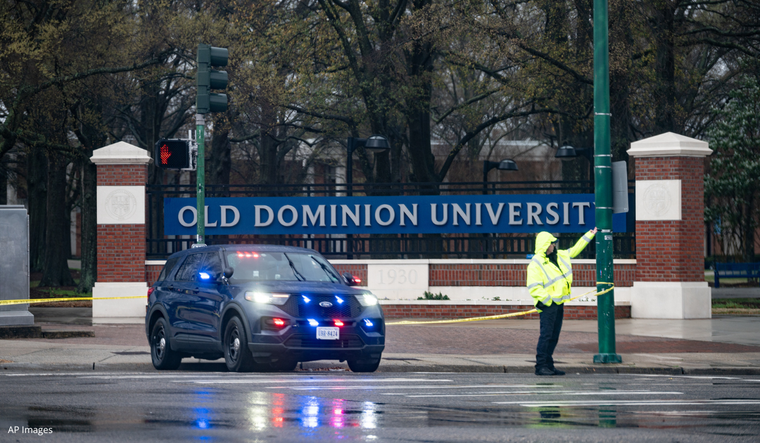
Those words, spoken by a counterterrorism expert and former FBI agent last week, stopped me cold. Reading that headline over my morning coffee jolted me awake. Obviously, it’s not the kind of sentence anyone wants to read over breakfast. It’s the kind that makes you pause, read it again, and wonder if the world suddenly became more dangerous than it was yesterday. It certainly feels that way.
Moments like this remind us how fragile our sense of normalcy can be.
Tonight, the Oscars will take place in Los Angeles—a glittering gathering of the entertainment and artistic community. But in the days leading up to the event, I’ve spoken to several friends who quietly admitted something surprising: they are afraid to attend. They fear the unknown. Sleeper cells. Impending drone attacks here in California. And the sense that the world is entering a far more volatile chapter. They are not alone. Friends tell me they no longer want to attend sporting events, movies, concerts, or even go to the airport. People feel understandably uneasy.
Meanwhile, gas prices are soaring. It’s over $6 here in Los Angeles! And there’s no end in sight. Food prices continue to climb. Rumors swirl about a possible draft. Political leaders send mixed messages about whether we are at war, while also reporting that the cost of the first week of this conflict exceeded $11 billion. Let that sink in: eleven billion dollars for a single week!
Then there are the images of young servicemen and women returning home in coffins. These sobering scenes remind us that regardless of what we call this conflict, lives are being lost. It certainly looks like war, it reads like war, and it feels like war. And it feels as though none of us were consulted about it.
It is hard not to feel disoriented. Even if we can’t quite articulate it, many of us feel a deep uncertainty. We do not fully understand the mission, what success looks like, or what the exit strategy might be. We don’t know how long this will last. And all of this comes from a man who ran on a platform of ending wars.
Perhaps it’s fitting that we find ourselves in the month of March, which is a time Americans often associate with March Madness. Usually, that phrase belongs to basketball courts and tournament brackets. But lately, it feels as though the madness is not confined to sports arenas. It feels like it’s everywhere.
Those in Iran fighting for their human rights are understandably angry. Jewish communities close to home and around the world are fearful and outraged as they confront renewed threats to their safety. Palestinian families struggle in plain sight for food, water, and security. Ukrainians continue to defend their homes while Russian families grieve sons lost to war.
And here at home, many Americans feel their own frustration as they try to make ends meet in an economy where groceries, housing, and healthcare stretch household budgets to the breaking point. Everywhere you look there is tension. Anger. Fear. Uncertainty. It can feel, at times, like a kind of global madness.
In times like these, it is easy to feel powerless. But we are not. War, or the threat of it, is no small matter. It is not a decision that should unfold without the clear understanding and support of the people it affects. Decisions about war should never be made in silence while those who bear the cost remain quiet. And that is exactly why thoughtful voices—calm voices—matter more than ever.
I know speaking up can feel uncomfortable. Social media has turned every conversation into a battlefield of opinions where saying the "wrong" thing invites attack. Who wants to subject themselves to that? But using your voice doesn’t have to mean shouting. Sometimes it simply means asking thoughtful questions at your dinner table, among your friends, or within your community.
Questions like:
• What do we believe?
• What are we willing to sacrifice?
• What outcome are we hoping for?
Decisions are being made with or without our input, and silence is its own form of input.
CNN commentator Van Jones recently spoke about a “gray war”—a conflict fought not with tanks, but with information. He noted that in this kind of war, people can be pulled into narratives that serve neither their country nor their values. Post by post, we are nudged into camps that divide rather than unite. Most people don’t even realize it’s happening, which is why thoughtful voices matter now more than ever.
Last year at the Screen Actors Guild Awards, Jane Fonda spoke about staying connected during difficult times: “We must not isolate. We must stay in community. We must help the vulnerable. We must find ways to project an inspiring vision of the future.”
That message feels just as vital today. We must speak up and stay in community, for that is where our strength and hope reside. We must also remember what we are speaking for: peace, human dignity, and a future better than the present.
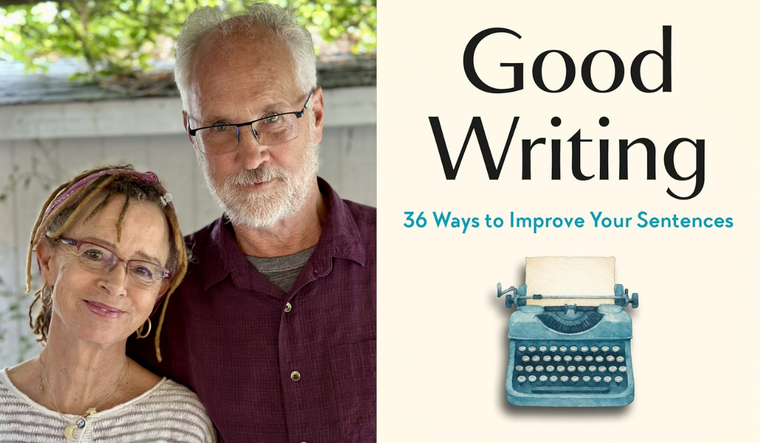
History reminds us that profound change rarely begins in government buildings. It begins with ordinary citizens who decide to speak and write. Those who let their voices rise above the noise. That is why I’m honored to have advocates Shannon Watts and Katie Paris writing in today’s paper about using your voice for social change, alongside my dear friend Anne Lamott, who has a new book out with her husband, Neil, on finding your writer’s voice.
Both pieces speak to this moment. They remind us of the power of the collective. The power of "us." Using your voice allows you to shed powerlessness and remember the many figures throughout history who brought about change in a calm, consistent, and centered manner.
The other day, I wore a T-shirt to the gym with Gandhi’s face on it. A young man asked me who it was and when I told him, he looked puzzled. He wasn’t sure who Gandhi was or why someone would wear his image. The moment stayed with me.
I explained that Gandhi used nonviolent resistance to lead India to independence and inspired civil rights movements worldwide. His work is an important reminder that this style of resistance is not a thing of the past.
Time moves quickly, but history moves faster. Unless we continue telling the stories of those who stood for peace and justice, those voices will fade. It is our responsibility to carry them forward in our conversations and our courage.
History is not only something we remember. It is something we create. Sometimes the most powerful force in the world is not violence, but the quiet courage of ordinary people who choose to speak with clarity, conviction, and hope. Because when enough voices rise together, that’s when the course of history changes.
Prayer of the Week
Dear God,
May we find the courage to raise our voices in a chorus of peace, trusting that our collective light can guide us through the uncertainty of this moment.
Amen.
Also in this week’s issue:
• Anne Lamott and Her Husband Neal Allen Want to Be Your Writing Teachers
• We Gather Women to Create Civic Change—but That’s Only the Start to the Magic We See
Please note that we may receive affiliate commissions from the sales of linked products.