What Animals Can Teach Us

A weakling.
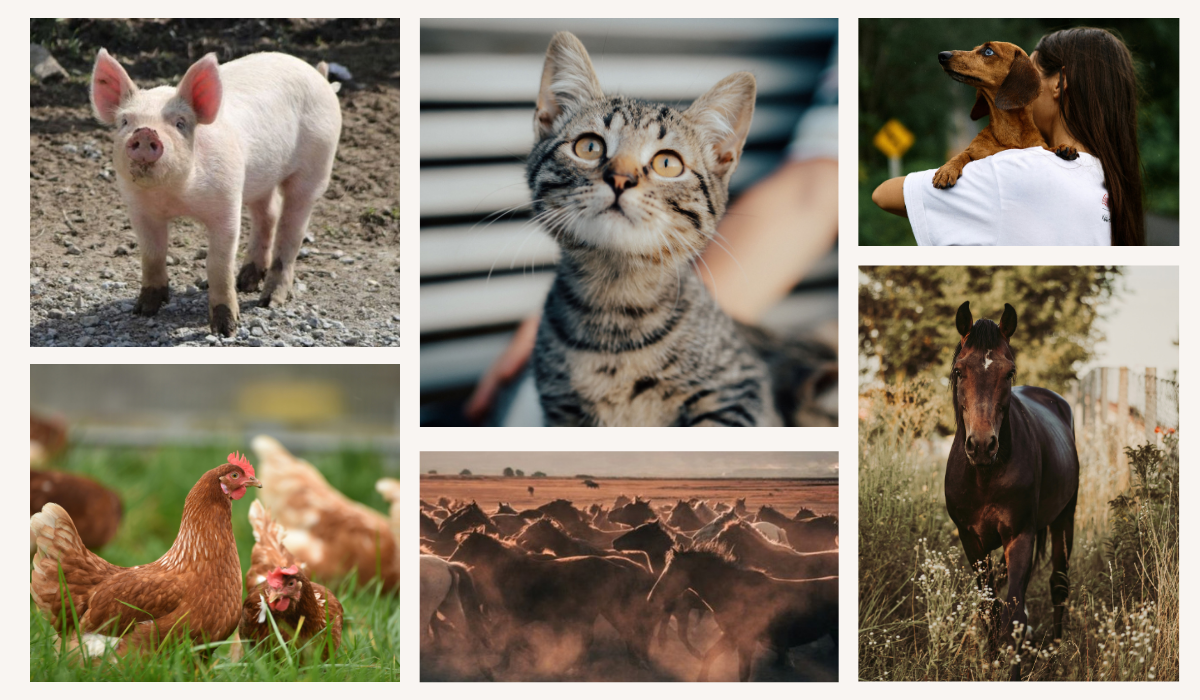
That’s what has won countless hearts: a runt piglet described as a “weakling” and “no bigger than a white rat.”
His name, if you haven’t guessed, is Wilbur. He’s the star of the novel Charlotte’s Web and one of literature's most beloved characters.
Consider your favorite books: How many revolve around a being like Wilbur, a creature with a colossal spirit and a gift for living in the present? For me, most of the stories that have altered the interior of my heart focus on animals, and I know I am one of many. The numbers alone support my point: Charlotte’s Web has sold more than 45 million copies to date, and Seabiscuit, over 3 million, to name just two examples.
Even more telling than numbers is anecdotal evidence. The hope found in wiggly noses, furry coats, and wild eyes—on the page and beyond—show how deeply animals move us. Ask the hardest person you know about reading Old Yeller, The Elephant Keeper, or The Art of Racing in the Rain (my mother’s favorite), and you’ll see tenderness take over. The same goes when you ask someone about their pet or favorite creature to spot in the wild.
Animals speak to our souls.
They unlock our hope.
They crack our vulnerability.
They pull us out of our AI-fueled haze.
Animals show us how to live.
So the question is this: If animals move us so much, why do we still fail to learn their lessons?
A Language Beyond Words
For author Pam Houston, animals have been more than a meaningful part of her life. They’ve been integral to her becoming.
“They're so central to me,” she tells me over Zoom from Iceland, where she spends much of her time. “And to my memory of a place or my memory of a person. It’s always bound up in the animals that were there.”
Houston’s work shows her reverence for nonhumans, and that reverence keeps returning to the page. Her books—which include two novels, two short story collections (including the forever favorite Cowboys Are My Weakness), and several nonfiction titles—lend stunning clarity to darker human experiences like loss, abuse, natural disasters, climate change, and heartache. Her phrases make those hard parts of being human more accessible.
But it’s the animals in her narratives that have inspired me to enter new emotional portals.
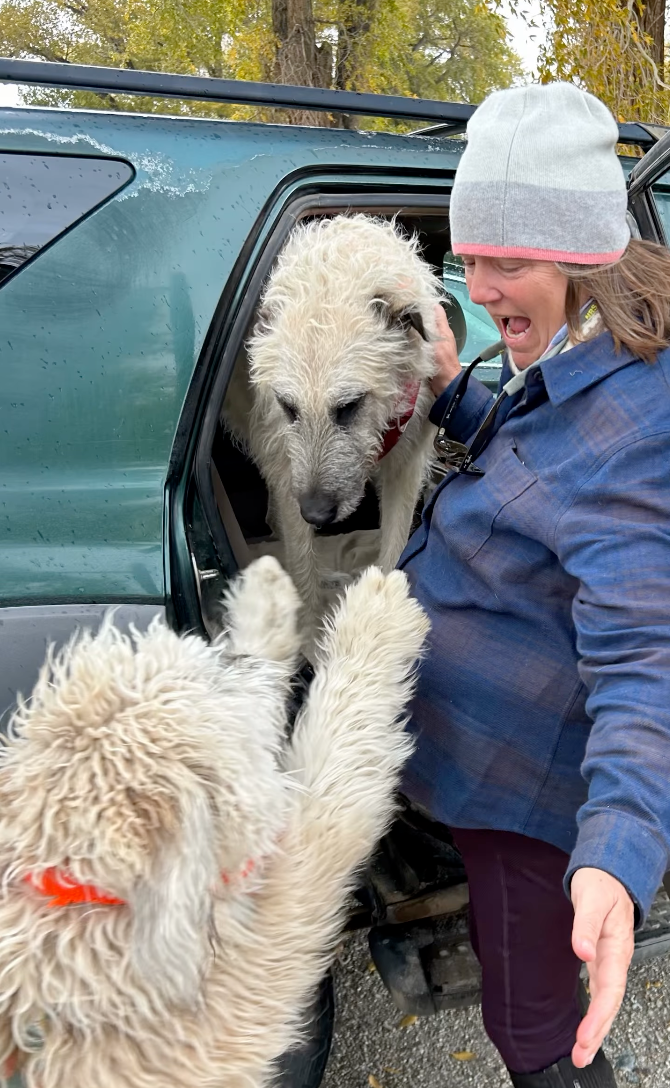
Take Deep Creek, her 2019 memoir about living on a 120-acre ranch in Colorado. When my friend Rachael sent me the book a few years back, I tore through it in a few days. Houston’s essays about navigating colossal wildfires and finding herself in America’s West helped me sit a little taller. But her stories about her beloved Irish wolfhounds teasing her mini-donkeys, and her chicken Martina who “laid the most delicious egg you ever tasted each morning”? Those gave me new reasons to believe in this life.
“They’re my kins, they’re my friends,” says Houston. “They're my models and my teachers.”
In keeping with that sentiment, they’re also the main subject of her new book, Animals Taught Me Everything. It’s a raw, rich, and at times hilarious collection of essays about Houston’s life and the lessons she’s learned from the creatures she’s homed and crossed paths with in the wild.
The book’s wisdom is vast. Houston weaves together what other species have taught her about how to love (”unconditionally” and “joyfully” and “waggingly”), how to make a day better (”go outside”), and how to hope against all odds (”Ask any dog who sits beneath a dinner table on steak night.”). In each case, the animals’ remind us that the simple things make a good life, while the trivial things get in our way.
This is evident in how we communicate. Humans hide behind words, shielding emotions and botching what we really want to say. Houston says she loves international travel because language barriers reduce this hiding, stripping communication down to its essentials. The same goes for connecting with animals. It’s pure and honest, and “less burdened by our desire for protection or to sound smart,” she says.
Houston tells me that earlier that day, she was riding her horse, Óski, when they came upon some loud steam vents. Óski got scared and didn’t want to go past them, so Houston moved her body on top of him to ease his angst.
“I had to keep telling him, ‘I believe you're safe, and I respect your fear.’ That's what I had to communicate to him in that moment, with my hands, my seat, my legs, my voice.”
She listened, and he listened; eventually they moved forward, beyond the vents.
“That’s what animals give us: a kind of communication that is intuitive and bodily,” she continues. “And a turning back to things you can pet and touch and smell. They activate all of our senses, in a way that a computer screen absolutely can’t.”
Deep Intelligence
Perhaps humans’ biggest flaw is thinking we’re superior. We act as though we’re the species deserving of all the natural resources and space. This mindset has gotten us into a pickle, as we see precious Earth deteriorate, animals suffer, and, in many ways, our quality of life plummet.
This thinking has also led us to believe our capacity for acquiring knowledge is greater than any other animal's—an assumption worth rethinking, says legal scholar Cass R. Sunstein.
“With dogs, there are things they will see and hear and smell that are invisible to us,” he tells me over the phone. “If we look at the whole universe of animals, sharks can sense things that we can, so can sea turtles. Snakes and pythons get thermal radiation; I certainly can't do that.”
Sunstein underscores humans’ brilliance. Our minds and bodies are incredible in what they can conceive and produce, and we have “capacities that no one else has.” But we’re not the only ones.
“Pigs have some capacities that are quite amazing,” he continues. “Chickens can do some amazing things.”
The key is that we need to listen and give reverence to animals’ incredible capabilities. When we do, it “leads us to have more respect, more kindness, more of a sense of commonality, even,” he says.
It also opens our worlds to deeper humility and wonder.
Sunstein has long worked to help people open their minds and make decisions that improve their quality of life. He founded and directs the Program on Behavioral Economics and Public Policy at Harvard Law School and previously served as head of the White House Office of Information and Regulatory Affairs under President Obama. In his 2009 book Nudge, which he co-authored with Richard H. Thaler, he offered simple, accessible ways to “nudge” people toward decisions that better consider the well-being of days, our society, and the planet.
While humans have been at the more obvious forefront of Sunstein’s work, all species have always been on his mind. He says he’s worked on animal rights and welfare issues for roughly 20 years, and in the past has met “a storm of horror, including death threats,” from those opposed to his ideas, which quieted his efforts for some time.
But these days, he’s getting loud again. His forthcoming book, Animals Matter: The Case for a Kinder World, argues that we humans not only need to change our practices to reduce animal suffering, but we must also work to advance their well-being.
“In recent years, I've just noticed the suffering and abuse of nonhuman animals is all around us, and I thought, what am I doing here?” he says. “To be deterred because people get mad is not the right idea. In 100 years from now, the mistreatment of animals will be regarded, in all probability, as a shame. And the sooner we do better, the better for our fellow creatures.”
And the better for us humans.
To Really See the Truth
More than a decade ago, I interviewed Ike for a news story. A military veteran who became fully disabled after serving in Desert Storm, Ike had grown despondent. His injuries caused him to lose any desire to go out or take care of himself.
Then came Bernie. A goofy, bright-eyed service dog, Bernie gave Ike a reason to believe and a sense of purpose. During the darkest moments when Ike wanted to crawl into bed, Bernie asked for a walk or a potty break. He offered licks and companionship.
Bernie was Ike’s savior.
“You can’t give up, because they need you as much as you need them,” Ike told me, as he hugged Bernie in his lap. “And that’s what it’s all about to me.”
Ike’s story sheds light on what animals give us: a reason to be in the world. They remind us that our necessities—fresh air, freedom to move, a full belly, tenderness—are both critical and abundant with pleasure.
So why do we rob ourselves of this lesson? Instead of burying ourselves in computers and destructive ways, how do we learn more from the creatures around us?
As I type these questions, I look over at my snoring mutt, Andi MacHowl. She’s starting to stir; her little cinnamon roll body knows it’s time for her walk—or rather, her sniff, as I bet she would call it if she spoke my language. But she doesn’t speak my language; she has her own, and together, we find our deeper way to communicate, just as Pam Houston reminds me.
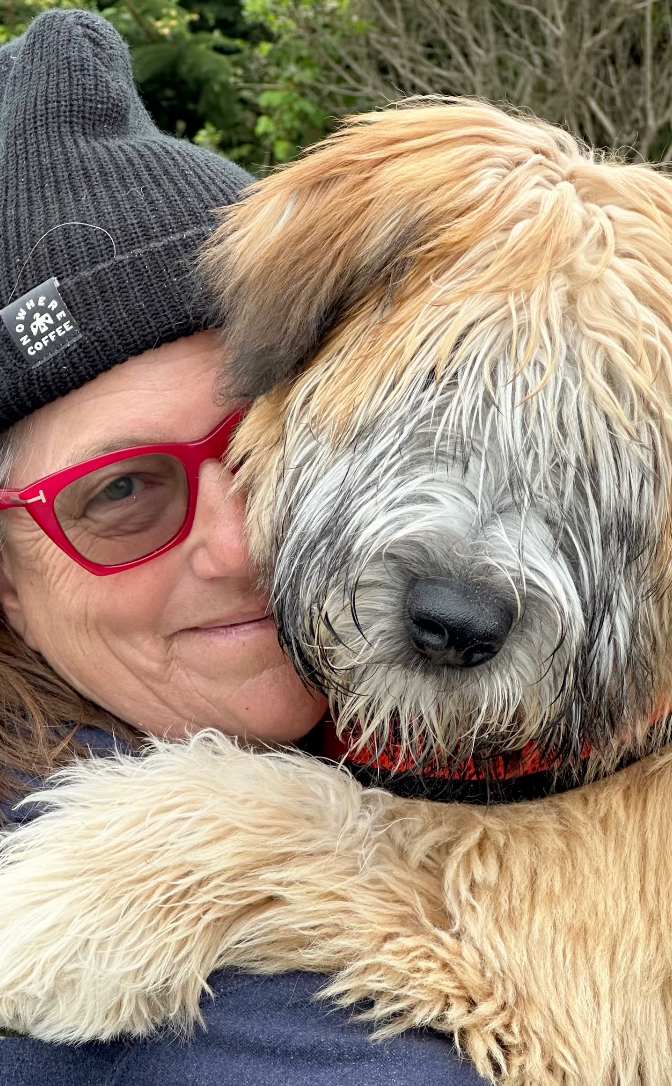
“If we would just listen,” Houston says again. “They could be our teachers.”
Cass Sunstein credits his two dogs, Finley and Snow, for being his teachers. They’ve reminded him to reassess his priorities, he says, and that “to go on the trails is a great thing, and to spend a little less time reading some academic paper is not a terrible thing. There are incredible things that can make you smile and make you more at peace that human beings often, including me, pay too little attention to.”
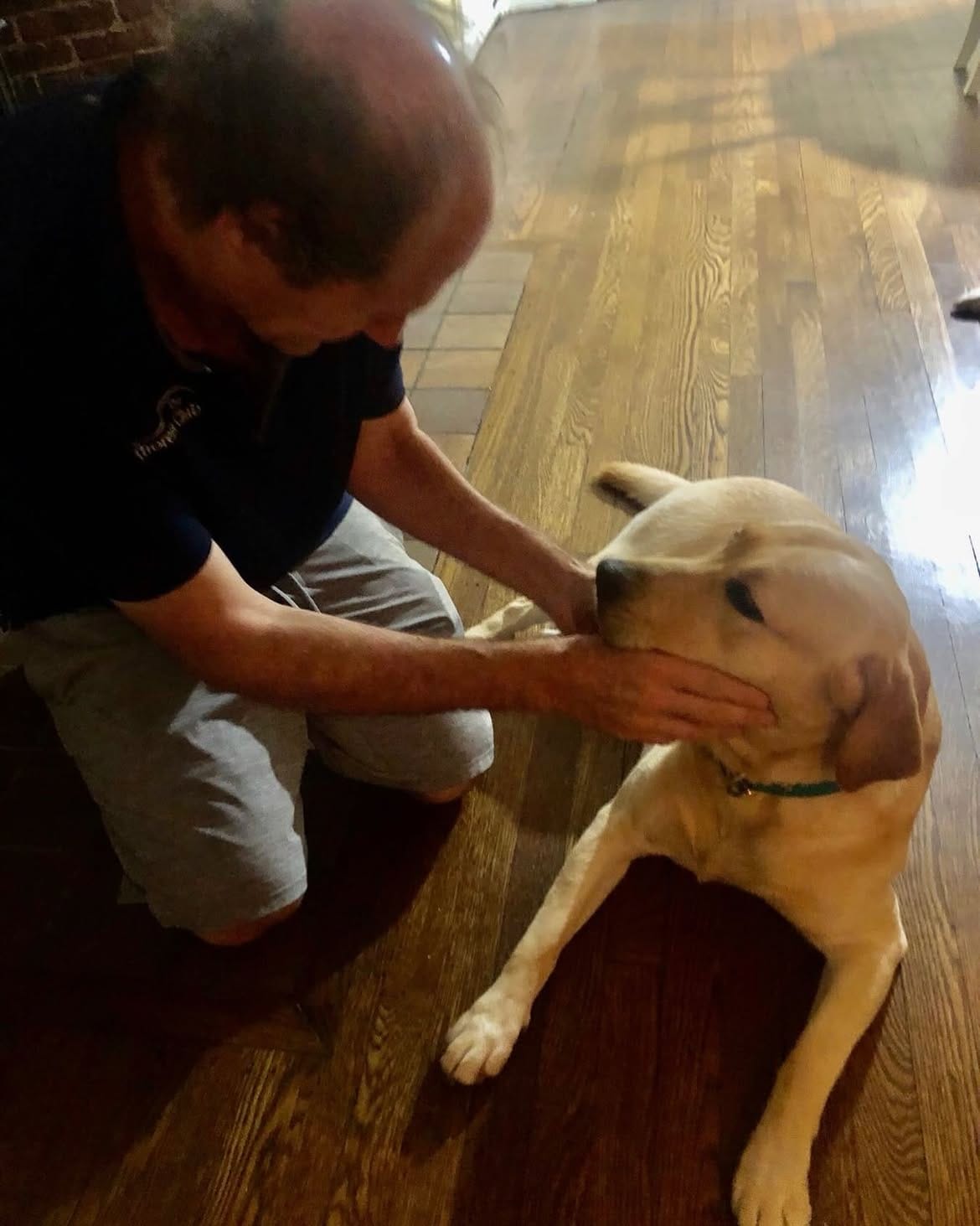
That is the answer our fellow animals give us: pay more attention. Stop overthinking everything. See that different intelligences are at work in beings all around us. Listen soulfully. Read more of animals’ stories in books and listen to their language in the wild. (If you have a favorite animal-focused book, please share it below.)
Animals provide a ministry in our oversaturated world. To really listen to them, whether in our own lives, out in the wild, or on the literary page, is to suspend our spinning minds and remember that we are all fleeting.
It’s to recognize that whether we’re a “weakling” piglet named Wilbur or a floundering human, we all want the same things: safety and warmth, eyes gazing into our own, tender fingers on fur, fresh water and air.
We want to feel free, even for brief moments, with the dazzling truth of who we are.
Featured Books:


Please note that we may receive affiliate commissions from the sales of linked products.