What Happens When Health Conditions Go Unnoticed
For most of my life, I had no idea I was deaf.
I learned to lip-read without knowing there was a word for it. I watched faces constantly trying to fill in the gaps left by the few muffled sounds that did reach my ears. I over-prepared for every conversation and became, without realizing it, my own access system, because nobody had built one for me.
It wasn’t until I was 24 years old that a professor noticed something and referred me to a specialist, and finally, my first hearing aid. What followed was not relief. It was grief. And then, slowly, clarity.
I began to understand that my experience was not exceptional. It was simply one of the most honest versions of something millions of women live every day, quietly, without language for it, without support, and without being counted.
I was born in Pakistan, grew up in Africa, but have called New York home for over thirty years. You might think, with America’s wealth and access a woman’s experience would be different here. In many cases, it is not.
Invisible disability is everywhere.
Hearing loss. ADHD. Chronic illness. Autoimmune conditions. Neurodiversity. Conditions that shape how a woman learns, works, and moves through the world but leave no visible trace. Conditions that get absorbed into labels like difficult, disengaged, non-compliant. Conditions that go undiagnosed for years, sometimes decades, because the systems around us were never designed to recognize them, let alone do anything about it.
I know this because I lived it. And I know it because I have spent years since trying to understand it at scale.
Through a population health survey I launched, we are collecting data from women across Pakistan on their lived health experiences. We started it because this data simply does not exist. You cannot find comprehensive information on invisible disability among women in the Global South. That absence is not an oversight. It is a reflection of who has historically been considered worth counting.
That is what I am trying to change.
Earlier this year, I endowed the Zainab Wadood Chair in Inclusive Systems and Policy Design at Habib University in Pakistan. It is the first endowed chair of its kind anywhere in the world, permanently funding the scholars, the research and the curriculum that will begin to fill this gap, globally. It will ask the questions that have not been asked at scale. It will train the next generation of decision makers to design systems that see everyone.
Not just the visible. Not just those who are currently counted.
I did not endow this program because I had figured everything out. I did it because I spent too many years navigating a world not built for me, and I refuse to let that be the story of the next generation of women.
Gloria Steinem recently joined our efforts, hosting one of her famous “Talking Circles” in her New York apartment. Together, we are opening the discussions, listening to those impacted, and dreaming of what we can build together, for women everywhere.
The architects of change I have always admired most are not the ones who waited until everything was perfect, they are the ones who started building anyway, with whatever they had, toward whatever they could see.
Imagine a world where no girl spends 24 years not knowing what is shaping her life.
That is what I see. That is the world I am building toward.
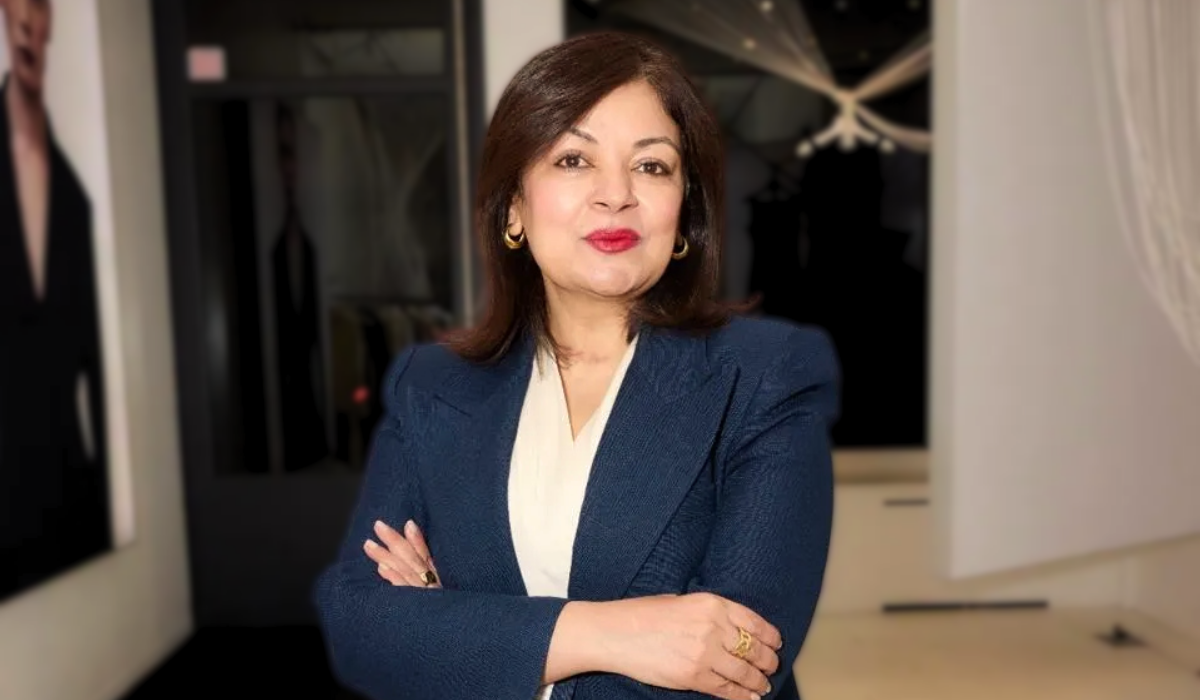
Zainab Wadood is a healthcare executive, philanthropist, and advocate who has led healthcare and benefits strategies for some of the world’s most recognized organizations. Her work combines professional leadership with a commitment to building more equitable, inclusive, and human-centered systems.
Please note that we may receive affiliate commissions from the sales of linked products.