The Surprising Science Behind a Life of Meaning and Purpose

Given the state of the world these days, many of us are wondering: Is it possible to see our way through this mess? Is there a future in which we can feel more connected?
Journalist Jennifer Breheny Wallace is hopeful. But she’s convinced it’s going to take each of us feeling like we’re valued and that we add value to our corner of the world—a psychological concept known as mattering.
“I’ve come to believe that mattering connects us to the best in ourselves and the best in others,” she tells The Sunday Paper. “In this way, mattering becomes a bridge towards connection and a path forward for our disconnected society. Mattering to your neighbors. Mattering to your community. Building a workplace where people feel like they matter. That is how we knit back this fabric that has been torn.”
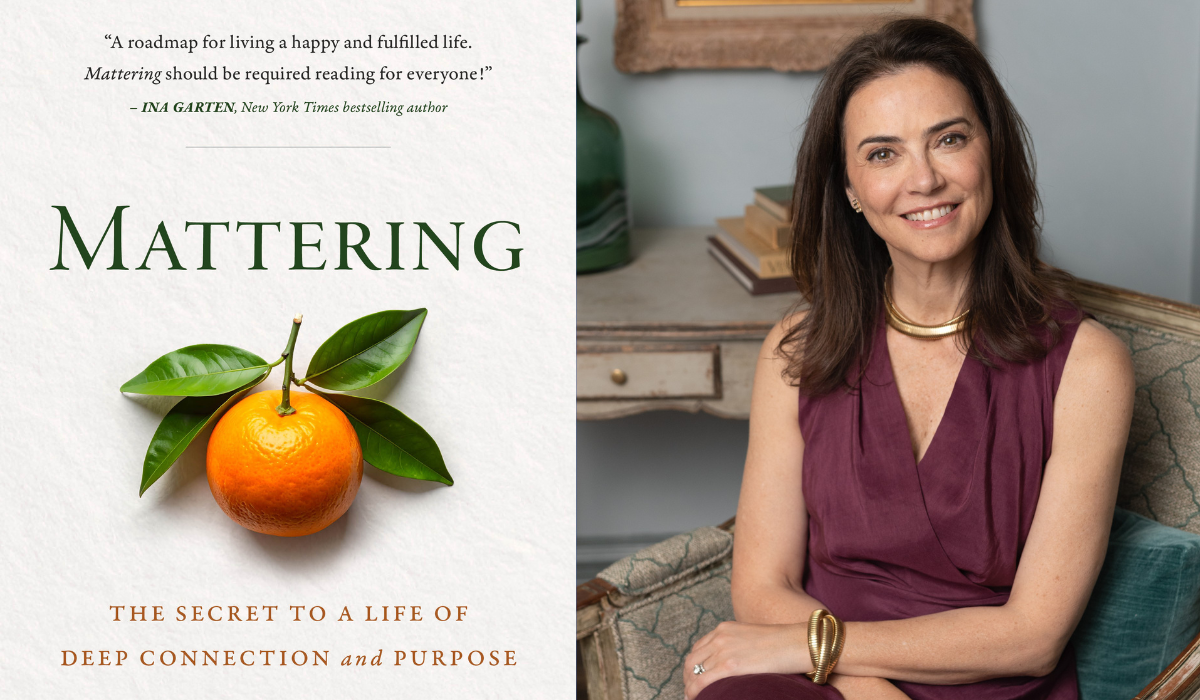
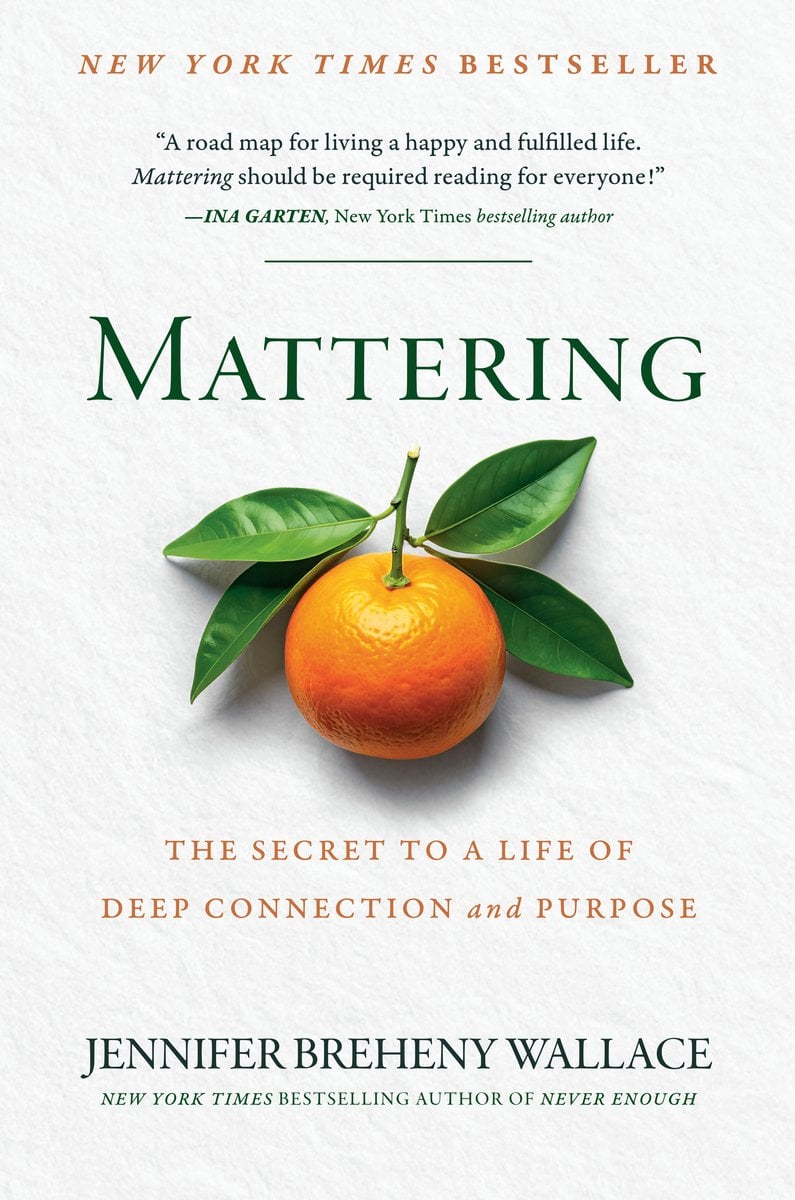
In her new book, Mattering: The Secret to a Life of Deep Connection and Purpose, Wallace explains why our sense of mattering has eroded, and she offers simple, science-backed ways to build meaning and connection in our lives.
Wondering where to start? Read on.
A CONVERSATION WITH JENNIFER BREHENY WALLACE
You quote Mary Oliver at the start of your book: “I don’t want to end up simply having visited this world.” What does that mean to you?
For the last seven years, I’ve been researching mattering. As a woman who’s now in my 50s, I’ve been asking, “What is the meaning of life? What is it to live a purposeful life? To me, that epitaph means to live a full life—to find a way to matter to the world. I think of mattering as the tax we pay to God. We are here to matter to each other.
What happens when we feel like we matter—and when we don’t?
When we know we matter—when we feel valued by ourselves, by our family, friends, colleagues and society, and we are able to add value back to those various groups—we thrive. We show up to the world in positive ways. We contribute; we engage. When we are chronically made to feel like we don’t matter, we can withdraw and become anxious and depressed.
In one study of suicidal men, the two words they use to describe their pain the most were useless and worthless. Those are the words of feeling like you don’t matter. Other people who feel like they don’t matter might act out in online comments, road rage, shootings, or political extremes. In my mind, these are desperate attempts to say, “I’ll show you I matter.”
This need to matter is universal. And we are seeing people on both sides of the aisle, of all genders, of all socioeconomic groups, feeling like they don’t matter. In my reporting, I asked people if they felt like they mattered, and I was stunned at how often people would say “not anymore.” And so, I dug into why.
What did you find?
We are no longer are affiliated with religious institutions. We don’t belong to bowling leagues. We don’t know our neighbors. The people I interviewed felt like their friendships had eroded, and they felt replaceable at work. Something like 70 percent of employees today are disengaged in the workplace. If you think about disengagement through the lens of mattering, when you feel like you don’t matter at work, when you feel like you’re replaceable, when you feel like no one knows you or cares about you or tells you you’re making a positive impact, how can you cope? By pulling back and disengaging.
I also found that big life transitions—like facing an empty nest, relocating, changing jobs, getting divorced—can rattle our sense of mattering. We tend to personalize these life transitions. Before I learned about mattering, I used to wonder, “Am I just uniquely bad at coping with transitions?” They were always so hard for me. And then I realized after looking at the research, “Yes, these transitions are hard for all of us, and a pathway to cope in a healthy way through transitions is to look at it as through the lens of mattering.” During these transitions, ask yourself, “What part of my mattering has taken a hit? Do I not feel valued? Am I no longer adding value? The answers offer you a path forward.
Why is mattering so urgent right now?
We talk about the loneliness epidemic. We talk about the substance abuse epidemic, an epidemic of mental health, our struggles with isolation, disengagement at work, AI coming for our jobs. We talk about these as separate issues, but really they’re rooted in a deep unmet need to matter.
I wasn’t actually thinking I would write a book so quickly after Never Enough. But it felt so urgent to me that I worked on it seven days a week for years to get this out as quickly as possible. I think that this idea that has been studied since the 80s offers hope and a path forward for people now—not just at the individual level, but at the relational level and at the societal level.
What does mattering look like in everyday life—not in theory, but in real, small actions?
Researchers have found key ingredients to mattering, and I’ve put them under a framework I call the SAID framework:
S is a feeling of significance. When I asked people to name a time you felt like you mattered, it was never an award at work or a toast at a birthday. It was in the small moments. It was a colleague checking in after a particularly rough week at work. It was a neighbor stopping by just to check in because they hadn’t seen you in a while and wanted to make sure everything was okay. As humans, we crave to matter in the mundane—in the everydayness of life. We want to know that we are important to the people who are important to us.
A is feeling appreciated. I’ve come to think of this as appreciating the doer behind the deed. We make others feel like they matter when we appreciate them for who they are, not just what they do. For example, let’s say you have a colleague who is always planning happy hours or group lunches. Instead of saying to that colleague, “Thanks for another fun event,” a way to appreciate them that feeds their mattering is to say something like, “You know, you are really a community builder for us. Because of your efforts, you make us more cohesive as a team. We are so lucky to have you.”
I is feeling invested in. This is the feeling of being invested in by others—that others care about our goals, that they support us through setbacks, and that we have people in our life whose goals we are also investing in. The goal is to get to a place where other people’s success feels like your success, because you’re really invested in it. I will say, 70 percent of the joy I feel on any given day is because of my friends—their joys, their successes. It is so thrilling to be able to be that invested, that when they win, it feels like a win for you, too.
D is feeling depended on. This is knowing that there are people who depend on you to show up, and that if you weren’t there, you would be missed. There’s this psychological security of knowing we’re not going through this world alone.
These are four elements that we need to feel to feel like we matter, and it’s also how we can foster a sense of mattering in the people that we care about.
What’s one small shift we can all make starting today to feel like we matter?
I would love to offer a practice that I’ve come to do in my own life to help me feed my sense of mattering to myself. Every morning when I’m brushing my teeth, I think about one small need that I need to fill for myself today so that I can show up as my best self—for myself, but also for the people who depend on me. It might be wanting a 30-minute call with my sister to catch up. It could be wanting to go on a walk with a friend or wanting a half hour in peace with my book, my coffee, and a blanket.
It’s very personal what we need, but it’s important to tune in to what our needs are. What I know from decades of resilience research is that resilience is rooted in relationships. And if we want to be there for the people in our lives, like our children and the people we’re caring for, we need to prioritize our own needs at least once a day.
How can each of us be, as Maria says, an “Architect of Change” when it comes to building families, schools, workplaces, and communities where people genuinely feel they matter?
You might send a note or a text to a friend or colleague that says, “If it wasn’t for you …” For example, “If it wasn’t for you, I wouldn’t have gone for that big job promotion. Thank you for believing in me.” I think a lot of the reason we don’t let the people around us know they matter to us is not because we don’t want to, but because we are so distracted. As a culture we have so much incoming hitting us, and so much output that’s demanded of us, that just to get through our days we have to go on autopilot. And so really thinking about mattering is thinking about how we can connect people to the impact they make in the world. It’s also about closing the loop. If a friend offers you advice, circle back the next week and say, “You know that advice you gave me over coffee? I took it. And here’s what happened!” Taking that extra step helps other people feel like they matter.
How do you rise above the noise to remember to center mattering in your own life?
My dad passed away last year, and he was a real master at making people feel like they mattered. I have this mantra from him, which is essentially that we are kind, not because others always are but because we are. So, we make others matter not because they always make us feel like we matter, but because this is how we live our lives.
As important as it is to make people feel like they matter, it’s also important to think about the signals you are sending, even unintentionally, that other people don’t matter. Think about that. When you are on your phone checking out at the drugstore, and you’re not connecting with the woman who is working at the register because you are on your phone, and you’re treating her as though she’s a robot, not a human. It’s not because you’re unkind, it’s because you are distracted.
The fastest way to feel like you matter is to remind others how they matter. The way to do that is to pick your eyes up off your phone and to be an agent of mattering.
So many people are searching for purpose today. If you are looking for purpose, I see no greater purpose right now than to be an agent of mattering in your corner of the world.
Please note that we may receive affiliate commissions from the sales of linked products.