Another Piece of the Aging Puzzle Being Ignored
Editor’s Note from The Sunday Paper Team: As Maria takes some well-deserved time off this month, we’re revisiting a favorite from her archive. This essay originally ran in Be Healthy on July 21, 2026. Please note that any events or dates referenced reflect the time it was written.
July 22 is World Brain Day. Did you know that? Most people don’t. And that, right there, is the problem.
Because when it comes to women’s health, the brain is still treated as an afterthought. Brain health is rarely part of a routine conversation between a woman and her doctor, and it is not something we are routinely screened for, warned about, or prepared for at any age. And yet two out of three people living with Alzheimer’s disease are women. A woman who reaches 65 faces a one-in-five chance of developing dementia. This is not a footnote in the story of women’s health. This is the story.
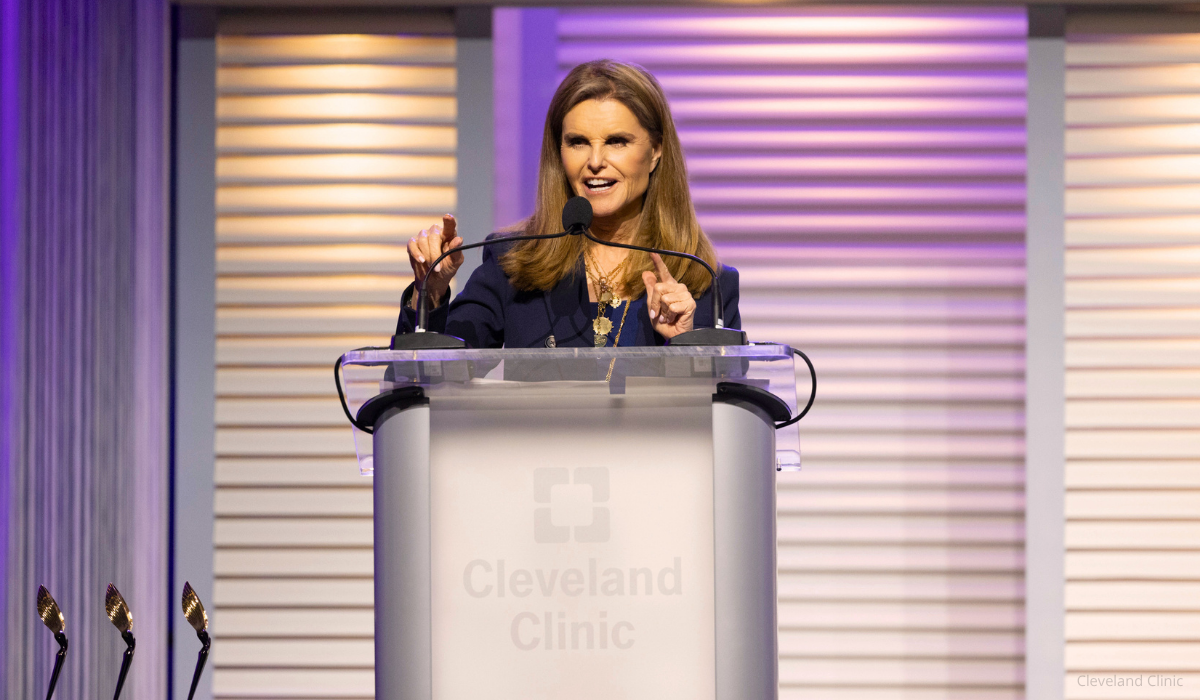
I have spent years sounding this alarm. As founder of the Women’s Alzheimer’s Movement (WAM) and now as co-founder of the Cleveland Clinic Women’s Comprehensive Health and Research Center, I helped commission a national status report on women’s health presented to doctors, researchers, policymakers, medical schools, and patients across this country so that no one could claim they didn’t know. So that the silence would have a number attached to it, a face, a reckoning.
The findings are not good.
Only 19 percent of women surveyed knew that women are more likely than men to develop Alzheimer’s disease. Only 29 percent said they worry about developing Alzheimer’s as they age. And perhaps most heartbreaking of all: women told us they are more worried about being able to pay for their healthcare than they are about getting Alzheimer’s, heart disease, or any other condition threatening their lives. In the most powerful nation on earth, women are lying awake at night afraid of the bill—not the disease. That is not just a healthcare failure. That is a moral failure.
Women are living inside a health crisis they don’t know is coming because no one told them. Because our medical system was never truly built for them.
That ends now. Or it should. And that is why I am writing this today.
This is a human rights issue. It is a women’s health revolution waiting to happen. And it does not belong to any one political party. Republican, Democrat, Independent—every woman has a brain. Every woman deserves to protect it. Every family has been touched by the devastation of Alzheimer’s, by watching someone they love disappear while still alive. This is the issue that can bring us together, because it has already touched all of us.
Women of color carry this burden most heavily. They face a disproportionately high risk of Alzheimer’s and remain among the most underserved by the very system we are calling to account. Any revolution that does not center their health is incomplete.
Our mission is to radically reframe women’s health, beginning with the brain. Why women specifically? Because we are the majority of those living with Alzheimer’s. Because we are the ones spending our final years not in grace and wholeness, but in poverty and cognitive decline, after a lifetime of putting everyone else first. Because the medical system that was supposed to care for us studied male bodies for generations and left women’s health as an afterthought, or worse, left it out entirely.
That neglect is not an accident. It is a structure. And structures can be dismantled.
We must rewrite the curriculum at medical schools so that women’s brains and bodies are centered, not ignored. We must redirect research funding. In 2019, only 12 percent of the NIH’s multibillion-dollar Alzheimer’s research budget was devoted to studying the disease in women, despite women comprising the majority of those affected. There is no moral or scientific justification for that. And this is not just the right thing to do—it is the smart thing. Research into women’s health has been shown to produce a 224 percent return on investment. Investing in women’s health is good for women, good for families, and good for the American economy.
We must expand insurance coverage so that brain screenings begin at 45, when perimenopause starts and measurable changes in women’s brains are already underway—not at 65, when it is far too late. And we must recognize that protecting women’s brain health begins even earlier than that, because the brain starts developing just three weeks into an embryo’s development. A healthy mother is the first act of a healthy future.
Women are not the problem. Let me say that clearly. When women have real information, they act. Among women who know they are at higher risk for Alzheimer’s, nearly nine in ten are already taking steps to protect their brain health. The failure is not theirs. The failure belongs to a system that did not think their brains were worth the investment.
We know better now. And knowing demands action.
So for World Brain Day I am asking you to do something radical and simple: talk to your doctor about your brain. Ask the question. Demand the conversation. Tell your mother, your daughter, your sister. Vote for leaders who will fund medicine that was built for all of us.
We are at the beginning of a revolution. Not a loud one, not a partisan one, a human one. A revolution that says women’s lives matter in full, from the womb to old age, and that brain health is not a luxury item in women’s healthcare. It is the whole point.
This is our moment. Let’s rise to meet it.
Maria Shriver is co-founder of the Cleveland Clinic Women’s Comprehensive Health and Research Center and founder of the Women’s Alzheimer’s Movement (WAM). She is a journalist, author, activist, and former First Lady of California.
Prayer of the Week
Dear God,
Grant us the courage to choose the right road, the wisdom to recognize it, and the love to walk it together.
Amen.
Please note that we may receive affiliate commissions from the sales of linked products.