What “Crying Out Loud” Taught Me About Grief

Before February 7, 2021, I never imagined I would be writing about grief, let alone teaching others how to move through it.
For nearly three decades, I was known as a therapist and media personality focused on love, intimacy, and relationships. While I was no stranger to loss and had supported many people through grief, it was not the center of my work.
Then, on that Super Bowl Sunday, my sixteen-year-old son, Sammy, died.
There are no words that fully capture what that does to a mother. It is not just heartbreak. It is a complete unraveling. In a single moment, the life I knew disappeared, the ground beneath me gave way, and I was left suspended in a world that no longer made sense.
In those early days, I automatically tried to do what so many of us are taught to do. Hold it together. Be strong. Keep it contained.
But the harder I tried to quiet it, the louder it became.
That’s when I realized something essential: Grief does not want to be quiet. And it cannot be thought away.
The pain I was carrying did not live in my thoughts. It lived in my body. It moved through me in waves that felt like they might take me under. And the more I tried to contain it, the more constricted and lost I became.
So I began to do something radically different.
I stopped fighting it and let it out. I cried when the tears came. I let my body shake when it needed to. I spoke what I was feeling instead of suppressing it. I allowed the grief to move through me rather than trying to control it.
That was the beginning of what I now call Crying Out Loud.
Not just the act of crying, but a new way of understanding grief altogether.
I discovered that grief is not just something we survive. It is a profound portal of transformation, if we are willing to meet it. When we allow ourselves to truly feel our loss rather than suppress or intellectualize it, grief does something unexpected. It strips away what is false, cracks open what was guarded, and reconnects us to what matters.
Not in a way we would ever choose. But in a way that can change us.
Making us more honest.
More connected.
More alive.
Crying Out Loud is how we move through that portal.
I mentioned that my grief over Sammy lived in my body. That is one of the most critical lessons I learned: Grief is not just emotional. It’s also physical, spiritual, and relational.
Grief lives in the nervous system, not just the mind. When we suppress it, we don’t resolve it, we store it, where it can settle into the body as tension, anxiety, numbness, even illness. But when we allow it to move through tears, breath, sound, and sensation, something begins to shift. The nervous system softens. The body opens.
Grief is spiritual. Loss cracks us open beyond the illusion of control. In my journey, it became a doorway to a continued relationship with Sammy and with those I love on the other side. And when I allowed myself to fully feel the pain and let it move through me, something else often rose just as powerfully: a profound sense of love and deep connection.
And grief is also relational. It reshapes your world. Some people fall away because they cannot meet you where you are. Others rise in ways you never expected. Crying Out Loud invites more honest, more aligned connection. None of us were meant to do this alone. Grief asks for witness, for a space where you don’t have to explain the depth of what you’re carrying.
This is not the way most of us are taught to grieve.
And that is exactly why I had to write this book.
Yet for a long time, I wasn’t thinking about a book. I was simply living this work, and helping others live it too. Then about three and a half years after Sammy’s death, I led my first Love Mama Grief Retreat at 1440 Multiversity. As I watched nearly seventy grieving mothers experience profound shifts through the Crying Out Loud approach, something became clear.
This wasn’t just my personal process. It was a path. And it was one I knew could help others find their way through not just the pain, but the transformation waiting on the other side of it.
The writing itself became part of the healing. Each morning, I would wake before 6am, meditate, call in Sammy and the loving presence of my other angels and guides, and then begin writing.
Seven days a week—until the manuscript for Crying Out Loud was done.
Some days the words flowed, like something was being released in real time. Other days, I sat staring at the page, unsure where to begin.
But I stayed.
And something remarkable began to happen. The words felt less like something I was producing and more like something moving through me.
By the time I finished, I was stunned. I had written nearly 40,000 words more than I needed. I tend to be a bit verbose, but this was next level.
I couldn’t imagine how I would ever let go of so much that felt like it came straight from my heart, every piece holding its own meaning. And then came one of the most unexpected gifts of the entire process.
My oldest son, Ethan (age 29), stepped in to help me edit.
He and I met each other in a new way. Not just as mother and son, but as two adults walking this path together. Collaborating. Reflecting. Honoring Sammy side by side. In the midst of so much devastation, it was its own kind of healing.
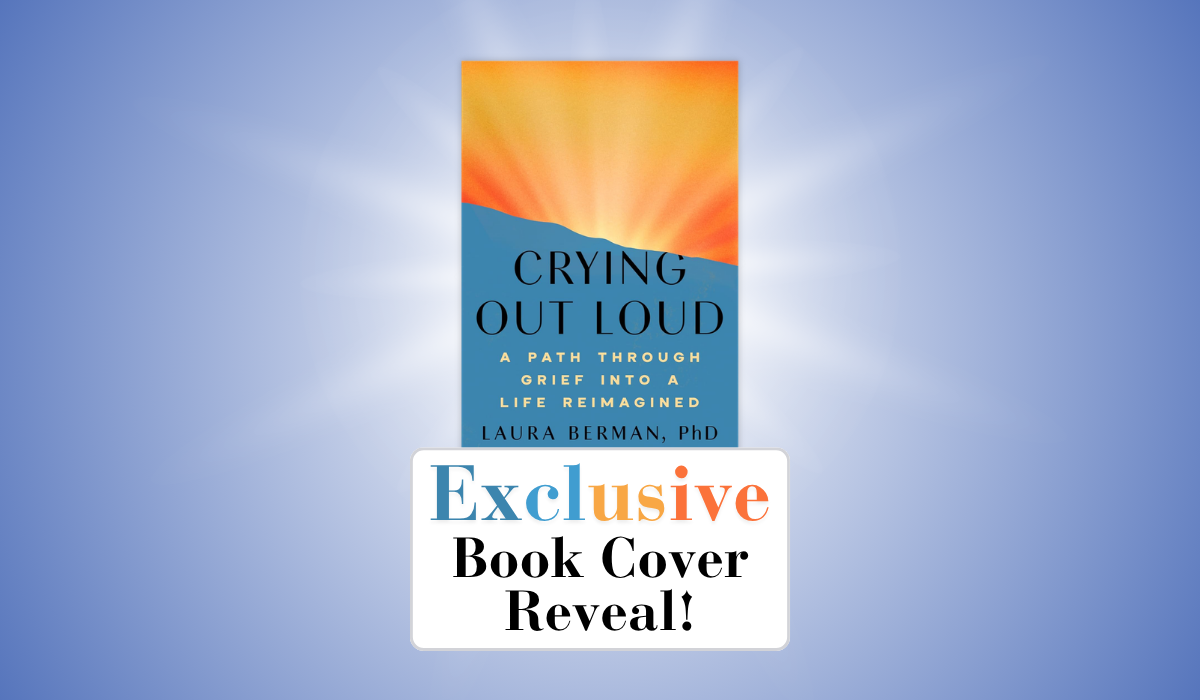
The cover for Crying Out Loud—which I am so proud to share with you below!—became an extension of this journey.
I knew I didn’t want a cover that suggested grief is something you “get over.” I wanted something that reflected the truth. That grief is a path. One you continue to move through, that can be filled with grace, and open you to a deeper, more authentic way of living.
The image we chose holds both sorrow and light. A tear across the surface, yes, but what it reveals is the light and love that are always there, even in our darkest moments. Love has not left us. It is still reaching for us.
When I shared several versions of the cover with my community in the Grief Healing Collective, this was the one they chose, almost unanimously.
That felt right. Because this book was never meant to be created alone.
Crying Out Loud is an invitation.
Not to get over your grief.
But to move with it. To be transformed by it.
Because grief does not just break you open. It is not the end of your story.
If you let it, it’s the doorway into the even-more-beautiful version of who you are becoming.
Laura Berman, PhD, is the author of Crying Out Loud, coming October 20, 2026, from The Open Field. She is also the host of The Language of Love and the founder of the Grief Healing Collective. Her next Love Mama Grief Retreat will be happening May 27–31 and is open for registration here.

Answer
Sense and Sensibility
Fun Fact: Did you know that Jane Austen published all of her novels anonymously, under "By a Lady" or the author of her previously published novel? It was not until after her death that her brother, Henry Austen, revealed her identity.

Please note that we may receive affiliate commissions from the sales of linked products.