When Addiction and Mental Illness Hits Your Family: 6 Lessons You'll Learn On the Road to Recovery
- Addiction is a family disease. Although one person is addicted, it affects the entire family. It also attacks families at every socioeconomic level…from Park Avenue to Skid Row. Its victims are parents, mothers, fathers, children, brothers, sisters, grandchildren, aunts, uncles, friends…and yourself. It doesn't matter whether one is male or female, employed or unemployed, young or old, any race or religion: Everyone is fair game. Many don't appear to have addiction issues at all. In fact, many of those who are dependent on drugs or alcohol are 'functional.” They have jobs and live with their families, but the disease will worsen over time. In fact, 75 percent of those with substance abuse disorder (SUD) are actively employed…55 percent of them full-time.
- Addiction is a chronic brain disease. This disease results in the inability to control the impulse to use a substance or stop repeating a process despite devastating consequences. It is not the result of a moral failing, bad character, or lack of will, though some unenlightened people still believe that. It is a chronic disease that alters a person's brain structure and function; it cannot be stopped by a simple 'Just say no” or 'Buck up, will ya!”
- A mental disorder often accompanies addiction. The question is which one is driving the other. I am not a psychologist, therapist, or drug treatment counselor with degrees and qualifications after my name, but I know enough to know that all diagnoses and treatment must emanate from licensed, certified, experienced, and caring professionals. Period.
- Resources don't get the victim sober. They are only the tools helping the individual get sober. Sobriety occurs when the victim genuinely wants to get sober and is willing to put in the work to get there…it is completely up to the individual. Most important, those in recovery can live full, productive, meaningful, significant lives just like everyone else who has never suffered from addiction.
- Relapse is often part of the journey, not the failure of treatment. I've seen families lament, 'Well, there goes that money down the drain . . . what good did that rehab do when she goes back to using drugs?” It's a hard and expensive lesson, but nonetheless one to learn. More than 60 percent of those treated for SUD relapse within the first year of discharge from treatment…similar to relapse rates of other chronic diseases such as diabetes, hypertension, and asthma. That's when it's time to reinstate treatment, albeit with adjustments (or even a completely different approach). Even after a year or two of remission achieved through treatment and aftercare, it can take three to five more years before the risk of relapse drops below 15 percent (the level of risk that people in the general population have of developing an SUD in their lifetime).
- There is no such thing as 'the best rehab.” It doesn't exist. What does exist is the right rehab for a particular individual. Lists of the '100 best rehabs” are a marketing and advertising ploy. Don't fall for it. The 'best” rehab is the right rehab that best matches an individual's diagnosis; substance use patterns; related medical, mental, and social issues; and resources…to mention a few crucial factors. When it comes to treatment facilities, one size does not fit all.
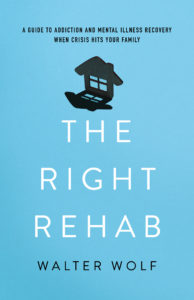 Excerpted from the book The Right Rehab: A Guide to Addiction and Mental Illness Recovery When Crisis Hits Your Family by Walter Wolf. Used by permission of the publisher Rowman & Littlefield. All rights reserved.
Please note that we may receive affiliate commissions from the sales of linked products.