A Brighter Future is Taking the Field In Minnesota
"Let me win. But if I cannot win, let me be brave in the attempt."
— SPECIAL OLYMPICS ATHLETES’ OATH
This week, athletes from all over the country will recite this oath as the Special Olympics USA Games get underway. The competition showcases the best of the human spirit: elite sprinters, swimmers, softball players, and more, who’ve sweat and bled and conquered obstacles most of us can’t fathom to earn their place at the top of their sports.
But the power of the Special Olympics has never been confined to the field of play. It gives us a glimpse at a future where differences are embraced instead of demeaned, and dignity isn’t measured by medal counts. Perhaps most of all, the Games hold up a mirror and ask us: What do our better, braver selves look like?
That’s a question that the people of Minnesota—where this year’s USA Games will take place, and the state I’m lucky to serve as First Lady—have been grappling with over the past year. And it’s why, in this singular moment, our state and the Special Olympics have so much to offer each other. There could be no better host for the Games, and in turn, we will be better for hosting, too.
Over this past year, Minnesotans have been tested in ways no community should have to endure. We’ve had to mourn selfless public servants stolen by political violence. We’ve had to bury precious schoolchildren killed in the pews during a Mass. We’ve had to witness our neighbors get terrorized by masked federal agents in unmarked cars, and our citizens exercising their constitutional rights get met by overwhelming, even deadly, force. Even now, we’re wrestling with an economy battered, children traumatized, and families living in fear.
Yet despite it all, Minnesotans didn’t flinch or fracture. Again and again, we responded with courage. Not the loud kind that confuses might with right—but the quiet, resilient kind, that knows true strength can be found in how you stand up for others and what you give of yourself.
After the violence last summer, communities gathered in churches and high schools to check in on one another and heal together. In just three days this winter, one cafe alone collected 30,000 pounds of donated food, enough to provide 25,000 meals. And when our communities came under attack, tens of thousands of Minnesotans—of different races, faiths, and political persuasions—took to the streets in the subzero cold to show our neighbors we have their backs.
Across our state, I’ve met parents who’ve kept an eye out for federal agents outside schools. Tow truck drivers who’ve returned hundreds of cars to the homes of those detained at traffic stops. Community members who’ve cleaned up debris and destruction ICE left behind.
That’s who Minnesotans have always been. After all, the wisdom of our late senator Paul Wellstone still echoes in our ears, reminding us that we all do better when we all do better. But this past year has asked us to dig even deeper—to tap into a well of compassion, fortitude, and courage we don’t often access.
When the Special Olympics meets Minnesota, it’ll be a collision of kindred spirits. So we’re harnessing this moment not only to put on the greatest USA Games to date, but to make an impact that lasts long after the final whistles blow.
That’s why we’re hosting a first-ever work summit alongside the Games, where athletes can get connected with employers equipped to build inclusive workplaces. And we’re setting up a health village to offer free screenings—from vision and hearing to dental and nutrition to mental and emotional well-being—because too many still face barriers to basic care. They’re small but meaningful steps toward building the community we want to be, where everyone belongs.
More than a few times, it would have been much easier to scale back our ambitions. But we refused to go to any lengths short of extraordinary. Special Olympians found a way onto those fields—we had to find a way, too.
Iris Pflum, a Minnesotan who at just 22 years old donned the stars and stripes to snowboard in Milan earlier this year, is one of the many Olympians—and thousands of Minnesotans—who’ve volunteered their time, talent, and resources to the Games. Every day, she reaches out to our team to ask: “What more can I do?”
That question has guided Minnesota’s entire approach. We’re constantly asking what more we can do to leave our athletes with more than memories—with more access, opportunity, and community. But there’s still so much more we can do.
The theme of this year’s Games is “Calling All Champions.” It defines all of the fierce competitors who’ve refused to be counted out, whether or not they leave with a medal. But it’s also an open invitation: to the sponsors who step up and the broadcasters who share their stories; to the employers who open doors and the doctors who provide care; to the volunteers who give their time and the community that fills the stands. They’re all champions, too.
That’s the Minnesota I know. And that’s the country I still believe we can be.
At a time when powerful people demonize anyone they see as different—when attacks on equity and inclusion have made too many institutions go quiet—the Special Olympics calls us to cheer even louder. For a nation being poisoned by so much cruelty and division, these competitors—embraced by this community—will offer a much-needed antidote.
So whether you’re from Mankato or Maine, Columbia Heights or California, come be a part of something special in the Twin Cities this week. Come volunteer. Come cheer. Come have your hope in humanity renewed.
And when the athletes take that oath, let’s take it as a challenge to the rest of us as well: to build a future worthy of these athletes.
Or at the very least, be brave in the attempt.
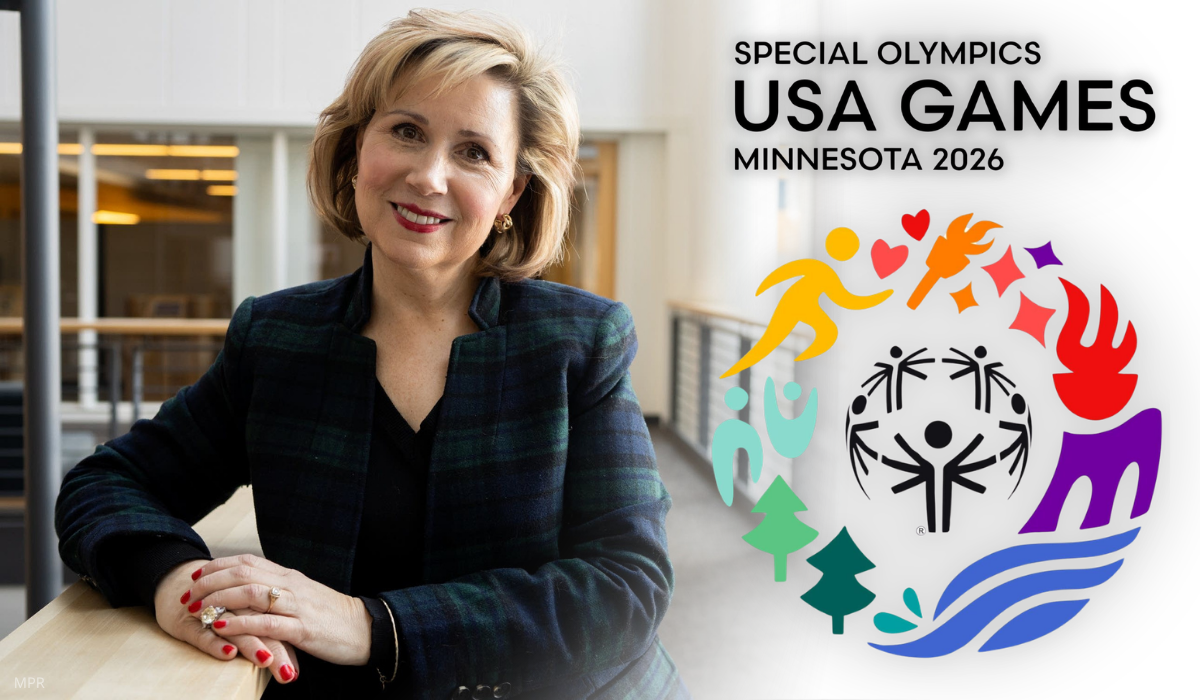
Gwen Walz serves as the First Lady of Minnesota and is a Board Member of the Special Olympics 2026 USA Games.
Please note that we may receive affiliate commissions from the sales of linked products.