Be Healthy Recommends—Week of September 29, 2026
This week in Be Healthy, we're recommending a book, an article, and a voice that have become our go‑to sources for health information. In a sea of noise and conflicting advice, these are the ones that keep us feeling enlightened. We hope they bring you the same
A Wellness Read Worth Your Time:
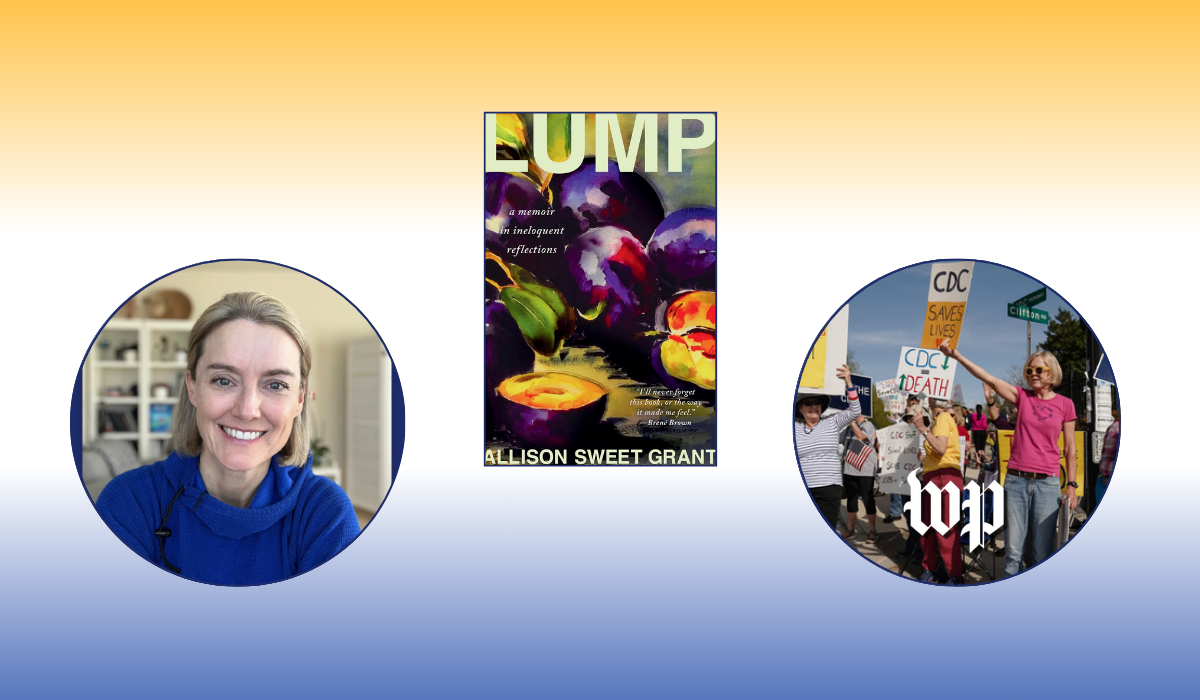
In Lump, Allison Sweet Grant chronicles her breast cancer diagnosis and treatment through poems that move between the macabre, the funny, the irreverent, the mundane, and the profound. She writes candidly about the pressure to be the “perfect” patient and the challenge of navigating the path-without-a-path that cancer can become. She doesn’t force the experience into a tidy story of bravery or triumph. Above all, she is honest about how illness can make room for terror, boredom, absurdity, tenderness, and ordinary life all at once.

Health News You Can Use:

How Staff Cuts and a Leadership Vacuum Left the C.D.C. “Zombified”
“Imagine losing a third of a city’s firefighters and then wondering why downtown is burning,” one former C.D.C. center director told The New York Times. It’s a stark way to describe an agency that went from more than 9,000 employees to about 6,700 in little over a year, just as measles spreads at home and Ebola surfaces abroad. The reporting draws on more than 30 current and former employees, who describe scientists stretched thin and acting leaders filling the gaps. It’s a sobering look at what the loss of expertise can cost the rest of us. Read more here.
An Expert We’re Listening To:
What if the health advice you keep ignoring isn't the problem, and the way you were taught to follow it is? Dr. Laurie Marbas, a physician board-certified in both family and lifestyle medicine, believes the answer isn't trying harder but starting smaller. In her Substack, The Habit Healers Mindset, she breaks down the science of why habits stick and offers one manageable shift at a time.
What We’re Debunking
Does Tylenol taken during pregnancy cause autism? According to a new review, no. Published in Developmental Medicine & Child Neurology, the umbrella review pooled seven meta-analyses covering more than 3 million participants. The small links to autism and ADHD seen in some research shrank toward zero once lower-quality studies were set aside, which means the evidence doesn't support a causal connection. It's a steadying read for anyone who felt the ground shift after last fall's headlines. Read the full study in Developmental Medicine & Child Neurology.
Please note that we may receive affiliate commissions from the sales of linked products.