Could Removing Your Fallopian Tubes Prevent Ovarian Cancer?

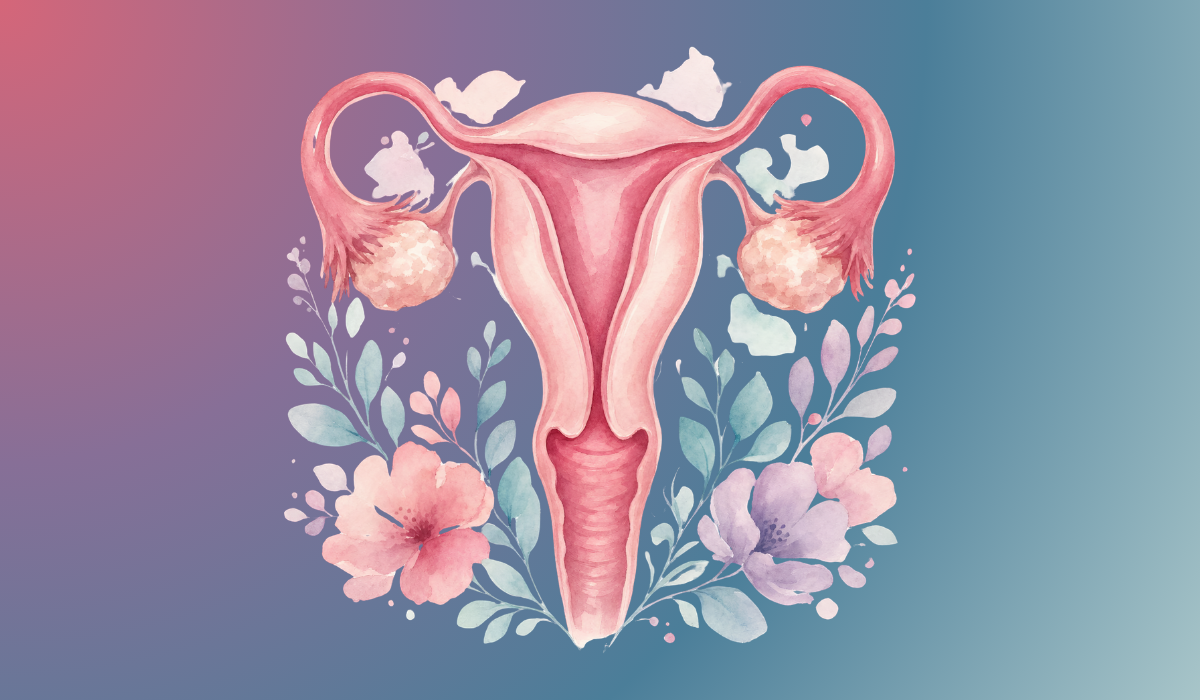
Removing the fallopian tubes during abdominal surgery could reduce a woman’s risk of developing ovarian cancer by nearly 80%, according to new recommendations from the American College of Obstetricians & Gynecologists.
Previous fallopian tube removal guidelines had focused mainly on women having gynecological surgeries, like cesarean sections, but the new approach encourages women having hernia, gallbladder or gastric sleeve operations (and who are done having children) to consider removing their tubes at the same time.
There is no screening for ovarian cancer, which kills more than 12,000 women a year, said Dr. Rebecca Stone, director of gynecologic oncology at Johns Hopkins Sidney Kimmel Cancer Center.
She is heading a new surgical trial at three locations—Hopkins, Memorial Sloan Kettering Cancer Center in New York City and MD Anderson Cancer Center in Houston—for women coming in to have non-gynecological abdominal surgery and are finished having children. The women watch an educational video about the procedure, called a salpingectomy, and why it’s being recommended. If interested, they then meet with Dr. Stone so she can answer any questions and address concerns.
So far, about 80% of the participants have decided to participate, and the study covers the cost of the fallopian tube removal.
“We did it that way because we wanted anybody, no matter what insurance you have, how wealthy or poor you are, to be able to participate,” Dr. Stone said.
Although women’s health organizations have advocated the removal of fallopian tubes for years to prevent ovarian cancer during gynecological surgeries, like C-sections or hysterectomies, the suggestion that all abdominal surgeries might be an opportunity to remove fallopian tubes is one that doctors are just starting to recognize, Dr. Stone said.
From her office at Johns Hopkins, where she had just finished a day in surgery, Dr. Stone explained why this is still news to many in the medical world, the pros and cons of the surgery and why she’s thinking about getting the procedure’s medical code (Z40.82, just FYI) as a tattoo.
A CONVERSATION WITH DR. REBECCA STONE
What made you focus so intensely on fallopian tube removal as a way to prevent ovarian cancer?
I’m a gynecologic oncologist, and I have spent my entire career taking care of women with tube ovarian cancer and their families. The disease is just terrible. There was one night where I was trying to go to bed after doing surgery for 14 hours, and I was replaying all the terribleness of it all in my brain, and I thought, “We cannot go on like this. We have to do something different.” We know how to prevent most of these cases. We know that most (ovarian) cancers start from the fallopian tube, and I want people to know there may be an opportunity to prevent them.
What exactly is the procedure?
It’s called a salpingectomy, which is the removal of the fallopian tubes. Oophorectomy is removal of the ovaries.
My obsession with fallopian tube removal for cancer prevention has as much to do with cancer prevention as it does to ovarian preservation. Because we’ve been taking people’s ovaries out in medicine for no good reason for a long time.
Why do you think this information has been so slow to reach doctors and patients?
When you think about how information gets disseminated in medicine, it can’t just stay in a medical journal. It has to come from organizations like the American Cancer Society, the CDC, the AMA. It has to be in people’s continuing medical education and when they’re doing boards and recertification.
What did you discover when you approached the CDC?
The CDC oversees a major bucket of medical coding called ICD-10 codes. When you think about a procedure, you have codes that say why something was done. I was on a call with the CDC and there were hundreds of people on that call, and no one had heard about this (the impact fallopian tube removal had on lowering ovarian cancer.) Zero people.
I spent several years presenting the evidence and working through how it would fit into the coding system. Now we have a code—Z40.82—specifically used for prophylactic surgery for removal of fallopian tubes specifically for cancer prevention. I was like, “I’m gonna get a tattoo of that code someday,” because it was so hard. It was like pushing a boulder uphill.
Does removing the fallopian tubes affect a woman’s hormones or menstrual cycle?
It doesn’t change your hormones, everything is the same. That’s what’s so compelling about the prevention strategy is that it doesn’t affect how you feel, how you look. Women who have this done still get their periods—they still have their uterus.
It’s a much more successful form of permanent contraception than tubal ligation and substantially reduces the risk of ectopic pregnancy.
What happens to the eggs after the fallopian tubes are removed?
People ask me that a lot too. When the egg comes out of the ovary, it doesn’t always get caught by the fallopian tube. So it floats around and it just dies.
What if the surgeon doesn’t know how to perform a salpingectomy?
It’s not uncommon. Until general surgeons get a lot of experience with this, it’s preferable that a gynecologic surgeon comes in and does the procedure.
Does adding a salpingectomy to another surgery add scars or recovery time?
The surgery itself takes, on average, about eight minutes. People ask, will I have additional scars, longer recovery? And the answer is no. We use all the same incision as your primary surgery. It doesn’t affect your recovery in terms of risk.
I’d say the main risk is bleeding, but that risk is certainly no higher than the risk of bleeding with your primary procedure.
What do you want women to know before considering the procedure?
I want to make sure that people really know the facts, that they get another opinion, that they can be empowered by the information.
We want to make sure women have all the right information to make the very best decision. So, particularly for premenopausal women, it’s a really good idea for women to talk to their gynecologist about it.
Dr. Rebecca Stone is the director of gynecologic oncology at the Johns Hopkins Kimmel Cancer Center.

Answer
The letter "e"
Please note that we may receive affiliate commissions from the sales of linked products.