Could This Simple Ritual Bring Us Closer Together?

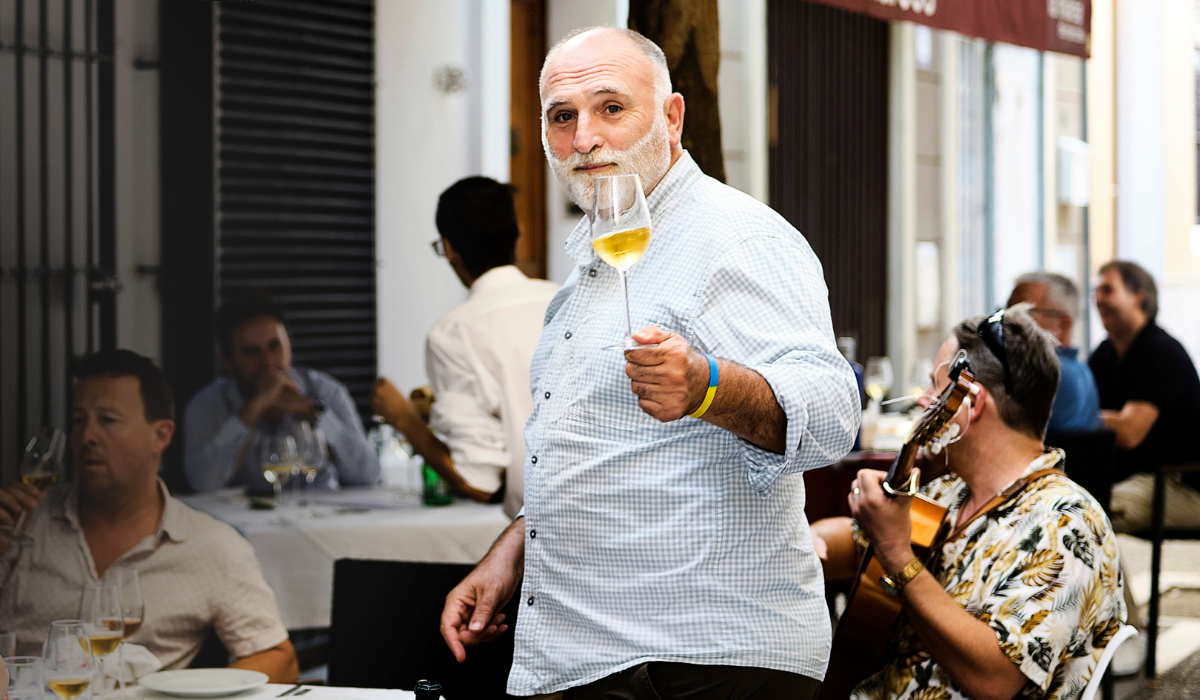
“There’s a moment in every great meal when you look around the table and you have to stop and take it all in.” This is where José Andrés starts his latest book, and if you thought the moment he’s describing is one of perfect place settings and picture-perfect plating fit for the cover of Better Homes and Gardens magazine, you’re an hour early.
Fast forward to the moment Andrés invites all of us to his table. It’s scattered with breadcrumbs and lost bits of second helpings; the glasses are empty (again); and everyone has settled into deep conversation, big laughs, and whispers (already!) of what to eat tomorrow. This, Andrés says, is what life is all about.
While it may not surprise you that a renowned Chef like Andrés sees food through such romantic lenses, the scene here is more than that. It’s a story of making room at your table for one more, it’s about making everyone at the table feel welcome and part of the moment, it’s about the magic of mealtime—arguably one of the surviving gathering points in the digital age.
This week, we asked Chef Andrés about his storied culinary career, and what all of us can learn from the Spaniards about making, enjoying, and sharing a good meal.
A CONVERSATION WITH CHEF JOSÉ ANDRÉS
Spain is where you learned to cook, to eat, and to love food, but America is where you built your life and your career. What made this the right moment to go back to your roots with this book?
It has been many years since I’ve written a book about the food of my homeland, so I felt like there are many new stories and incredible recipes to share today. With my first two Spanish cookbooks, Tapas and Made in Spain, I felt like I was bringing Spain to America, really introducing the foods of Spain to the people here. But now with Spain My Way, my goal is the reverse—to bring the people of my adopted home back to Spain with me for an intensive tour, to visit the friends I grew up with, the restaurants I love, the producers and farmers and winemakers who create the products that I buy every time I’m there. This is what I want to do with Spain My Way.
You open this book with a very specific image of a meal, but it's more than simply a table with food on it. Can you tell us about the magic of a shared meal, and what we can take from our actual dinner tables and apply to the ‘American table’ or the ‘world table’ at large?
I think it all comes down to the idea of longer tables, right? In Spain, growing up, my dad would make paella in the mountains for family and friends on the weekends. Whenever anyone would show up unannounced, he would simply throw another handful of rice into the pan. You see, in Spain, there is always space for one more at the table, we will always add some more tapas to the table, open another bottle of wine. I think anyone can bring that Spanish way of life into their own home, no matter where they live—it doesn’t have to be anything fancy, just the simple act of sharing a meal with the people you love, and always leaving room for one more…this is what longer tables are all about.
You say that while there are plenty of similarities, one of the ways these two cultures differ is how Spaniards organize their lives around food in a way Americans don't. What are we missing out on and what could we learn from the Spaniards?
Spaniards are thinking about food all the time. We wake up and wonder, what’s for breakfast? Breakfast is over and we’re looking forward to lunch and who we will be eating with. Then maybe merienda, the afternoon snack, and some tapas, a late dinner, and then it starts again the next day. Maybe it’s a “live to eat” way of thinking. In America, some people are like this, but many are not. It’s an idea that the best parts of the day happen around food, when you are with friends, colleagues, someone new you just met—this is what gives us joy throughout the day.
Thinking back to your first restaurant, Jaleo, in Washington, DC, to now publishing Spain My Way—both deeply rooted in Spanish cuisine—what’s different now vs. then? How would you describe the path it took to get here?
Many, many more people know about Spanish food now than in 1993 when we first opened Jaleo…back then no one had any idea what tapas were, and now you see tapas everywhere. I’m happy that people seek out Spanish food more and more, but there will always be a ways to go. I am hopeful that Spain My Way will introduce even more dishes and stories to the people of America.
Food moves across borders, generations, genders, ideology and everything in between. What do you think food is trying to tell us in this particular moment about who we are and what we can learn from each other?
I think food today is trying to teach us that we’re all connected, that there is one big system, and that every human, no matter where you are or who you are, you are plugged into it. The decisions we each make, no matter how small, impact everyone around the world. Do you want to eat an apple for breakfast? Where did it come from? Who was the farmer who grew it, the worker who picked it, the driver who shipped it, the grocer who sold it? When you think this way, with the bigger picture in mind, you can be a more thoughtful eater, one who understands your place in the system.

Please note that we may receive affiliate commissions from the sales of linked products.