Emma Grede’s Success Has Turned Heads—but That Doesn’t Distract Her

Have you ever thought about your ambition or what you’re ambitious for? In this issue of Be Lit, we feature two women, Emma Grede and Amina AlTai, who have written bestselling books about striving to make your dreams come true. They each offer a roadmap for creating abundance in work and life and writing your own definition of success.
Their journeys are wildly unique, but they share a similar belief: that true success comes when you’re radically honest with yourself and willing to face the work of personal growth—every single day.
We hope their stories help you Be Lit about building the life you desire.
~Maria and The Sunday Paper Team
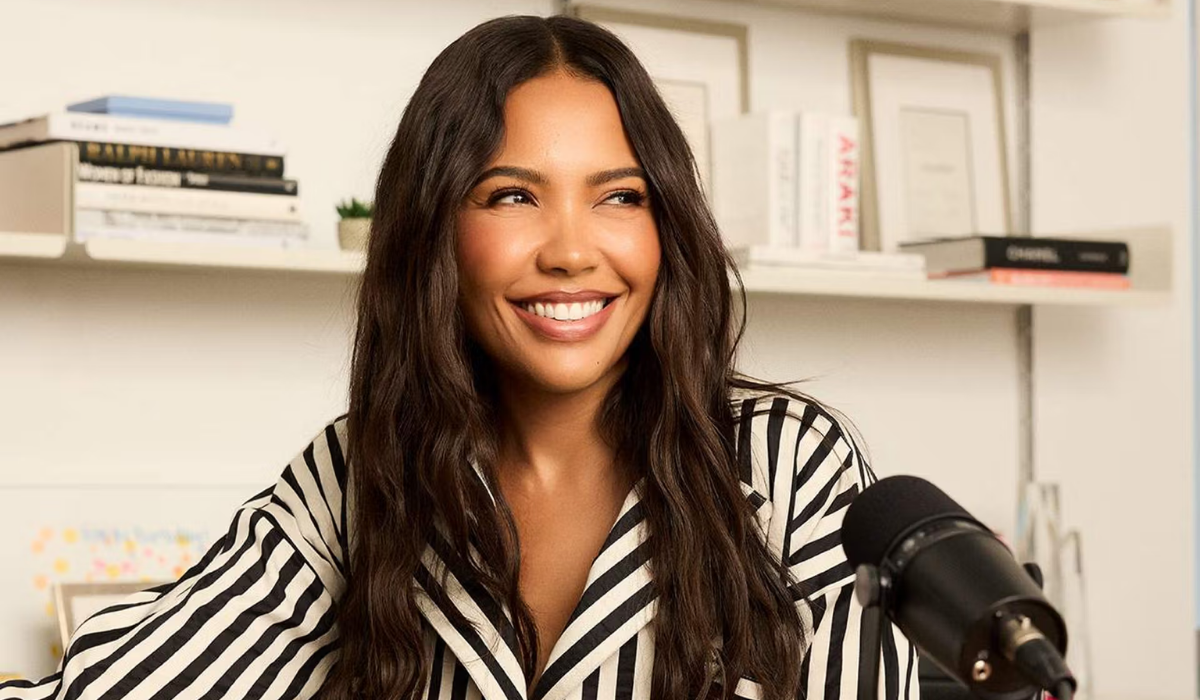
Emma Grede has zero pretense. As she hops on our Zoom, she offers an exclamation in her East London accent and a smile bobbing about—that’s because she’s in the car, going from one engagement to the next. “Always on the go!” she says, laughing.
Grede has been especially “on the go” for her book, Start with Yourself. An instant New York Times bestseller, it offers women “a new vision for work and life,” one that valorizes points overlooked in business literature: the need for women to be audacious and the necessity of compromise in the face of hard work.
Grede has received heat for her point of view. As a multi-hyphenate co-founder and CEO of Good American and founding partner of SKIMS (to name a few of her ventures), she’s unapologetic about her approach to juggling motherhood (she’s a mom to four) with her big dreams and demanding work life. You simply cannot be there for everything and every moment, she says.
You also cannot worry about what others think. As she chats about her drive that brought her from a poor upbringing to a life of abundance, one truth rises to the top: Grede listens to herself first—and she wishes the same for every woman.
“When you come from where I come from in East London, a place that's the hood, and you had to tell the truth. You had to be a person of your word. I learned—really, really early—that comparing myself was never going to work for me.”
A CONVERSATION WITH EMMA GREDE
Considering that you’ve started and built many things, what surprised you about this new process of creating a book and sharing your story?
That's such a good question. Everything surprised me, if I’m really honest. I don't know the last time I sat down and wrote something in long form. I'm dyslexic, and the book was such a challenge for me because of the dyslexia. I wrote it back to front: I started with the bits that would come more easily to me—those parts about building a brand and a business, and career and leadership. And then I thought, Well, why can I do that? So, it was all quite therapeutic.
I wrote this book because I wanted to write something people could use, not just read. It was never so much about my story, inasmuch as I was thinking, What can I do that is going to be useful to somebody else? I wanted people to put the book down and go, ‘Okay, I know what to do now. I know that I need to hold a vision for myself. I need to think about emotional management. I need to rid myself of any old thoughts.’ So, in my head, it was very much about, how do you create something that people can do something with?
You share personal anecdotes, specifically about growing up poor and working your way to where you are now. There's no glazing over in your book. What did writing so personally teach you about stretching your capabilities?
I don't think that you can ever be helpful to people unless you're really honest. And I know that it's the things that I've said where I've been honest and vulnerable, and when I've shared mistakes, that's when people are like, ‘Oh wow.’ Because I'm so aware of how my life can come across as this glossy reel. But I want people to understand that when you see me sitting at my desk, yes, the surroundings are really nice, but I'm actually at my desk. I actually have something on that laptop. There is actual work that is happening. I'm in the middle of the day, and someone from my team takes a photo of me, but the reality is, I go into an office five days a week. I've worked every job on the planet to get myself out of where I was and into a place where I get to have choice in my life. So, I just know that the only way I've ever been able to do anything is through being really honest, both with myself and whoever I'm trying to speak to.
I also thought long and deep because I'm an avid reader. I thought it was important to have not just my voice, but my way of thinking and my story to add to the collective wisdom of what's out there in the work, business, and career realm. There are a ton of business books that are written about men, not nearly enough written by women, and not nearly enough written by mothers—and certainly not mothers who are high school dropouts who decided to start businesses. So, in my head, I thought, I have a real point of view here. Those things were, for me, enough to think: Be really truthful about what it takes. Be really honest about where you've struggled and where you've really failed, because that will be helpful to people.
You say you’re not grateful for your success; you're proud. Talk about that distinction.
That’s always [the case] for women. We think we have to be so self-deprecating. This links in with the money conversation, too: The idea that we should be so grateful because we've been given an opportunity, or we're living nice lives, or we're being paid well, and therefore we shouldn’t ask for more. And I'm like, that's the starting point? That’s how we're thinking? That I should be so grateful to sit in this chair that I worked my ass off to be in? No way. Again, that’s predetermined thinking. That's because women don't want to come across as braggadocious. Or people are going to think, I wonder how she got there. So I think we need to eclipse that entire way of thinking. You should feel proud and know you can ask for what you deserve.
I want women to understand that ambition requires discomfort. And money requires audacity. If you want to be paid what you're worth, you're going to have to have uncomfortable conversations. You're going to have to lead with audacity. If we think about those things as ugly or feelings that we shouldn't have, we'll never get there. This is all supposed to be against the grain, and that’s okay. You can do it anyway. I really believe that where we are in the world right now, we are desperate for more women in positions of power. So, unless we grapple with those feelings and those stories that are keeping us small and allowing us to keep ourselves out of conversations, including money conversations, because we think it's crass or it’s too much, and you don't want to be seen in a certain way, that is all a part of what is holding us back.
Controlling your emotions is a big theme in your book, as is facing your fears and staying open to learning. How do you practice this and keep going into the unknown?
Listen, this is not to say that I don't have those emotions. I'm still fearful, and I still have guilt. I'm a mother of four. I'm not immune to these feelings. But I don't let it stop me. When I feel fear, I think it's a signal that I’m right on the edge of what is comfortable for me, and therefore on the other side of it is something amazing. So I never let fear stop me. The big difference is, I don't see fear and go, ‘whoa, whoa, whoa, back off, this is uncomfortable.’ I think, ‘this is exactly for me. I just don't know it yet.’ You’ve got to push, push yourself through it.
Sometimes I even think about visualizations. I’ll think, I'm gonna go through the door. I have a stop sign at the bottom of my road. I imagine I'm at the stop sign, then I imagine pushing right through it. Those things are helpful. But unless you can get a grip on those emotions, you will always make your decisions—decisions to not do something or to put something off—based on the emotional signal. So it just requires a bit of work to undo the wiring, to uncouple the thought that fear means no. Instead, I’m like, fear means yes! Fear means go!
Considering all the noise—social media, headlines, comparison, and people's many opinions—how do you rise above it and stay clear about what’s important to you?
I only found one way that ever works. When you come from where I come from in East London, a place that's the hood, and you had to tell the truth. You had to be a person of your word. I learned—really, really early—that comparing myself was never going to work for me. Because I didn't have great prospects or a great education. Instead, I figured out that having a vision, holding a high ideal for myself, and saying, ‘This is how I want to live, and this is how I want to spend my time,’ all help me to measure myself. It helps me to say, ‘Here are the things that are important to me, and therefore I'm going to live up to them.’ It’s not what I see you doing. It’s not what I saw a mum at school talking about. It’s not what I saw on social media. I do things that align with my vision. There are non-negotiables for me, and I stick to them—and I say no to everything else.
This really helps you become unstuck. It really helps you decipher what's worth your time and what's not. If you fall against your own goals, that's one thing. But if you're comparing yourself against somebody else who's living a different life and has different priorities and vision, then that's not a good use of your energy.
Emma Grede is the co-founder and CEO of Good American, the founding partner of SKIMS, the co-founder of Safely and Off Season, and the voice behind the Aspire with Emma Grede podcast.
Answer
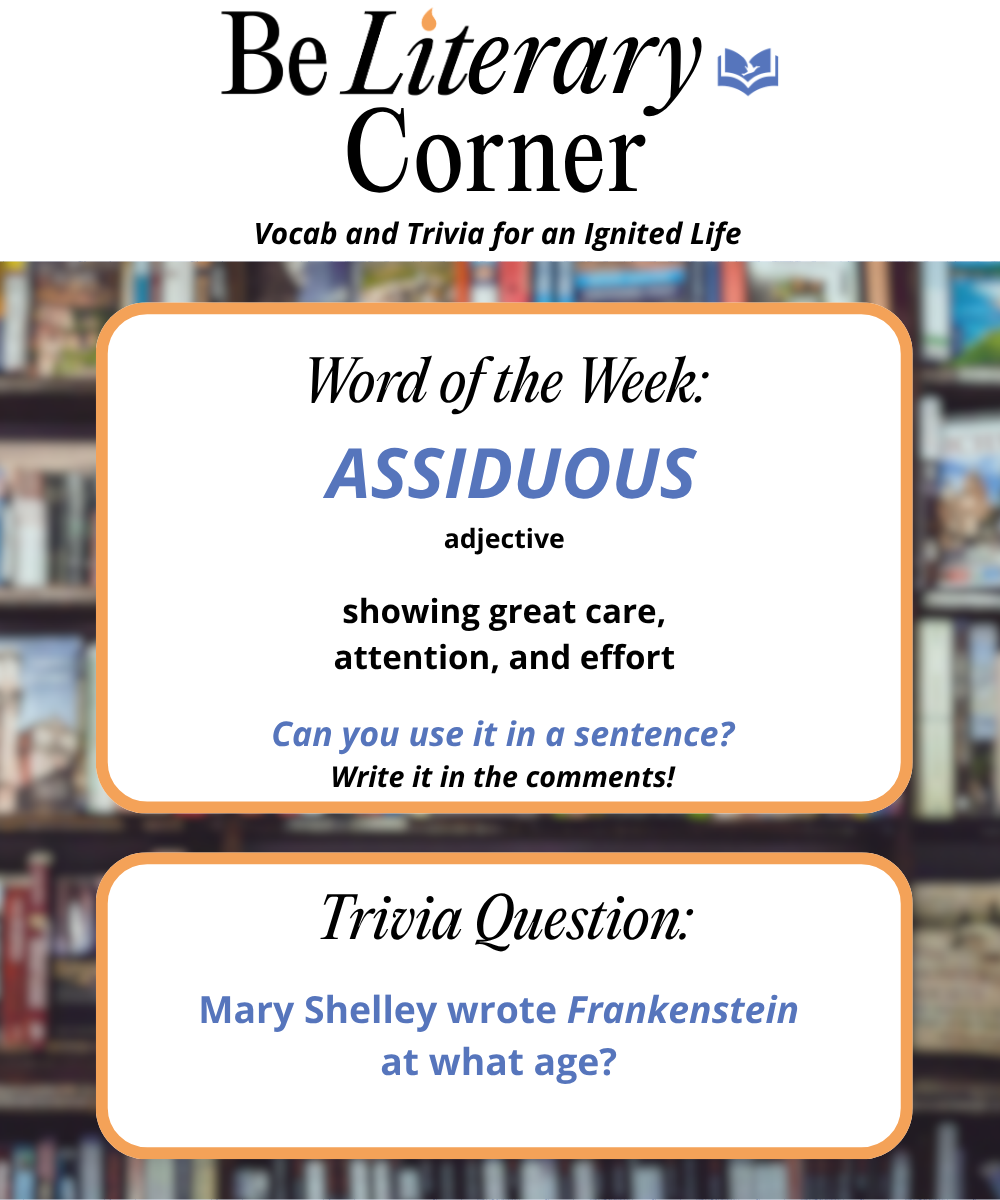
18 years old
Fun Fact: She came up with the idea during a stormy summer at a villa in Switzerland, as part of a ghost story competition with Percy Shelley and Lord Byron. She was the only one who actually finished hers.

Please note that we may receive affiliate commissions from the sales of linked products.