How Healthy Is Your Brain?

You get your eyesight tested every year. You get your heart checked at every doctor’s visit. But when was the last time you assessed your brain health?
If you’re like most people, cognitive testing isn’t even on your radar. In fact, too many of us don’t think about our brain health until something goes wrong, or we don’t want any kind of brain-health assessment because we don’t want to know the results.
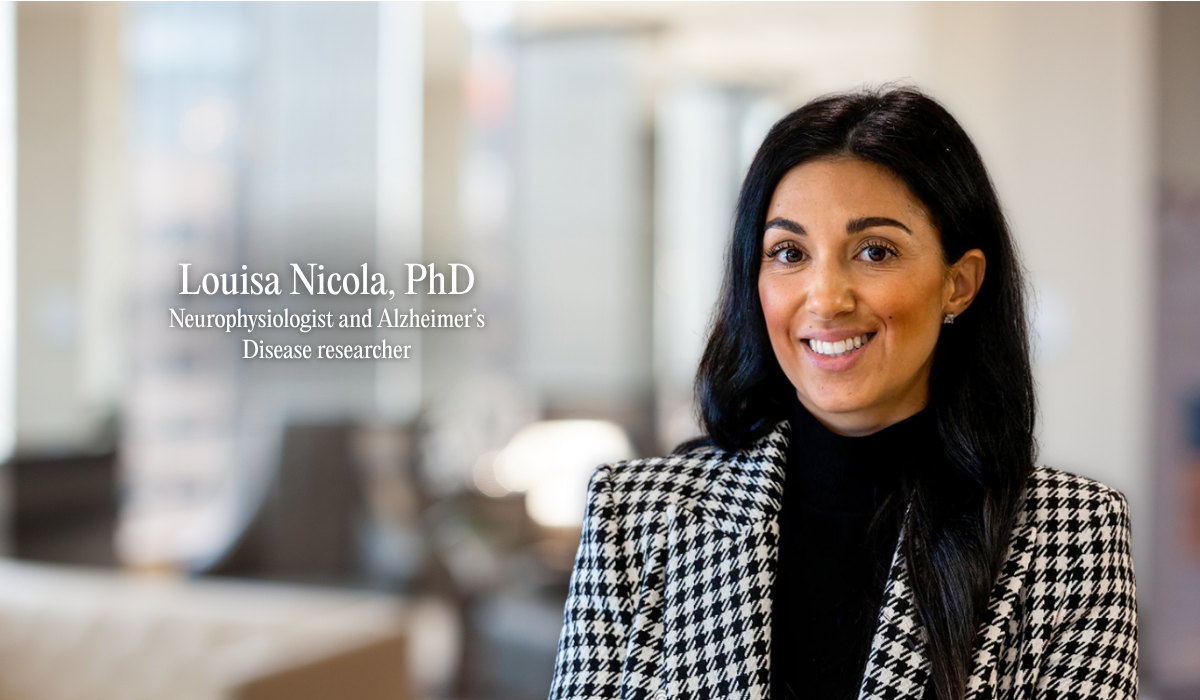
Louisa Nicola, PhD, wants to change this.
The neurophysiologist and brain health expert has spent her career studying what separates a brain that thrives from one that declines, and she’s more convinced than ever that it has less to do with genetics and much more to do with a handful of habits proven to protect your brain for decades to come. And having a cognitive assessment now—ideally well before any memory or other cognitive symptoms surface—means more of us would have the information we need to intervene and prevent the decline of our brain health, says Dr. Nicola.
“How your brain ages is in your control,” she says. “Unfortunately, we don’t prioritize our brain health. We think about cardiovascular disease, because it’s the number one killer here in the United States. We’re not taking the same kind of proactive approach about our brain health, but we should be.”
This week, The Sunday Paper sat down with Dr. Nicola to talk to her about cognitive testing, who should consider it (and when), and what the science says about the best ways to build a healthier brain now and for years to come.
In this article, you’ll learn...
- The age Dr. Nicola says everyone should get their first cognitive test
- The different types of cognitive testing available, and how to know which one is right for you
- How much brain aging is actually within your control (the answer may surprise you!)
- The two-session-per-week workout habit shown to reduce Alzheimer’s risk by 50 percent
- What to do if your cognitive test results come back with red flags
- The one piece of brain-health advice Dr. Nicola would give every American
A CONVERSATION WITH LOUISA NICOLA, PHD
Should healthy adults be getting cognitive testing before they have symptoms—just as we screen for breast cancer, colon cancer, and heart disease?
I think that cognitive testing should be exactly like getting your blood pressure checked—everyone should be getting it, especially over the age of 40.
Cognitive testing is a battery of tests that assess your memory, your decision making, and your processing speed. These are the three biggest levers we look for. With cognitive testing, we compare you against a normative database to make sure that your brain age is what it should be.
One of these assessments is called the Montreal Cognitive Assessment (MoCA), which is a basic screening tool designed to detect mild cognitive impairments and early signs of dementia. It’s the assessment you’ll likely get when you go to a neurologist with symptoms like short-term memory loss. But I think that everyone, starting in their 40s, should have this assessment. The reason I say 40 is because that’s when we start to see a decline, especially for women.
What’s involved in cognitive testing?
It ranges, depending on the testing you do. There are non-invasive tests, like the MoCA. There are brain checks you might do in a neurology clinic where you answer a series of questions on an iPad where you’re prompted to do various drills that test your speed and reaction. With these types of cognitive tests, we’re not looking for pathology, we’re just trying to assess your brain’s functioning.
The next step is doing something called an EEG (electroencephalogram) or a QEEG (quantitative EEG), where we put a specialized cap on your head and measure about 20 different markers of cognition to see how your brain is functioning. With these tests, we can pinpoint areas of the brain that are and aren’t performing well. The beauty of getting this testing done proactively is that it gives us time to intervene. Unfortunately, when it comes to neurodegenerative diseases, we can’t go back once you’ve been diagnosed. Yes, we have FDA-approved medications to slow the progression of disease, but those medications come with many risks.
Many people are afraid of what they might learn if they go through cognitive testing. What do you say to someone who isn’t sure they want to know?
Everyone is afraid of what they’ll find out. I understand this.
I’m a huge advocate on testing for the APOE (apolipoprotein E) gene, and most people are afraid of doing this testing because they think they can’t move the needle if it comes back positive. Here’s what I say to that: If you’re crossing the road, you want to look both ways, because you want to see if a bus is coming, right? Because if the bus is a mile away, you have time to intervene. But if the bus is a tenth of a mile away, you may not have time to intervene.
It’s also important to remember that a cognitive test isn’t going to assess any pathology, such as a tumor in your brain that’s going to kill you. It’s just going to give you an assessment of whether or not your brain is functioning correctly. And if that functioning is lower than where it should be, there are so many interventions available right now—from cognitive therapies to lifestyle changes like exercise and sleep. We don’t have to be scared because we have so much information on interventions that really can help.
If someone learns they’re at increased risk for Alzheimer’s, what can they actually do about it?
The best things that you can do, by far, are focus on sleep, exercise, and proper nutrition. This is especially important for women. Here’s why:
Take a male and a female, both 45 years old, both with the same genetic predispositions of Alzheimer’s. The woman has a two to three times increased risk of developing Alzheimer’s. It’s unfair, yes. So, what do you do? You double down on your omega-3 fatty fish intake. You double down on exercise. You double down on bringing your cholesterol markers down. (The APOE4 gene is responsible for cholesterol metabolism in the brain, so when we know there’s a mutation, it means it’s not functioning well and can’t transport fats correctly.)
Exercise and sleep are also key. The brain is the most vascular rich organ in the entire body. Physical activity helps to get a perfusion of blood to the brain to keep it healthy, and sleep is when we clear out the amyloid plaques that build up during the day.
If someone has a cognitive assessment and the results aren’t great—let’s say it shows mild cognitive decline—what’s the next step?
I personally would do a series of follow-up testing. Let’s say you’re a 50-year-old woman coming in with mild cognitive issues. I want to know why you’re having these symptoms. I’d do a MoCA test and repeat that test again, just to make sure something like being sleep-deprived isn’t prompting your poor score. I’d also do a series of other cognitive tests, including a P-tau217 (a blood-based biomarker that detects Alzheimer’s disease pathology) and APOE4 genetic tests. If testing is indicative of some kind of pathology—say, tau proteins in the brain—I would then order a functional MRI or an MRI with volumetrics to measure your hippocampus, the little seahorse-shaped structure in your brain, that’s the first thing to go during Alzheimer’s disease. With the right testing, we can figure out if your hippocampus is atrophying faster than somebody else’s at your age over a six-month period.
How much of brain aging is within our control?
Ninety-five percent.
I am at the forefront of this disease every single day. I’ve published papers. I have all of the available evidence. I’ve seen nothing to show me that anything outweighs lifestyle interventions when it comes to preventing Alzheimer’s disease.
Of all the lifestyle factors that influence brain health, what has the strongest evidence behind it?
Exercise. I recently published a study in the Journal of Aging that found all you have to do is two sessions of resistance training per week to reduce your risk of Alzheimer’s disease by 50 percent. Just two sessions.
What’s one thing most people are neglecting when it comes to their brain health?
Social interaction and stress management are hugely underestimated.
Also, what we know about the brain is that you need to stress it for it to grow. You have to provide a stimulus for new connections between neurons to grow. One way to do that is by reading, writing, and doing math problems. But thanks to AI, we’re doing less of all of that. We’re not reading or doing hard math problems anymore because we’ve got ChatGPT. Who needs to do the math to figure out what 20 percent of your bill is so you know how much to tip when you’ve got ChatGPT?
If you could give every reader one piece of brain-health advice today, what would it be?
Make your brain your best friend. If you make your brain your best friend, talk to it, love it, give it what it needs to thrive, it will treat you well in return.
Think about your brain as a bank account. What are you depositing into it every day so you can get the biggest return on your investment in the next 10 to 20 years?
Answer
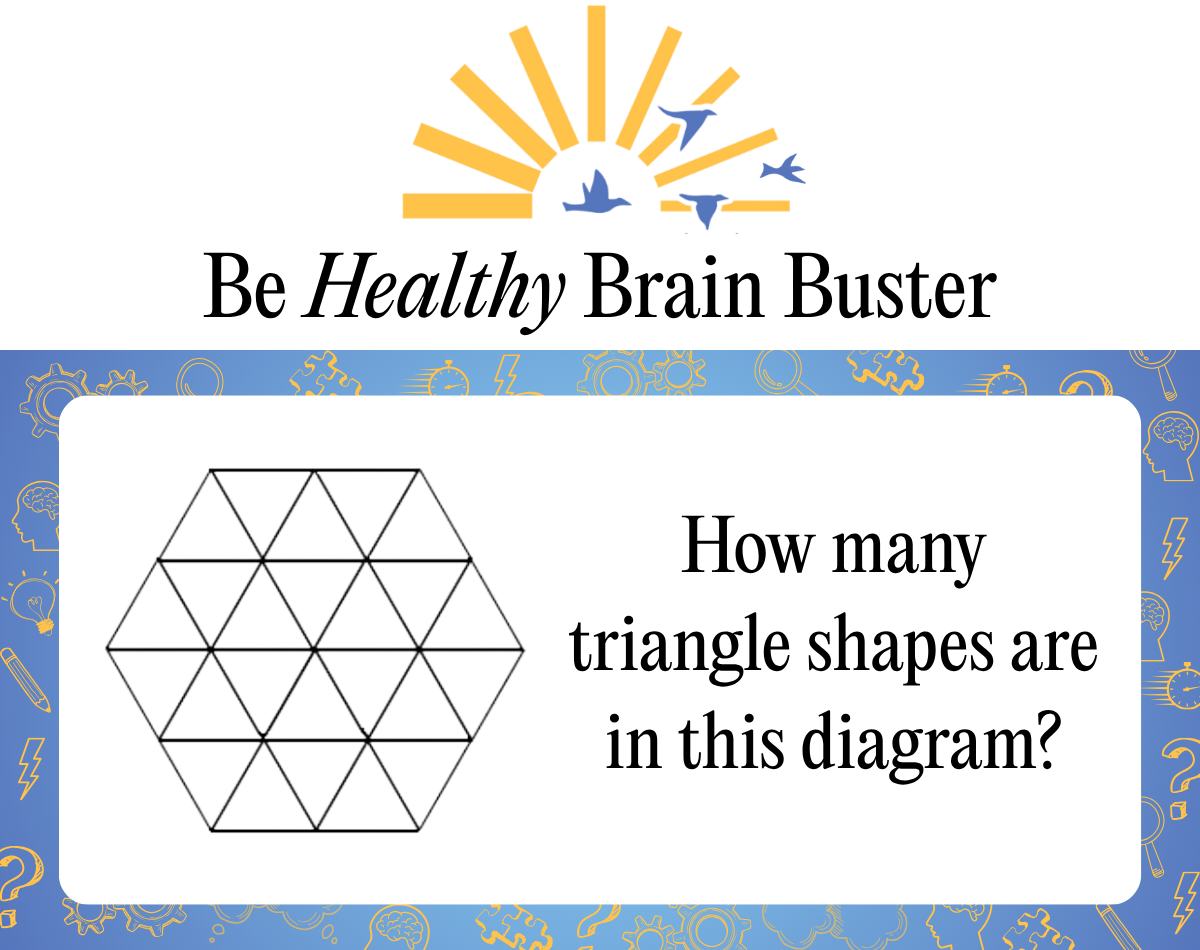
There are 38 triangles.
Please note that we may receive affiliate commissions from the sales of linked products.