How to “Stay Calm” in Investing—and Life

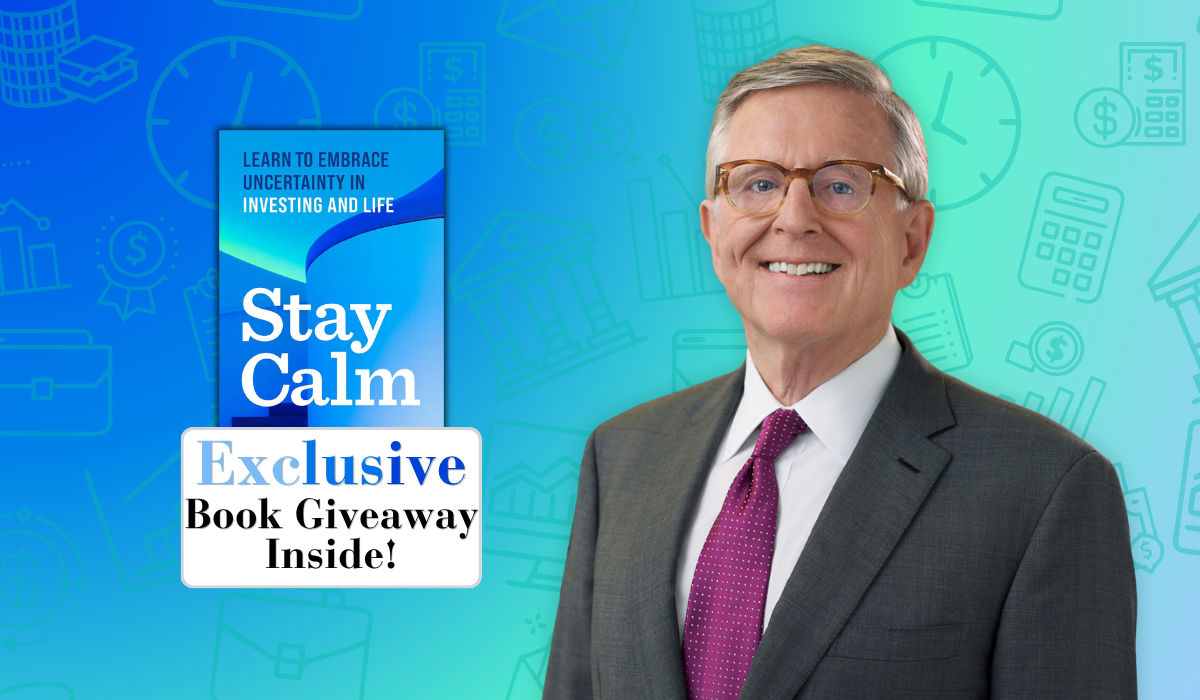
To celebrate the new release of Stay Calm, David Booth and team are giving away 5 copies to Sunday Paper readers who start a free 30-day trial of Sunday Paper PLUS. Start your trial and enter the giveaway here!
~ Maria and The Sunday Paper Team
From headlines to politics to relationships, life is filled with uncertainty that can spark panic and fear. Yet David Booth argues that uncertainty is not something to fear, but something that creates possibility.
The key is having “the right mindset about dealing with uncertainty,” he says.
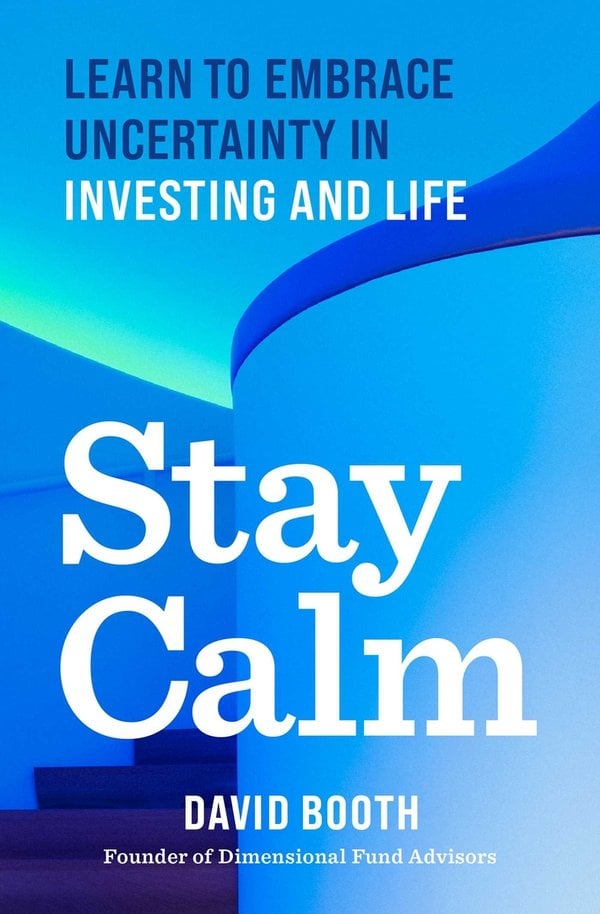
Booth has spent five decades honing that mindset around personal finance. As founder and chairman of the private global investment firm Dimensional Fund Advisors, he’s spent his career researching financial theory and developing an approach grounded in long-term thinking. In his new book, Stay Calm, he offers a guide to building true wealth, rooted not in forecasts or shortcuts, but in the science of how markets work.
What makes Booth’s wisdom most compelling is its parallels with life. Just as he believes in an emboldened, steady path to personal investing, he says this same approach can guide how we live our days.
He discussed this with The Sunday Paper, offering more on the genesis of his book, how uncertainty can create opportunity, and the merits of staying calm, in finance and in life. The following are six insights from our conversation.
6 Pieces of Wisdom on Finances and Life
#1: Know You Belong
Booth says he wrote Stay Calm in many ways for his parents—two people who never felt comfortable investing in the market. “They thought of themselves as outsiders,” he says, adding that they worried that the money “insiders” would just take advantage of them, so they opted out of investing.
While Booth understands his parents’ mindset then, he urges people today to think differently. He wants people to know there’s a place for everyone to invest in the whole market, as the data shows it can be a promising opportunity.
“So my parents, as outsiders, if they were living today, I would say, ‘Get rid of that idea! Everybody can buy the market portfolio,’” he says. Investing is nuanced, of course, but first you “ought to feel optimistic, like you're going to get a fair deal, if you buy the whole market.”
#2: Embrace the Truth that Uncertainty Creates Opportunity
About 10 years ago, Booth realized that while investing money is complex and involves uncertainty, the same goes for all of life—and that unpredictability opens doors. “If there were no uncertainty in life, you wouldn't have been able to progress the way you have,” he says. “Similarly, in investing, if there were no uncertainty, then all investments would be riskless and would give you a riskless return. So it's not about eliminating uncertainty; it's about managing uncertainty. Control what you can control and manage what you can't.”
#3: Stay the Course
Booth sees people reacting to market changes with fear and trying to predict what will happen. People panic or become paralyzed in thinking a dip is the end of their financial world, so they make rash decisions to try to beat the market. But as Booth writes, “markets aren’t something to fight or outsmart; they’re something to participate in.”
Booth credits his measured outlook to his robust study of financial science over the past five decades. When left to do their work, public markets reward those who stay long term. “Every investment strategy I’ve helped develop over the past five decades rests on two foundations: sound scientific evidence and the discipline to stick with your plan even when headlines are alarming,” he writes.
So know there will be ups and downs, and trust the science behind staying the course.
#4: Embrace That There Are No “Right Answers”
“Another problem is that people often have an intuitive notion that there are optimal solutions,” adds Booth. “They think there is a right answer.” But the truth is, there are no definitive “right answers” in investing or life. There are trade-offs. “So, it's really trying to figure out how you can make the best series of trade-offs.”
And never “be bashful about getting professional help—whether it’s in life, in medicine, or in investing,” he adds.
#5: Focus on the Quality of Your Decisions
“Above all, judge yourself by the quality of the decisions you made, not the outcomes,” says Booth. Not everything will always work out the way you hope, he continues. What matters is that you believe in the actions you take. Adapt and remain flexible, play for the long haul, pay attention, and know that even with the bumps along the road, you can and will get back on track.
“I'm committed to trying to make the best choices I can, and that's all I can do. Just keep repeating that to yourself,” says Booth. “It sounds simplistic, but it really isn't. It is very robust. It comes from [decades of] studying uncertainty and great econometric models. Not only is it applicable to running an economy, but it's also true for leading your life.”
#6: Protect Your Values
The noise is relentless these days. Open social media or turn on the TV, and dozens of experts are telling you how to spend, save, invest, and live. Some may be helpful, others not so much. What matters most is staying anchored in your values, says Booth. “When I hear things, if something sounds interesting, I ask, Does that make sense? Is there anything in life that would say that that person's opinion would be sensible? Is what they're saying consistent with my set of values or my intuition?” Pause to check in with the science, your integrity, and what matters in your life.
Speaking of what matters, Booth brings it back to his parents, who were his ultimate teachers of true abundance. They taught him not about money for money’s sake, but about the priceless things in life. “I characterized [my parents] as being wealthy. They just didn't have much money,” he says. “For them, true wealth was family and being able to set three meals a day. Basic stuff. And a big part of their goal was making it easy for their three kids to progress. That’s wealthy.”
Booth encourages you to ask yourself why money is important to you. You’ll likely find it isn’t about numbers or budgets, but about what it can give you—freedom, security, giving back, family time—in your life.
For five decades, David Booth has bridged the worlds of academic theory and practical investing, collaborating with Nobel laureates to build Dimensional Fund Advisors into a $1 trillion global firm that has democratized evidence-based investing for millions. Learn more at dimensional.com.
Please note that we may receive affiliate commissions from the sales of linked products.