Most Women Who Get Breast Cancer Don’t See it Coming

Breast cancer is one of the most common cancers women face. It’s also one of the most feared.
Yet for something so widespread and widely discussed, breast cancer is often misunderstood. Many of us assume we aren’t at risk because we don’t have a family history. (Spoiler alert: That’s not true.) Too many of us don’t know what actually drives our chances of getting breast cancer, or what changes in how our breasts look and feel we should pay attention to.
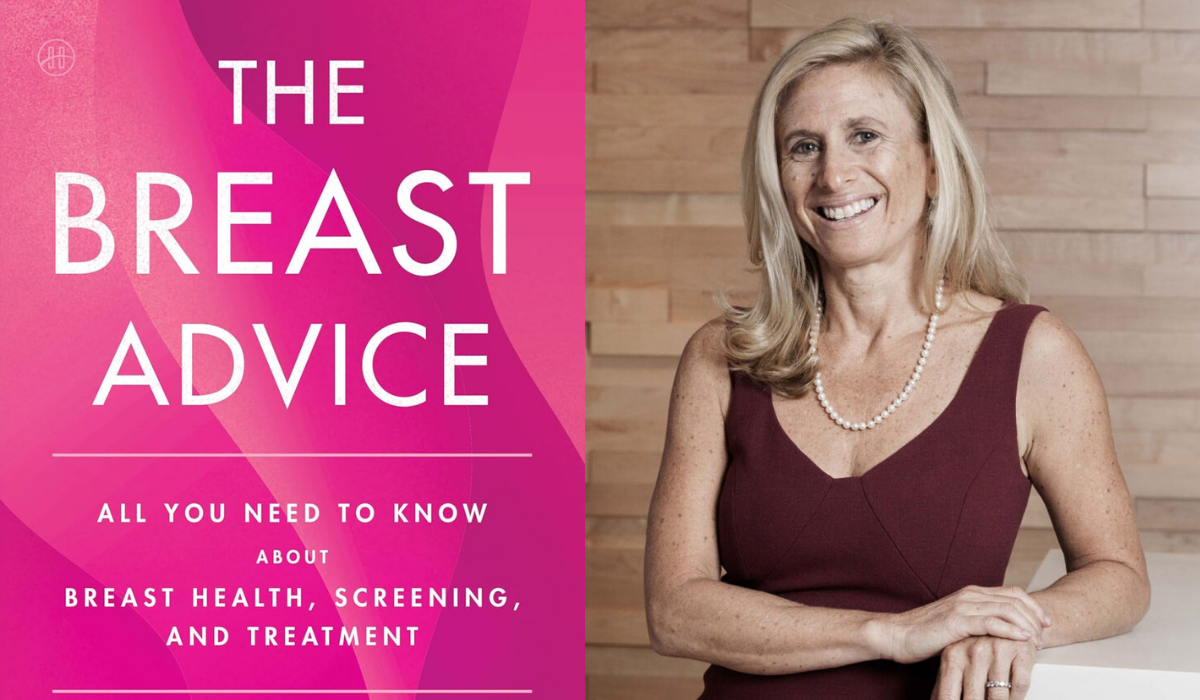
Dr. Elisa Port wants to change this. She’s one of the country’s leading breast specialists and author of the new book, The Breast Advice: All You Need to Know About Breast Health, Screening, and Treatment. She’s on a mission to cut through the noise and misinformation that too often shapes how we think about breast cancer risk, prevention, and treatment and replace it with clear, evidence-based information and advice.
Want to know what Dr. Port wants every woman (and man!) to understand about what truly makes a difference when it comes to breast health? Read on.
In this article, you’ll learn...
- Why family history isn’t everything when it comes to your risk of breast cancer
- The risk factors you can control that really do reduce your risk
- When a mammogram isn’t enough and more screening is necessary
- Who should consider genetic testing
- The signs of breast cancer you should never ignore
- The biggest myths about breast cancer, debunked
A CONVERSATION WITH ELISA PORT, MD
What are the most important things women can do to reduce our risk of breast cancer?
There’s a huge misconception about what puts you at risk for breast cancer, starting with the fact that 90 percent of women who get breast cancer have no family history of it. Ninety percent. So many women who’ve been diagnosed with breast cancer walk into my office saying, “How did this happen to me? I’m not at risk. I have no family history.”
So, what should be on a woman’s radar when it comes to risk?
I like to talk about risk in terms of factors that you can control and factors you can’t control. For example, one of the things that can increase your risk a little bit that you can’t change is getting your period early or going into menopause late. This is because there are longer years of hormone exposure due to your menstrual cycles.
What can you control? The number one factor is maintaining a healthy body weight. Everyone thinks that schlepping around an extra 10, 15, or 20 pounds is just cosmetic, but that’s just not true. Fat stores are very metabolically active, and they produce hormones that can lead to breast cancer.
Alcohol intake is another factor. We used to say that it was a sliding scale, where very low amounts of alcohol probably don’t affect you at all compared to moderate or heavy drinking. We now know that no alcohol is better than even one to three drinks a week, likely due to hormones. Alcohol is metabolized in the liver. Hormones are also broken down in the liver. If the liver is so busy breaking down the alcohol you’re drinking, it probably doesn’t have the bandwidth to break down the hormones—and so the body sees more circulating hormones that may increase your risk of breast cancer.
Finally, it’s also important to know that there’s no single dietary element that causes or prevents breast cancer. Blueberries and green juice don’t prevent breast cancer just like sugar doesn’t “feed” breast cancer.
When it comes to screening, most women think they’re covered if they’re getting their annual mammogram starting at age 40. When should women consider additional screening like ultrasound or MRI, and how do you know what’s appropriate?
I’m so glad you’re asking these questions, because what I want people to know is that while I wrote a book about breast cancer and how to navigate that pathway if you’ve been diagnosed, the whole first half of the book is about breast health.
Yes, for women at average risk, you start your mammogram at age 40. If you have a family history of breast cancer, it’s typically recommended that you start screening about 10 years younger than when your family member was diagnosed.
If you have dense breasts—which 50 percent of women in younger age groups do—it is very appropriate to add on an ultrasound, which can pick up things a mammogram might miss. Adding on an ultrasound is easy if you have dense breasts. We typically reserve breast MRI for women in the high-risk levels.
How do we define high risk?
The average woman’s risk of developing breast cancer is about 10 percent over her lifetime. We do breast MRIs when there’s a 20 percent risk level and above.
There are ways to calculate your risk using online risk models, like this one, which you can learn more about here.
Who should consider genetic testing for breast cancer, and should we ask for it?
This is a tricky question. The short answer is that everyone should consider testing. The longer answer is that there are criteria that are “red flags,” where we say you should definitely get tested.
Anyone newly diagnosed with breast cancer should be tested. If you have a family history of breast cancer, ovarian cancer, prostate cancer, or pancreatic cancer, you should get tested. And remember to pay attention to both sides of the family. A lot of people don’t realize that you can pass down genetic risk for breast cancer from a father’s side. There are a lot of people, including myself, who say all Ashkenazi Jews should be tested, because one in 40 of us will have breast cancer.
Overall, I think people should have a low threshold for testing, because there is very little downside as long as you are prepared to handle the information. There is a misconception that if you get genetic testing, someone is going to bully you into doing really aggressive surgery. It doesn’t happen that way. There is good screening for breast cancer, and I monitor a lot of women who have the gene who aren’t ready or may never be ready to have preventive surgery.
You have a mantra: “If you feel something, say something.” What changes in breast tissue are normal, and what should never be ignored?
Well first, I think the biggest mixed message we’ve received is about breast self-exams. The United States Preventive Service Task Force does not recommend breast self-exams, which is insane. The irony is that they do recommend that you be familiar with what’s normal for you. How can you do that if you don’t do breast self-exams?
Lots of women have lumpy, bumpy breasts, especially younger women. What you’re looking for is what we call a dominant mass—something that stands out against the background and feels different from the kind of wavy lumpiness you may feel in other areas. You also want to look for something that’s new compared to previously, which you could only know if you know what’s normal for you previously. Then there are some more subtle signs, like skin dimpling or puckering, changes to the nipple, scabbing of the skin, and lumps under your arm.
If you are a young woman and you’re still cycling, it is very reasonable to wait a cycle and see if any changes you’ve noticed from what’s normal for you goes away. A lot of women get these hormonally stimulated lumps and bumps leading up to their period, which then recede. Those are not worrisome. If you’re post-menopausal, any lump or other changes in look or feel requires immediate attention.
What are the biggest myths about breast cancer or breast cancer screening you see circulating right now that you’d like to debunk?
There are two main ones. One is that a needle biopsy can spread cancer cells. When a woman feels a lump or we see something on a mammogram and we’re concerned, the first step is a biopsy. The standard of care for doing a biopsy is to stick a tiny needle in that takes out snippets of tissue. The reason we do this is because it’s noninvasive and gives us a diagnosis. If the biopsy is normal, you can avoid surgery altogether. The big thing that people worry about is that a needle biopsy will spread the cancer if it is, in fact, cancer. However, needle biopsies do not spread cancer.
Another big myth is that mammograms cause cancer due to the dose of radiation you get. I tell people that a mammogram is equal to about five or 10 flights. So, if you really are concerned about that level of radiation, it’s hypocritical to fly. The perception that mammograms cause cancer because of radiation exposure is wrong, and it prompts women to use other screening models that are not the gold standard.
What do you wish every woman understood about her breasts, and her power to protect her breast health?
Breast cancer is the most common cancer in women. Everyone is at risk. But the cure rates are so high now—above 91 percent overall.
I think breast cancer strikes fear in the minds of those who are worried about it, and certainly those who get it. That’s understandable. But it is something we absolutely can take care of and cure. There’s so much room for optimism. That’s what I really love about my field.
Elisa R. Port, MD, FACS, is a breast surgeon who specializes in the care and treatment of patients with breast cancer and those at increased risk for breast cancer. She is the author of The Breast Advice: All You Need to Know About Breast Health, Screening, and Treatment.


Answer
19 total stacked cubes
Please note that we may receive affiliate commissions from the sales of linked products.