One Foot in Front of the Other
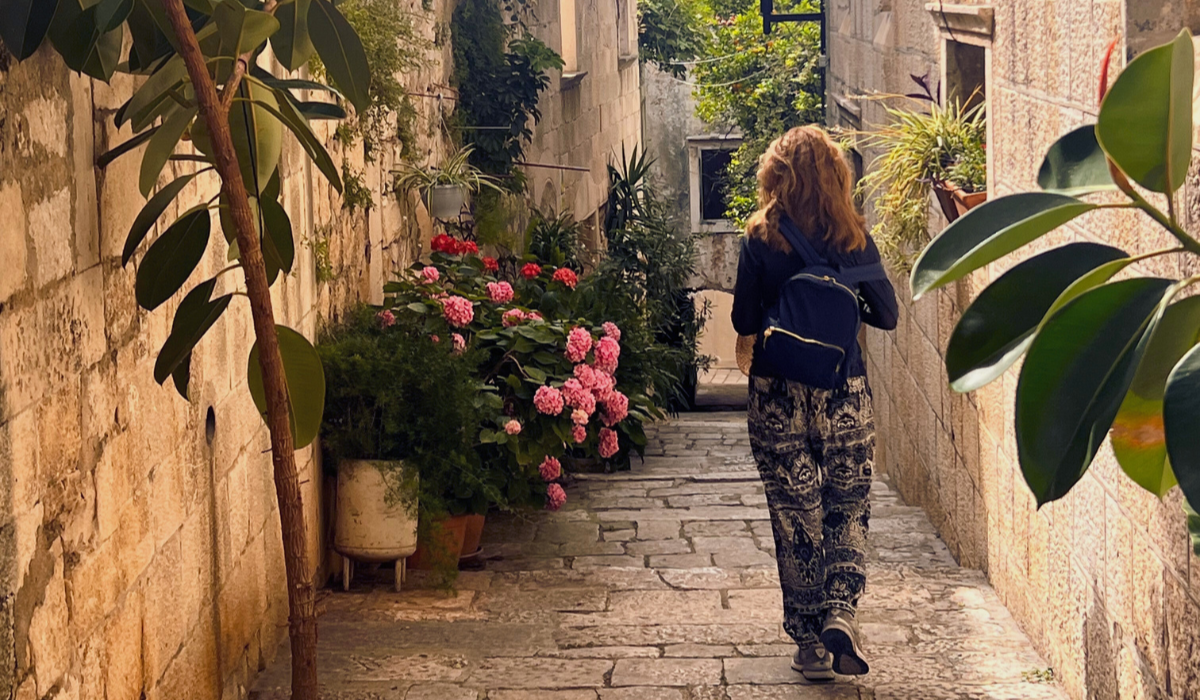
When you read this, God willing, I will be on the Camino de Santiago.
I will be walking alone. Away from the noise. Away from the news, the notifications, and the relentless pull of a world that wants every last bit of my attention. I have traveled here with one intention: to pay attention to what my heart and soul are asking of me.
I have a birthday coming, and I wanted to walk into a new year of my life grounded not in my calendar or my to-do list or the latest outrage demanding a response, but in my heart and soul. I wanted to feel my way forward for once, instead of think my way forward. I wanted to get out of my head and feel my way into what actually matters to me now.
I have told you before that walking the Camino has been on my list for years. For centuries, people have walked these paths across Europe in search of faith, meaning, healing, clarity, or simply a way to find themselves again. It’s a journey made on foot that asks you to slow down, strip away the distractions, and pay attention to what matters most.
I told you in the spring that I couldn't stop thinking about doing it, and I've learned to pay attention when something won't leave me alone. So I stopped waiting for the perfect time and decided to just go.
The Camino is a pilgrimage. It’s not a vacation, and it’s not exercise. It’s a deliberate, physical, spiritual act of putting one foot in front of the other and trusting where the road leads. It’s a chance to pay attention—really pay attention—to what my body is telling me, what my heart is telling me, and what I am hearing from God.
Before I left, a friend said something to me that I haven't been able to ignore: “If someone doesn't know your feelings about this well, then they are not paying attention to who you are.”
Paying attention is an act of love. I sat with that for a long time. I'm still sitting with it.
How many of us are truly paying close attention to the people we love? Are we able to say, with any certainty, that we know how a friend is feeling—not what they say on the surface, but what’s actually going on beneath it? Do we notice when someone drops a hint about something that matters deeply to them? Or do we find ourselves caught off guard, realizing we missed the clues because we were somewhere else entirely?
I find it increasingly difficult to pay attention to what truly matters. I find myself pulled in so many different directions. And I don’t like that feeling.
In the week before I left, several things grabbed my attention, and I want to tell you about them because they are part of why I needed to go.
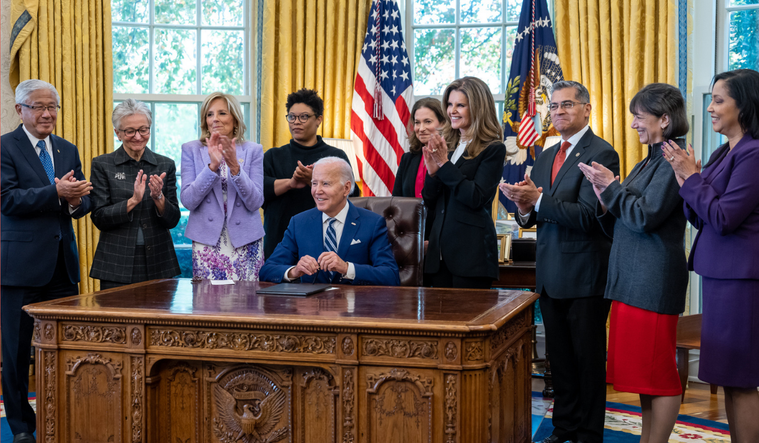
Melania Trump got my attention when she announced a new "transformative White House initiative for women's health." The president stood beside her and said that no one had done anything like this before. He said it was a first. That is categorically false, and I believe the truth deserves to be on the table. Two years ago, Dr. Jill Biden and President Joe Biden launched a truly historic White House initiative on women's health and research, and it was genuinely the first of its kind. I was there. I was honored to work alongside Dr. Biden on the initiative, and I watched what it sparked: an explosion of public and scientific interest in women's health that continues to this day.
I am not attacking Melania Trump. I welcome her into this space. Women need the government to pay attention to their health needs, particularly women in rural America. We need every champion we can get. And when a First Lady focuses on an issue, it can change things. I sincerely hope this new initiative will be backed by the funding women in this country need and deserve. The federal government currently spends less than ten cents of every NIH research dollar on women's health. That has to change, and if Mrs. Trump can change that, bravo.
But gaslighting, erasing what came before, or claiming something is first-of-its-kind when it isn’t, are dangerous. It is dangerous in personal relationships, and it is dangerous in public life. I went into journalism in pursuit of the truth, so when something is presented to the world as something it isn’t, it gets my attention. That’s why I’m so grateful to have Dr. Carolyn Mazure, the chair of the Initiative on Women's Health Research led by Dr. Biden, writing for us this Sunday. She helps us set the record straight and also shed light on what needs to happen next.
And now, as I write this, there is news that Melania Trump has helped broker a temporary ceasefire between Russia and Ukraine in the city of Oleshky, allowing for humanitarian aid and the planned evacuation of civilians. If it holds, this ceasefire could bring desperately needed relief to people living in devastating circumstances and amidst a deepening food crisis. That matters, and I want to acknowledge that. Because paying attention to the truth means being willing to recognize meaningful work wherever it happens, even when we disagree on other things.
Actress Christina Applegate also got my attention this week. She announced that her MS diagnosis was, in fact, incorrect. For years, she had been living under the assumption that she had MS, only to learn now that she doesn't. She said her doctor was thrilled to deliver the news, but she was not thrilled to receive it because it meant starting over and beginning the long, exhausting search for an answer all over again.
This is where millions of people live. Going from doctor to doctor. Being told everything is fine when something is clearly not. Not being believed. Not being heard. Not being paid close enough attention to.
It is a women's health crisis hiding inside a medical system that has historically not paid sufficient attention to women's bodies, women's symptoms, or women's pain. Christina's story is not unique. It is far too common. It's why I keep talking about the need for more research.
Something else also got my attention and my grief: the lack of ongoing attention to the Bend school shooting. A fellow journalist said to me: “Maria, remember when there was a school shooting and the whole newsroom would stop? We would cover it nonstop. Now it's a blip. It comes in, it goes. We've lost our attention span for it.”
Think about that. We have lost our attention span for mass death. I don't have words for that. I just know it's true. And I know what it costs us: our capacity for sustained outrage, our ability to hold grief long enough to demand change.
All week, things grabbed at my brain. The riots in France. A disgusting political ad in Ohio that stopped me cold. One thing after another demanded my attention, but none of it brought me any peace. None of it helped me center myself. None of it made me feel like I was operating from my highest self or working toward the highest good.
There were also polls talking about the coming blue wave and stories about how people fear that the president will not accept the results of the election if they turn out not to be what he wants them to be. But as for me, I’m feeling encouraged as we head into this final week before Election Day. I'm optimistic that people will really put their attention on this election. They know what matters and understand what's on the line, and I have no doubt that they're going to step up to reclaim our country.
By the end of the week, I realized: The Camino is exactly where I need to be. Not because the world's problems don't matter. But because the noise has become so constant, so consuming, that I’ve had very little attention left over for what nourishes me. For the quiet. For the self that needs tending. For my conversations with God and with myself.
If I want to think clearly and calmly about how best to live this next year of my life, I need quiet. I need to reacquaint myself with the me hiding inside. The one who isn't reactive. The one who can respond from a centered place.
So I started asking myself: How do I bring myself to my highest place? What do I need to do to operate day in, day out from this place? It starts, I believe, with how we treat ourselves. How we treat ourselves ends up being how we treat others, which is why I've been asking myself: What does it actually mean to love myself? Not as an idea, but as a daily practice?
I think it means being kind and gentle with myself. It means protecting the things that allow me to function and flourish: my sleep, my food, my exercise, my spiritual time, my quiet. It means not rushing myself. Rushing gives me anxiety, and I've started to recognize it as a form of unkindness I inflict on myself.
It means standing up for what I need. Being clear about things I believe in. Having the strength to use my voice for what I believe in from a centered, calm place.
And it means spending real, unhurried time with my children and grandchildren. Time when I am actually there, not half-present and half-somewhere-else. Because time with them fills me up. It makes me feel like I'm paying attention to what truly matters.
That is what loving myself looks like at this time in my life. It requires paying attention to my own signals, my own needs, and my own life. (Speaking of time, I encourage you to read this week’s piece on time by my dear friend Martha Beck.)
I am also at my best when I am paying closer attention to the people I love. The people I care about. The people I work with and for.
I'm at my best when I'm really listening. And when someone tells me they are fine, I know now that there is more behind it. I know it requires a follow-up question. Because "fine" is often not the whole story. "Fine" is what we say when we haven't decided yet whether the person in front of us is paying close enough attention to hear the rest. A follow-up question is a signal: I'm here. I'm paying attention. You can tell me more. That is love. A small, specific, demanding act of love.
The philosopher Simone Weil wrote: “Attention is the rarest and purest form of generosity.” Who deserves your generosity?
She also wrote this, and it is why I am on the Camino: “Absolutely unmixed attention is prayer.”
That is what I am going to do out here on this road: pray. With my feet and my breath and the silence and the miles. I am going to get quiet enough to hear what has been trying to reach me through all the noise. I am going to pay attention, unmixed, undivided, whole, to God, to my own soul, to the life I am still in the middle of living.
I am walking into my next year asking the questions my friend's words put in front of me:
Who am I paying attention to?
Who deserves my generosity?
Where is my love actually going, in the time I have left here on this Earth?
I want to ask you the same.
This week, amid everything competing for your attention, everything pulling and grabbing and demanding, where will your unmixed attention go? Not the scattered kind. Not the attention pulled in seventeen directions by noise and news and notifications. The unmixed kind. The full kind. The kind that is, as Weil says, the same thing as prayer. Who will it be for? Your child who said "I'm fine" a little too quickly? Your friend who dropped a hint you almost missed? Yourself, the person you have been rushing past, too busy to tend to, too tired to hear?
Paying attention is the rarest and purest form of generosity. I am going to practice that on the Camino. And I am asking you to practice it wherever you are.
P.S. I will be thinking of you out there on that road. And when I return, I want to hear from you: Where did your unmixed attention go this week? Who did you pray for, even if you didn't call it that? Write to me. I read everything. And I believe that where we choose to put our attention may be the most important choice we make.
Prayer of the Week
Dear God,
Please help me find the peace and quiet to turn inward and, more importantly, to turn toward you. Quiet my mind and open my heart so I can truly listen to you, to my own heart and soul, and to what you are asking of me during my precious time here on Earth. Help me hear what matters, recognize where I am needed, and move through this life with intention, love, and grace.
Amen.
Also in this week’s issue:
Please note that we may receive affiliate commissions from the sales of linked products.