Refreshing Life Advice Everyone Must Hear

Twenty-five years ago, columnist Roger Rosenblatt released a funny, sharp collection of wisdom called Rules for Aging. The book became a national bestseller. Now, Rosenblatt returns with his follow-up, More Rules for Aging. As witty as the first, yet, according to the author, kinder and more generous, the book offers refreshing advice—“rules”—for a culture often prone to overlooking what truly matters.
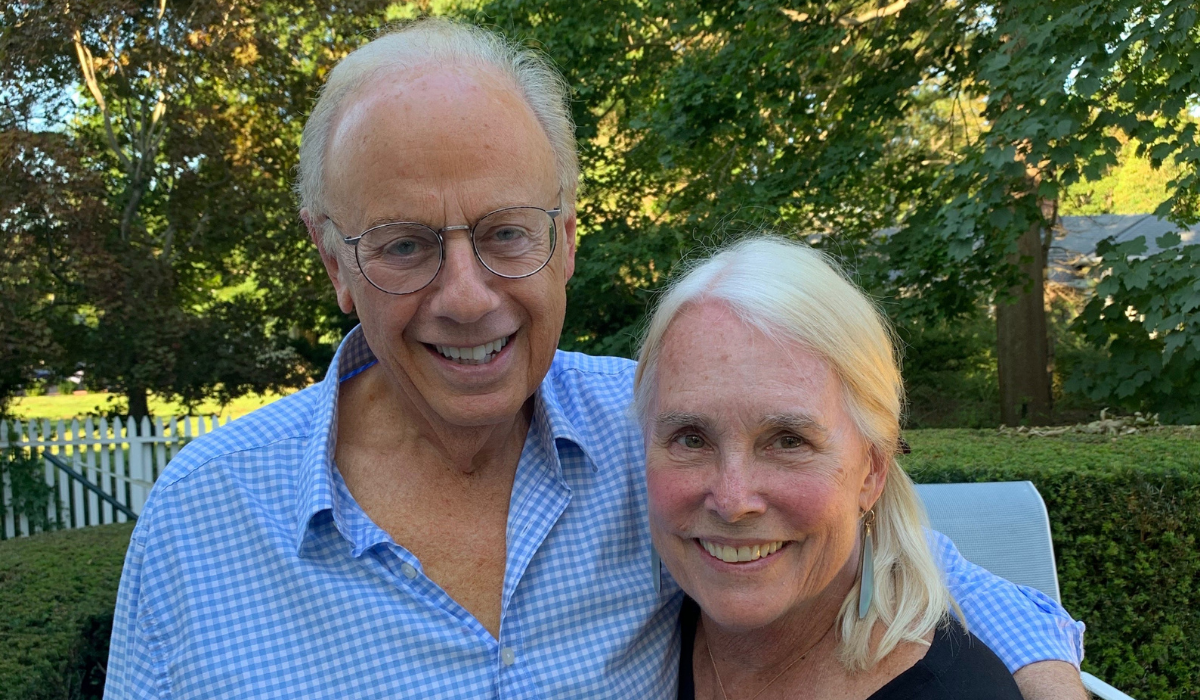
This is Rosenblatt’s gift: shining a light on deserving truths. In his recent New York Times essay, he penned a "love letter" to old ladies, with particular attention to his wife, Ginny. “Old ladies are wonders, winking lights in the universe, stars,” he writes, honoring wisdom with genuine reverence.
Rosenblatt’s perspective took our breath away—so we were thrilled to delve even deeper with him this week.
A CONVERSATION WITH ROGER ROSENBLATT
Your recent New York Times essay opens with Ginny, your wife of 62 years, describing her transformation from the dark-haired ninth-grade knockout you met at Friends Seminary into someone you find lovelier now than ever. Over the years, what have you observed in her transformation?
Every tragedy in our lives and every joy has left its mark on Ginny’s appearance. Her face is a history of all that can affect a long marriage. A map. I can read all our life in her eyes, along with the strength to deal with it.
What makes women in their 80s and beyond “lovelier than ever”?
Women in their 80s and older have borne everything—children, careers, the establishment of homes, illness in the family. All that has given them a certain power, one that says, I can bear and do anything. That confidence has a look, and it is beautiful.
You published Rules for Aging 25 years ago, and now you’re releasing the sequel, More Rules for Aging. What made you return to it, and how is this one different?
One reason I wrote More Rules is simply that friends like Garry Trudeau and Jane Pauley encouraged it. Also, Ginny—who remembered how much fun the first book was to write. The sequel is different from the original because there’s more kindness and generosity in it. More calm. Cleverness in writing can take you only so far. Sympathy takes you the rest of the way.
Rule 10, "Nobody’s thinking about you".... Is that a liberating thought, a lonely one, or something in between?
Liberating, mostly, if somewhat disappointing. People mainly think about themselves, just as you are doing now.
You write about nearly dying from an electrolyte crash, saying you “had an intimation of mortality that took the form of a lightness of mind and being—not a levitation exactly; more as if all the weight had been removed from my body. This filled me with as much wonder as fear….” Did you mean this as a spiritual reference?
The experience was all spiritual to me. I wasn’t even sure what an electrolyte was. I felt that I was departing this earth. I was heavy with sorrow at the thought of leaving my family and loved ones. But I also felt Havel’s “lightness of being,” the wonder of it. As a writer, I believe in wonder as a great creative, as well as natural, force. All that we cannot explain challenges our every word.
Rule 18 is "Believe everyone." In this chapter, you tell the story of Betty at the homeless shelter, who said she'd worked in Hollywood and been Miss Ohio, and you questioned her story, as any skeptical journalist would! What shifted in your thinking when you learned her story was true?
I learned, as the rule suggests, that life is unbelievable. Believe it.
You include the rule, "On Regrets," three times in the book. You say regrets “...are part of life, learn to live with them.” Tell us more.
Regrets are teachers, if you pay attention to them. I have too many to name, but I quietly strive to profit from them.
Rule 38, "Talk small," feels like a quiet act of resistance in a moment when everyone is so loud, screaming at each other rather than speaking to each other. Do you think there are still ways we can perhaps talk big and still have meaningful conversations?
Big talk is an act of power. Small talk is an act of kindness. I believe the world moves more powerfully on kindness.
Your book is a gift to young and old readers alike. What do you hope readers take from it?
I guess the thing I’d like people, young and old, to take from my book is that the world is a strange mix of the beautiful and ridiculous. Here we are, laughable and sublime. Insincere and faithful. Brave, cowardly, destructive, and self-destructive. And somehow more mysterious than the sum of our mysteries.
You alternate between funny, pithy passages and poignant prose, showing many sides of you and your writing. Did you mean for it to be a mini memoir of sorts?
That’s an exceptionally perceptive question. I didn’t intend it as a memoir, but I’ll bet you’re right. There’s one hiding in there.
Do you have one favorite rule of all time?
Everyone’s in pain. The sooner you realize that the sooner you’ll treat the world better and be a hell of a lot happier yourself.
Roger Rosenblatt is a memoirist, essayist, novelist, and a Guest Essayist for the New York Times. His new book is More Rules for Aging

Please note that we may receive affiliate commissions from the sales of linked products.