The Hidden Health Costs of Being the “Good Girl”
Here’s Your Exclusive Look Inside
Growing up the oldest and only daughter from our side of a big Texan and Lebanese family, I was raised in the traditional manner: to be the ultimate good girl. But within eighteen months of my 42nd birthday I was diagnosed with melanoma, multiple breast and ovarian tumors, active Epstein-Barr, heavy metal poisoning, and mold poisoning, in addition to debilitating flare-ups of the autoimmune disease Hashimoto’s thyroiditis, which I was diagnosed with at age 30.
The word “symptom” comes from an old Greek word that refers to something that “falls upon us or strikes us” in a way that wounds us or divides us against ourselves. But whenever I questioned why I was getting so sick, I would hear the same refrain from my doctors: “I’m not sure what to tell you.”
Only one integrative doctor in Los Angeles was not shy about sharing his thoughts as I ran my forty-something illness gauntlet.
“Beloved,” Dr. Habib Sadeghi said. “Why are you killing yourself, one wrong choice for your life at a time?”
“F you!” I replied. (By replied, I mean that’s what I screamed on the inside, followed by “How dare you tell me I’m doing this to myself?” As someone with a lifelong terror of disappointing others, there was no way I voiced that challenge aloud.) But I loathed the implication that I was responsible for making any choices that led to my body shutting down. Hell hath no fury like a good girl who worries she may have done something bad.
Still, in the weeks after that appointment, I began questioning whether I’d brought this on myself.
I didn’t understand how to draw the crucial distinction between blaming myself for my failing health and understanding the mind–body connection to healing, one of the many incisive points explored by psychiatrist Dr. Gabor Maté and his son Daniel Maté in their New York Times bestseller, The Myth of Normal. “Repression disarms one’s ability to protect oneself from stress,” they write. “Time after time it was the ‘nice’ people, the ones who compulsively put others’ expectations and needs ahead of their own and who repressed their so-called negative emotions, who showed up with chronic illness.”
For those of us who suffer with chronic or autoimmune issues, Nicole Sachs, LCSW, coach and author of Mind Your Body, explained, “Your autoimmune flare is just your nervous system saying, ‘It feels like that big bad world out there, with all of its many triggers that make so much sense, is too dangerous—so may I offer you a respite?’”
And that respite from the overstimulating, difficult environments we find ourselves in comes in the form of pain that, in essence, takes us out.
“There’s no shame in something that’s automatic,” Nicole writes. “And once people start to understand, A, that it’s not their fault, and they’re not doing anything wrong, and B, that their systems are actually on point, because the predator is in the room, and what else would you have your system do? It’s the same as pulling your hand off a hot stove or jumping out of the way of something coming that could hurt you.”
Ultimately, Nicole said, it becomes “a conversation around empowerment.” It was a mic-drop statement I wish I had heard years earlier, because it would have become my new mantra. Like, learn-to-embroider-just-so-I-could-put-it-on-a-pillow mantra: “Life is a choice between what hurts, and what hurts worse.”
For me, this would have meant asking myself, “What hurts worse?” Disappointing everyone around me, failing at their “good” expectations of me, upsetting their understanding of my needing nothing so I could handle more? Or living more days in a chronically diagnosed pain cave?
A few months after Dr. Sadeghi’s challenge, I set out to understand my own health in the way I knew best: I mapped out a literary documentary of my life, featuring every up, down, and sideways tale of my personal power and my health. With the help of my mother’s incredible archival “Kid’s Health Calendars” from the 1970s, 80s, and 90s, I started to investigate spans of my girlhood when I began to systematically repress my voice and compromise my needs and map out the possible effects on my health.
Along the way I searched for other sources of validation and confirmation, from scientists and experts to best friends and focus groups. What I observed over and over again, in myself and in the women I spoke with, was that we had all been raised as good girls—empowered to caretake but disempowered to safely have and express our own needs. I observed that it was when I was living unconsciously from my conditioned nice girl and oldest daughter identity that I became sick or newly diagnosed. When I was sovereign in my voice, my needs, and my worth, I stayed well.
The correlation was undeniable, but I wanted to know why. After connecting these upsetting dots, I vowed to put my own needs first, both emotionally and physically.
If disempowerment got me sick, could empowerment help get me well?
I would try to no longer self-surrender to be the good girl everyone expected of me. I slowly began to awaken and break the unconscious, disempowering patterns, like my chronic self-betrayal and the steady deprioritization of my own needs. In their place, I started to set boundaries. (I will fully confess I Googled “how to set boundaries.”) I began to introduce myself to my own intuition: “Hi, I’m Sara, are you still in there somewhere? I think I owe you a massive apology.” And I began to replace the fear of disappointing others with responsibility for my own health.
When I saw my doctors the following year, I learned that my diagnoses had been reversed or were in remission. Every single one of them. Which is not to say the process was, in any way, easy, or natural, or graceful. But after seeing the positive results on my health from rewiring my good girl and caretaker identity, I knew I would need to study how these factors affected the immune system at scale if I were to help other women like me.
In 2023, I commissioned Autoimmunity and the Good Girls™, the first sociological survey exploring the intersection of female empowerment and autoimmunity in American women. More than 2,500 women participated, 1,000 of whom had been diagnosed with at least one autoimmune disease. We learned that 63 percent of women with autoimmune diseases were either the only or oldest daughter in their family. And of the women who grew up as the childhood caretaker, 84 percent said “I find it uncomfortable to receive help, compliments, or generosity” and 79 percent said “I quiet my own pain or suffering because I don’t want to be “too much trouble.”
While I loved seeing the echo of birth order of eldest and only daughters as majority percentages of women with autoimmune, what I found even more potent is the number of women who had a girlhood defined by caretaking. That girlhood identity, raised in very tight sets of permissions, in environments that make the girl feel safer when she is dutiful for others instead of true to herself, are yielding splintered senses of self.
It all led me to this: a girlhood self-identity in compromise is yielding a womanhood immune system in compromise.
But take it from me, a recovering “good girl”: We cannot allow ourselves to continue being more afraid of disappointing others than doing what is needed for our own care. Changing my relationship to this construct changed everything for me. We are worthy of having wants and needs. We are worthy of bringing them out into the world through our voices, and we deserve to have them addressed and fulfilled. Most of us were never told or taught this, but we can re-parent ourselves one step at a time. I am living proof that it can be done.
I now gently invite you to:
- Believe that it is never too late to prioritize yourself.
- Acknowledge your body is your partner and messenger, not your enemy.
- Get comfortable speaking new phrases, such as “No, thank you, that’s not what I need right now,” “Can I please ask for your help with something?” or “I’m hurting. And here is what would be really comforting.”
- Befriend your inner girl whose turn it never was until now to take her turn, and to mother her in the way you know you need today.
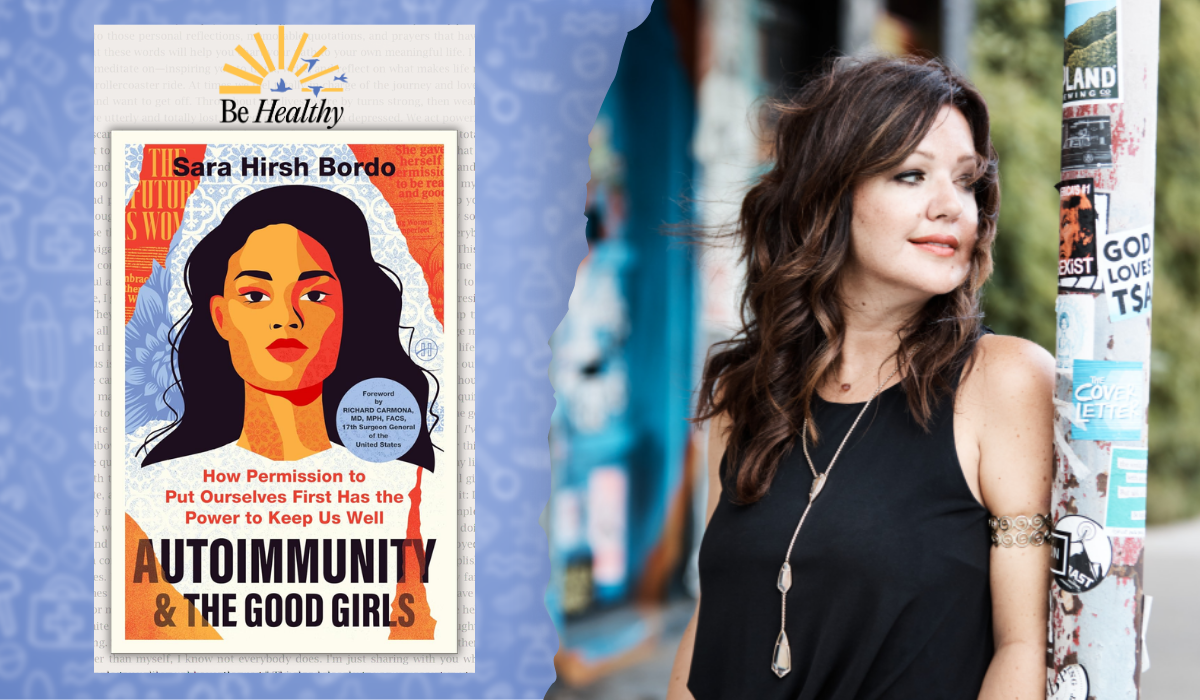
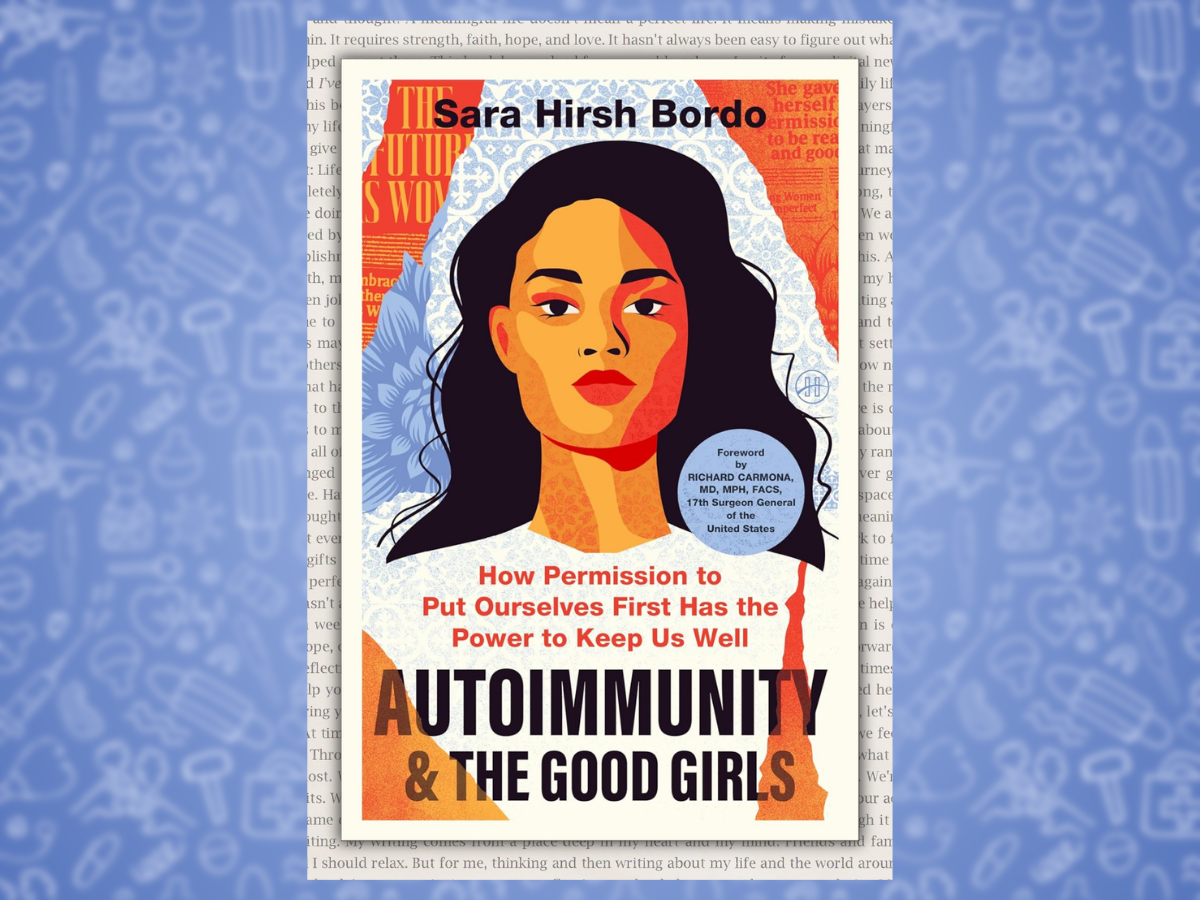
Excerpted from Autoimmunity and the Good Girls. Reprinted with the permission of the publisher HarperOne, an imprint of HarperCollins. Copyright ©️ 2026 by Sara Hirsh Bordo.

Please note that we may receive affiliate commissions from the sales of linked products.