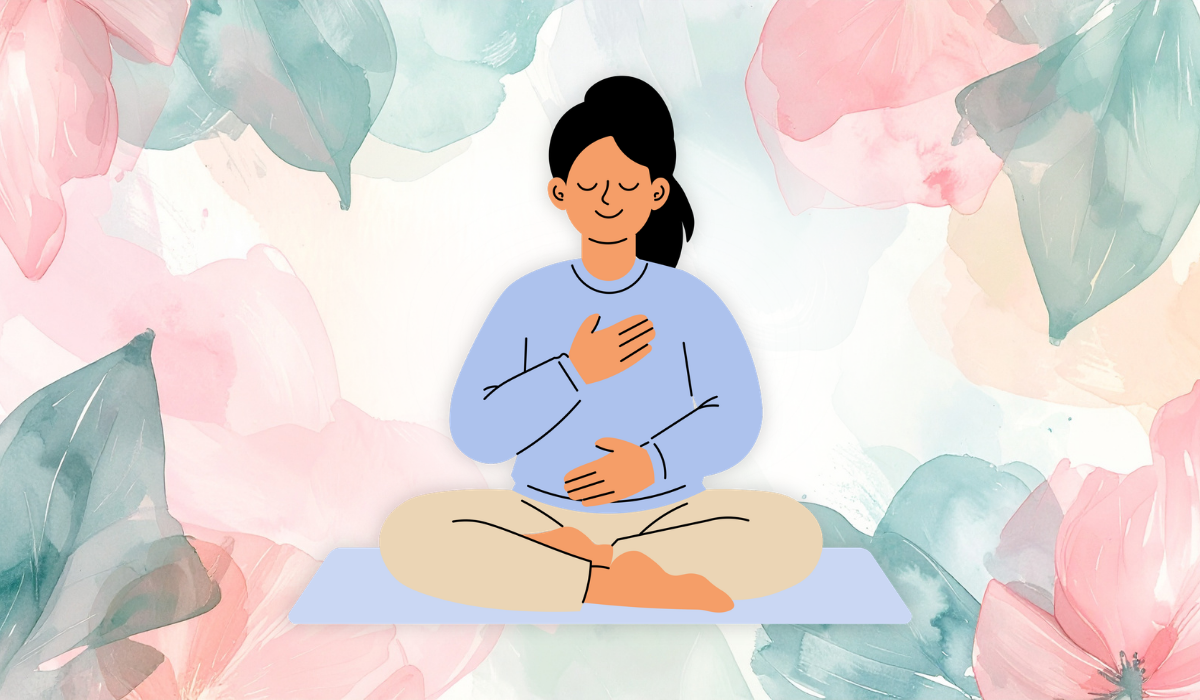
The Night I Tried Breathwork
I was a month shy of my eighth birthday when my younger brother Ian died of pneumonia. He was three years old, born deaf and with Down syndrome. I adored him with the fierce devotion only a child can feel.
I learned sign language alongside him. I sat through doctor’s appointments where adults discussed hearing aids, therapies, and developmental timelines I barely understood.
Somewhere along the way, I became his unofficial third parent. I learned which cry meant tired, which meant hungry, which meant scared. Loving him required vigilance and gave me purpose.
When he died, I didn’t just lose my brother. I lost the role my body had instinctively organized itself around—protector, translator, keeper of his needs. I think my nervous system has been bracing for something to protect ever since.
The Role I Didn’t Know I’d Lost
For most of my life, I’ve been composed. Functional. Buttoned up. But beneath that composure there has always been an ache. Losing my brother so early in life taught me that attachment carries a cost. I learned how to stay in relationships without fully exposing myself. How to love without coming undone.
At the same time, I’ve always been unusually sensitive to other people’s suffering. Witnessing it triggers something immediate in my chest. A child being bullied. An adult with a disability. Even an elderly person moving through a crowded space can send a wave of panic through me, paired with an overwhelming urge to help.
When Empathy Feels Like Responsibility
For years I thought of these reactions as personality traits—empathy, sensitivity, intuition. It never occurred to me they might be physiological: that my body had learned, early on, to constantly scan for vulnerability and respond as if I were responsible for fixing it.
A few months ago, while volunteering at a hospital, something minor happened with a patient. The brief moment passed unnoticed by anyone else on the floor, but it triggered a familiar tightening in my chest. The sensation built, spreading into my throat until I felt completely flooded, as if something catastrophic were unfolding.
The area was full of doctors and nurses—professionals trained to handle emergencies. I was only a volunteer, not responsible for anyone’s medical care. But standing there, my body reacted as if it were my job to stay on high alert. It was the same restless vigilance I remembered from childhood—the sense that if I stopped paying attention, something would go wrong.
When I told my therapist about the episode a few days later, she listened without interruption and then suggested something I hadn’t expected: breathwork.
At first her suggestion sounded too simple to help. Breathing was something my body was doing automatically. But she explained that breathwork with a trained practitioner isn’t about breathing in the ordinary sense. It involves deliberately changing the rhythm of the breath to signal safety to the nervous system. Slow, controlled breathing stimulates the vagus nerve, guiding the body out of fight-or-flight and back toward regulation.
My therapist didn’t recommend a specific practitioner, so I went home and did what most people do when they’re given advice: I Googled it.
The Night I Tried Breathwork
The first option that popped up was a workshop scheduled just a few days later at a yoga studio not far from where I live. It was being taught by an “intuitive healer” and the description promised a two-hour guided breathwork session designed to regulate the nervous system and release stored emotional patterns. It cost 40 bucks.
The idea that two hours of breathing might undo decades of nervous-system wiring felt optimistic at best. Still, the class was nearby, relatively inexpensive, and happening just a few days away.
Against my better judgment, I signed up.
On the night of the session, I arrived to find seven other people already lying on yoga mats with blankets, eye masks, and water bottles beside them. Our breathwork practitioner, Zach, greeted us and walked us through what to expect. He explained that breathwork can bring up buried emotions or physical sensations—some people cry, feel waves of anxiety, and occasionally even scream. Other times, nothing much happens at all. He assured us that whatever happened was normal and okay.
When the session began, it felt like meditation at first. Zach dimmed the lights, played calming music, and guided us through a breathing pattern while we lay on our mats with eye masks on. His voice occasionally floated through the room, reminding us when to deepen or slow our breath.
For me, meditation usually means my thoughts wander toward practical things—whether I’ve paid my bills, what I want my next meal to be, the ordinary errands of daily life. But after a while something shifted. The breathing became more rhythmic and trance-like, and my mind stopped jumping around in its usual way.
At certain points I could hear people around me having their own reactions—some crying, someone yelling—but it didn’t pull me out of what I was experiencing. The room somehow felt shared and private at the same time. Memories from different points in my life surfaced and passed through me in ways I can’t explain. Without fully understanding why, I felt tears streaming down my face.
Then, before I realized how much time had passed, Zach’s voice returned, telling us to remove our masks and slowly sit up. An hour and a half had gone by.
I wouldn’t attempt to describe the experience too precisely. All I can say is that when I left that first session, something felt different. There was a noticeable shift—a sense of ease I hadn’t felt before. When I got home that evening, I signed up for another session. I slept deeply that night.
Breathwork uses breathing techniques to shift the body into different states of awareness. Research suggests certain breathing practices can help regulate the nervous system, reduce stress, and promote a greater sense of calm. People describe all kinds of experiences during sessions—sometimes emotional, sometimes calming, sometimes a feeling of clarity. There are many different approaches, from structured breathing patterns like box breathing to more immersive styles such as holotropic or conscious connected breathwork.
Teaching My Body Something New
Over the next few months, I kept going back. Once a week, I found myself lying on a mat with a group of strangers, following the rhythm of my breath. Each experience was different, but the ritual itself felt steady. Slowly, my body began learning something it had never known before: how to let go of the need to stay alert.
I began to notice small shifts outside the sessions. Situations that might once have sent my nervous system into overdrive felt easier to navigate. The impulse to scan a room for signs that someone needed help was still there, but it no longer carried the same urgency.
For the first time, I began to wonder whether the vigilance I had always thought of as part of my personality was actually something my body had learned long ago in response to trauma. It began to make sense when I thought about where that instinct had started.
The Little Girl Standing Watch
My vigilance had once been useful.
When my brother Ian was alive, paying close attention mattered. He couldn’t hear what was happening around him. He relied on me to notice things—a door closing, someone calling his name, a change in the room. Watching carefully was part of loving him.
But after he died, the habit had nowhere to go. The alertness stayed in my body even when there was no one left to protect.
Trauma, it turns out, isn’t only remembered in the mind. It’s stored in the body—in the tight chest, the quickened breath, the constant readiness for something to go wrong.
In those long sessions of steady breathing, I can sometimes feel the tension loosening in places I didn’t realize I’d been holding it. The fear that once lived just beneath the surface rises, moves through me, and then, just as quietly, leaves. Each time it happens, it feels a little like letting go of something I’ve been gripping for years.
I can care. I can notice. I can love deeply.
But I no longer have to be the little girl standing watch.
With every breath, my body seems to be learning something my mind has taken years to understand: that the danger has passed—and that it is finally safe to let go.
The Sunday Paper Sidebar:
So You’re Curious About Breathwork?
If this story has you curious about exploring breathwork in your own life, you don’t have to start with an intensive session. Simple breathing practices can be done in just a few minutes and may offer an accessible way to slow down, create space, and ease feelings of stress or anxiety.
This guide from U.S. News & World Report walks through several straightforward techniques—including belly breathing and box breathing—with step-by-step instructions to help you find one that feels doable for you.
A note before you begin: Gentle breathing exercises are different from the more intensive breathwork described in this essay. If you have a medical condition or a significant mental health concern, consider checking with your healthcare provider before exploring more intensive forms of breathwork.
Have you tried breathwork? We’d love to hear about your experience. If this story inspired you—or reminded you of your own journey—reply to this story and let us know. We always love hearing what’s resonating with you.
Please note that we may receive affiliate commissions from the sales of linked products.