The People Who Walk Beside Us

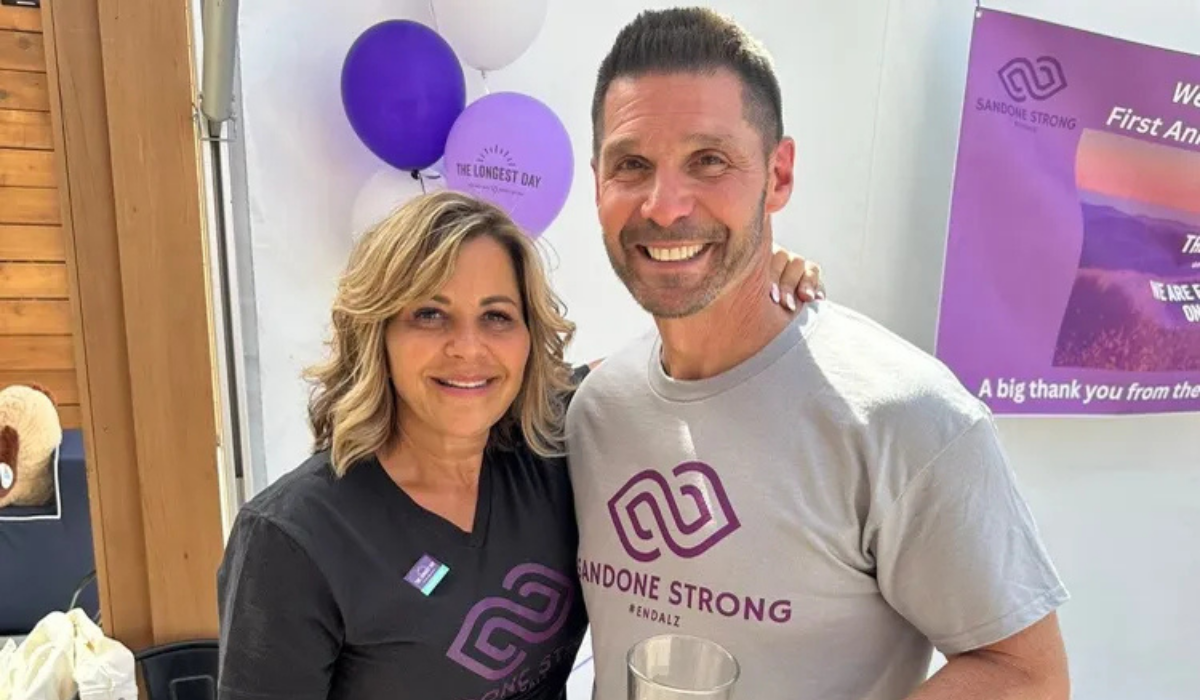
Laundry used to be Anthony’s job.
For the first 15 years of their marriage, Karen Sandone didn’t really need to think about washing and drying and folding the clothes. She never had to.
Today, Sandone handles the laundry, the bills, the house, the moving and the care of her husband. She gets him dressed. She helps him shower and brush his teeth. She helps him use the bathroom. She tries to get him walking during the day. At night, she makes sure he’s safe when he gets out of bed.
She has an alarm on the doors. There is a camera in the family room. She has alerted neighbors. She has found a way for Anthony’s children to call and check on him because he can no longer use his phone.
These are the small adaptations of a life that has changed dramatically in the three years since Anthony was diagnosed with younger-onset Alzheimer’s disease. He was 55. Now 58, he is in the later stages of the disease and has lost many of the abilities that made him an independent businessman and a marriage partner.
Where Anthony was the breadwinner, Karen now handles the finances, working full-time as a director of human resources. The couple has moved into a new home, with space for home help to stay over if needed.
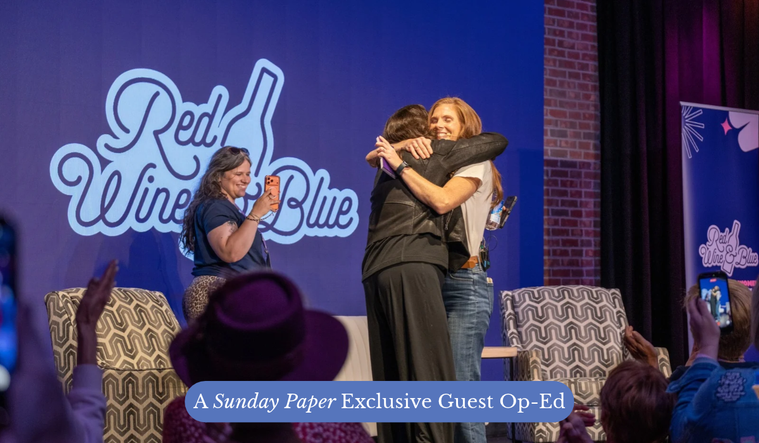
And through ”Surviving the Now,” the support community she created for caregivers of those with early-onset Alzheimer’s, she spends part of her limited free time helping other families navigate the same disease. Sandone was recognized this year by the Women’s Alzheimers Movement, founded by Maria Shriver, for her leadership in philanthropy, caregiving and corporate giving.
From her (current) home in Doylestown, Pennsylvania, Karen Sandone talked about what caregiving looks like when it becomes a 24-hour responsibility, what she wishes families would do before a diagnosis and the concrete ways friends, relatives and employers can help.
Before Anthony was diagnosed, what did you think Alzheimer’s was like?
I didn't know a lot about it before Anthony's diagnosis. Anthony was very fit, very athletic, ate really well. He was really very self-conscious about his health. He went to the doctors and was religious about his appointments. So when all of this happened, I thought because of his good health that maybe we had 10 years, and then within the 10 years we could find a cure. I was hopeful, but very naive, not realizing that his particular progression was going to be really fast.
How quickly has his disease progressed?
He was diagnosed in September of 2023, and he was 55. On Sept. 7, 2026, he turned 58, and he doubled his stage level. That, to me, I just didn't understand. I still don't understand, but I do hear that a lot from some of the caregivers across the country, that the same thing is happening with their loved one who's younger onset, that it seems to progress faster.
What does a normal day look like now?
I get up out of bed around 6 or 6:15. I try to sneak out so that I can have maybe a half hour and just have a cup of coffee. But he gets up when I get up. He's going through a shadowing process right now where he just follows me everywhere, and that’s OK. I can handle that.
We have our coffee. I get him showered. He can no longer do a lot of life skills, so showering, brushing teeth, getting dressed, all of that. Then I either feed him or when somebody comes in, if I'm working, they feed him breakfast. If we have to take the dog out, he comes with me. I like to get him to walk a couple times a day.
Then, if I'm home, it's lunch. He does sundown a little bit. He does try to nap. We do have a lot of wandering going on. He does need help with the bathroom, and then of course at night I put him to bed. Usually he wants to go in around seven, and then he's up a couple times, coming out a little confused.
What has been the hardest part of taking over the responsibilities you once shared?
All those responsibilities that we used to share are now on me. I'm responsible for him, the bills, everything, the tasks. We used to laugh because he would do the wash. I didn't even know how to put the washer and dryer on. Well, I had to learn.
You have also made your life public through social media. What are the pros and cons of discussing your world so publicly?
There have been a lot more pros. I never thought that this would escalate or really go as viral as it did in terms of our social media presence. I'm finding that I get messages about me helping people, and so that helps me cope.
This is how I have found my support system—it has created this community for me. It does put your life on display and I’ll get messages about how they don’t like Anthony’s coffee cup or something I said to him. If they’re really mean, I just delete it. I know we’re doing a lot of good for people, but that’s tough to read.
What do you wish people understood about what caregiving is really like?
My son said to me, “Mom, all your videos, you act like you're so strong, and that you do not need help.” And I said, "Well, I'm not trying to act like that. I have my moments, but it's not going to help people to bring tips to them that they can't use.”
With this disease every day, I can't be a victim. I don't have the time. So I have learned how to rise above those feelings that I have. Trust me, I have my moments—last night I watched the first video that we posted together, when Anthony was talking better. And I cried.
But, like another son said—my life is just working and Alzheimer’s. I don’t know how to get out of it. I’m living it, and I’ve also created this support group and I probably get 3,000 messages every morning. I want to answer all of them but I can’t.
I haven’t worked out in years. I really cannot leave the house just to run to CVS. I hope that when I have help—part of this move is that I’m having two nurses alternate days—maybe I can start working out again, even if I just go for a walk.
What should people consider early-on, before an Alzheimer’s diagnosis?
Think about long-term care. Think about your life insurance. Think about future decisions that need to be made if you are faced with a terminal illness. Everyone thinks that that's something they can deal with later on in life, and that's not the case.
The second thing is care and advocacy for getting a diagnosis. Right now, it's taking two to three years for a diagnosis, and that just is way too long. If you know in your gut something's wrong, you need to push to get those appointments on the schedule.
And the third thing is really about how you're going to grieve and what you can do as the caregiver. Your marriage changes. You are no longer in a marriage; you are now a caregiver with a patient. You have a lot of lasts. You go through a ton of lasts, and you can't prepare people for that. The last text Anthony sent me was April 2025. How am I going to deal with that?
What do you want employers to understand about younger-onset Alzheimer’s?
There are a ton of people who lose their jobs because they are diagnosed with Alzheimer's and it's blamed on performance. If someone has 10 years of great performance, and then all of a sudden there are things happening, it's something else. It could be medical.
One of the platforms that I talk about a lot is awareness for employers to better understand this disease, anything cognitive, so that they have empathy and they work with individuals on what could be a medical reason for performance changes.
What are your thoughts about long-term care?
I have started looking at memory care centers as backups. Believe it or not, the minimum age is 62. All three that I've called so far, they'll take him but they say ”We don't have anybody there that's Anthony's age,” so that's upsetting to me.
I have promised the family that I would try and do this from our home. I would care for Anthony as long as I could in our home. But if there's aggression, if I can’t lift him anymore—that I would need to have a back-up plan available. Then there's the financial part of it—it's $12,000 a month. As we got closer to needing care, I realized that care is not supported financially by anyone.
That's one of the reasons I want to have a voice for caregivers and do more work to look for funding for caregivers and look for support, especially younger onset. Later in life, people have retired, so they use their retirement, or they're already in maybe an independent living care facility.
I have people who follow us on Surviving the Now who have kids in college, fourth graders. I have somebody who has a two—and a four-year-old. We're talking the breadwinner now has been diagnosed, so they are really stuck. That's why we really concentrate on younger-onset population.
People often say, "let me know what I can do." What are some concrete things they can actually offer?
I have gotten better at telling people what I need. I have a great support system with my family and friends. I have a friend who comes over and helps me meal prep. There’s a couple who we’ve known for a long time, and they’ll come over and he will keep Anthony company so she and I can go for a walk. I think meal prepping and grocery shopping is a gift. Offer to come over and do the wash. Just come over.
Karen Sandone is the creator of “Surviving The Now,” a website and support group for caregivers of those with younger-onset Alzheimer's. World Alzheimer's Day is September 21.
Watch Karen and Anthony's heartwarming interview with WAM below.
Please note that we may receive affiliate commissions from the sales of linked products.