The Secret to Building Friendships That Actually Last


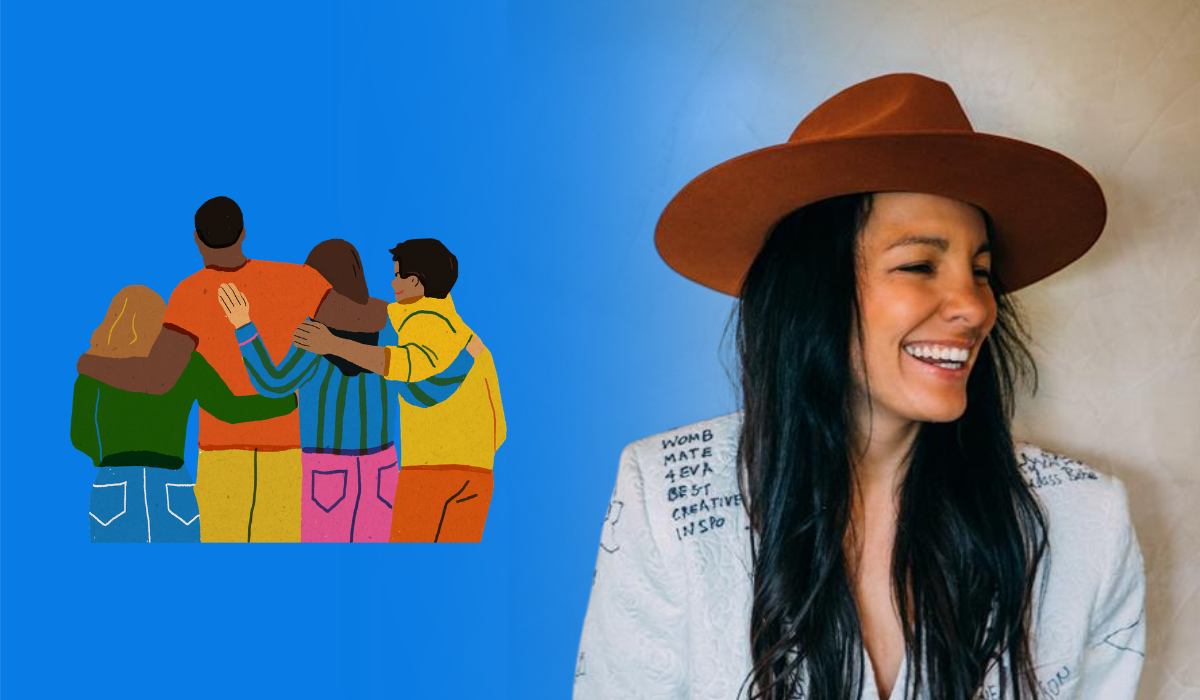
Radha Agrawal believes we’ve forgotten a profoundly human skill: how to make and keep friends.
“In a world obsessed with speed, optimization, and efficiency, friendship is built through the exact opposite,” the author tells The Sunday Paper. “It grows in the unhurried moments: the long walk, the lingering dinner, the conversation that wasn't supposed to last three hours.”
Those “unhurried moments” have fueled Agrawal’s career. Over 10 years ago, the self-described “community builder” founded Daybreaker, a global morning dance-party movement focused on joy and connection. She’s written and spoken extensively about friendship and how it’s critical to our health and quality of life (as the science shows!).
Still, through it all, she’s been honest—that as much as we need friendship, it’s hard to come by and honor these days.
Thankfully, Agrawal makes it easier. She’ll release How to Make a Friend this fall, which she calls a “deeply human guide to creating meaningful friendships in an age of loneliness.” In the meantime, she offers us her advice, along with more refreshing reasons why friendship isn’t a luxury but a necessity for a meaningful life.
A CONVERSATION WITH RADHA AGRAWAL
The world is scary and demanding. We grapple with a lot—from divisiveness to uncertainty to environmental injustice to AI, as you mention. How do you believe friendship emboldens our ability to face these issues?
We were never meant to carry the weight of the world alone! Modern humans invented loneliness. Throughout human history, our greatest challenges were met collectively. We survived because we belonged to one another. Today, many of our problems are shared, yet we've been conditioned to face them in isolation.
Friendship doesn't make hardship disappear. It makes hardship bearable. A good friend reminds you that you're not the only one afraid, overwhelmed, grieving, or uncertain. Friendship transforms “me against the world" into “us facing the world together.”
And when enough friendships connect, they become communities. Communities become movements. Nearly every meaningful social change in history began with people gathering around kitchen tables, campfires, living rooms, and neighborhood blocks.
Friendship is often the smallest unit of social change.
You created Daybreaker more than a decade ago. One of its great aspects is its intergenerational nature. Why is building friendships with people of different ages important?
I’ve defined the next generation as “InterGen”—not Gen Z or Gen Alpha, but InterGen. Because age diversity may be one of the most overlooked forms of diversity.
Many of us spend our lives segregated by age—children with children, college students with college students, adults with adults, seniors with seniors. Yet for most of human history, we lived in villages where generations mixed every day. When we're surrounded only by our peers, we lose access to the wisdom of those who came before us and the perspective of those who come after us. Some of my most meaningful friendships are with people decades older or younger than me. Older friends remind me what's worth worrying about—and what isn't. Younger friends help me stay curious, playful, and connected to what's emerging.
Intergenerational friendship expands our sense of time. It reminds us we're part of a much larger human story.
Keeping friends can be hard; so can making friends, especially as we grow older. What is one piece of advice or assurance to help us make friends?
The biggest misconception about friendship is that it should happen naturally. But the truth is that friendship requires intention.
One question I often encourage people to ask themselves is: Who am I waiting for to reach out to me that I could reach out to today?
Most people aren't rejecting us. They're busy, overwhelmed, shy, or assuming we're too busy ourselves. If there's someone you've been thinking about, send the text. Make the invitation. Suggest the coffee. Friendship often begins not with confidence but with courage. Don’t wait for the invitation—make the invitation!
What if someone feels too awkward or shy?
First, know that almost everyone feels awkward.
One of the most liberating discoveries in social psychology is something called “the liking gap"—the tendency for people to underestimate how much others like them after an interaction. In other words, many of us walk away from conversations thinking we did worse than we actually did. Awkwardness isn't evidence that you're doing friendship wrong. It's often evidence that you're being brave.
I tell people to stop trying to be impressive and start trying to be interested. Curiosity is one of the fastest pathways to connection. Ask a genuine question. Listen carefully. Let yourself be human. People rarely remember whether you were perfectly smooth. They remember how you made them feel.
From your own life, what is one unexpected way you’ve either made a friend or repaired a friendship?
One story from my life that made its way into the book began with a friendship rupture.
A friend and I had drifted apart after a misunderstanding. Months went by, each of us carrying our own assumptions about what had happened. Finally, I called and asked a simple question:
“Can you help me understand what that experience was like for you?”
Instead of defending myself, I listened.
What I discovered was that the issue wasn't what happened—it was the meaning each of us had made of it. That conversation didn't just repair the friendship; it deepened it.
I've learned that most friendships don't end because of conflict. They end because neither person is willing to risk going first. Whether making a new friend or repairing an old one, the magic often begins with the same thing: the courage to be honest and the willingness to ask, “Help me understand.”

Please note that we may receive affiliate commissions from the sales of linked products.