The Truest Way to Honor Those Who’ve Served

Heroes who have served and sacrificed for our country are everywhere among us, yet too often their stories go unrecognized.
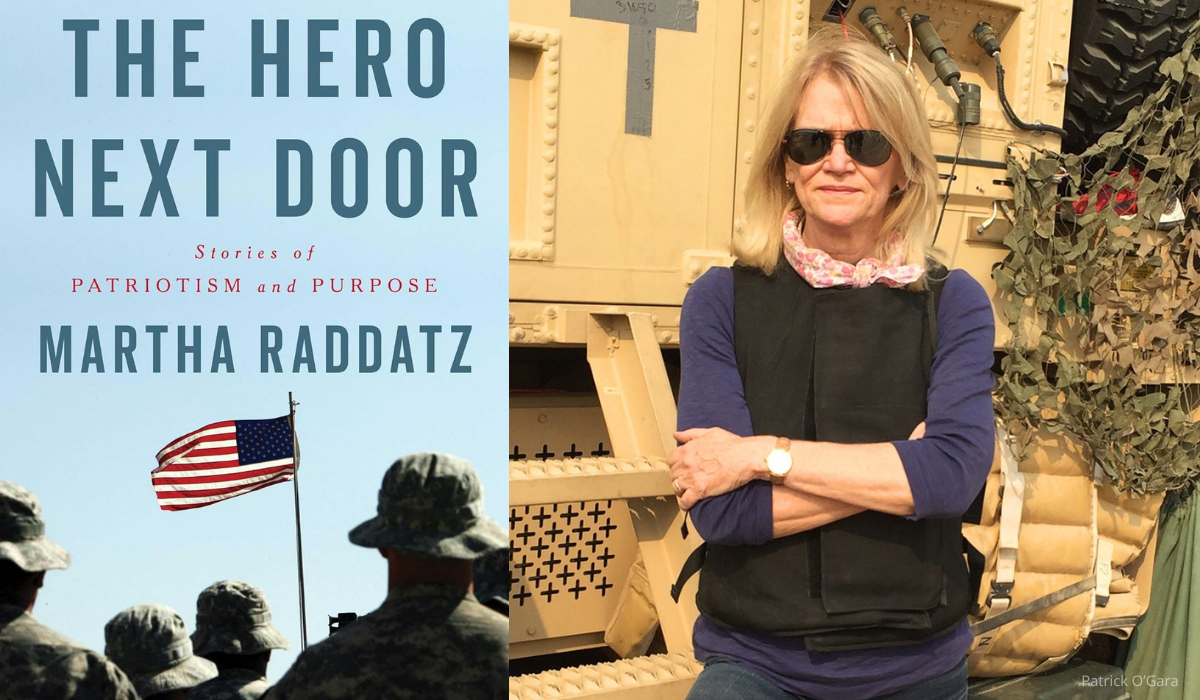
In her new book, The Hero Next Door, Martha Raddatz shines the light.
The Emmy award-winning journalist has been reporting on America’s wars since 9/11, observing the altruism and resilience of the service members who’ve put their lives on the line for our country, as well as those who love and care for them. They “are no less great than the Greatest Generation,” Raddatz tells The Sunday Paper, “and they should be remembered as such.”
Raddatz weaves together the stories of a dozen inspiring service members, offering a stunning portrait not only of incredible feats and character but also of a remarkable collective sense of purpose. These service members carry an unwavering purpose.
A purpose that Raddatz helps us see is a beacon for the rest of us.
“Every one of the people I profile in this book, different as they are, whatever the battles they have fought, shares a passion for service that has outlasted the wars themselves.”
A CONVERSATION WITH MARTHA RADDATZ
You say it is “hard to spot a hero.” What does this say about where society puts its attention?
I think society often expects heroes to be the swaggering soldier or Marine exuding bravado and bluster. That is not what I have found. The heroes I know and profile in the book would never call themselves heroes. They believe what they have done on the battlefield, or on the home front are what any one of us would do. And they always credit others on their teams. So perhaps the one sure way to spot a hero may be to look for the ones who insist they are not.
Throughout your career, you have witnessed service members' courage in war zones and at home. How have these experiences changed your perspective?
I consider covering our service members a privilege and a gift. When I have a day that feels challenging, personally or professionally, I think of them and what they have faced, and it becomes my own inspiration. I think I am a better person for having known them and seen their courage.
Your book shares stories about Americans who have served, whose names you want everyone to remember. Could you highlight Sergeant Mark Little, who lost his legs to a war injury? As he said, "I’m really happy every day when I open my eyes."
I met Mark on what should have been the worst day of his life. I was there when he was pulled off the medevac helicopter with both of his lower legs gone or about to be. And yet Mark will say that is the best day of his life because he did not die. He has maintained that positive attitude to this day. Anyone who thinks that is easy is kidding themselves. It takes a different kind of resolve and resilience. And something we can all learn from.
What is one practical step we can take today to better recognize the heroes among us?
Find out about anyone you know who may be a veteran, or someone caring for one. Or of course anyone who has lost a loved one. Don’t just thank them, listen to them. Ask them about why they served or serve—and please, please don’t ever ask them if they killed anyone. Be respectful if they don’t want to talk but let them know you genuinely appreciate and respect them. Know something about service, sacrifice, and the challenges they face.
This is the reason I wrote this book. These are lessons we can all learn. And anyone who reads about these remarkable people can apply some of the lessons of resilience and gratitude to their own lives.
And what is one way to more effectively honor those who have served?
In addition, please choose a charity that helps veterans. No matter how small the amount. It has made a huge difference in the lives of many of those in the book. As a board member, I am partial to the Bob Woodruff Foundation, but any reputable charity will help our veterans.
Martha Raddatz is the chief global affairs correspondent for ABC News and co-anchor of This Week. She is also the author of the New York Times bestseller The Long Road Home. She has won seven Emmys and was also awarded the George C. Marshall Medal for sustained commitment to the men and women of America’s armed forces.

Please note that we may receive affiliate commissions from the sales of linked products.