What a Near-Death Experience Taught Me About Living
In September 2022, Nikki Goldstein was placed in an induced coma with lungs that had stopped working. The doctors prepared her family for the worst. She survived, and emerged as someone she didn’t entirely recognize.
The first thing I noticed when I came back was the light.
Not the light in any dramatic sense. No tunnel, no golden warmth, no cinematic beckoning. Just the light through the window of a general hospital ward in Paddington, Sydney, moving slowly across the ornate Victorian stonework opposite, changing color as the hours went by.
I lay in that bed and watched it for a long time. I didn’t think about what I needed to do. I didn’t make a list. I felt, there is no better word for this, wiped clean. Not depleted, not traumatized, not grateful in the performative sense people expect after a brush with death. As though something had been removed from me that I hadn’t known was there, and in its absence, the world looked the way it apparently had always looked but that I had never, until that morning, actually seen.
This is the thing nobody tells you about surviving a near-death experience. The drama is in the medical details, which are dramatic—induced coma, total white-out of both lungs, the head of the ICU drawing my family aside to ask whether I had my affairs in order. But the rupture, the thing that actually changes you, is much subtler. It happens in a hospital bed, watching light move across stone, wondering why you spent fifty-seven years looking at the world without really seeing it.
Three days before I watched that light, I’d been in an ICU with a breathing mask pressed over my face that felt like more like suffocation rather than rescue or relief. I had chronic lung disease; I’d been hospitalized before. I knew the rhythm. “A couple of days and I’ll be home,” I told my husband. This time I was wrong, very wrong. Within hours of arriving at the ED, my oxygen was dropping in ways the doctors didn’t like, and the furrowed brows of the nursing staff—a tell-tale sign of impending dange—had shifted into something more urgent and less reassuring.
At 7:30 on the second morning, the head of the ICU stood at the foot of my bed and told me they needed to intubate me. Without it, my heart would give out. I had a few minutes to call my family before they put me into a coma.
I rang my husband Rowan and told him I loved him. I made him promise to keep my feet warm—I’ve had cold feet my entire life, and lying intubated with no ability to ask for socks struck me, in that moment, as the most unbearable hardship. What you think about in the minutes that might be your last is a mish-mash of the practical and the profound. Socks. Your daughter’s face. You send texts that say, in different combinations, the same words: I love you. I hope I’ll see you on the other side.
Then everything went blank. An induced coma is exactly like switching off a television: one moment Rowan’s voice and the weight of the oxygen mask; then nothing, not darkness, which is still something, just absence. A space where a person used to be. A space where I used to be.
When I came back, I was not the same person who had gone under.
The noise that had accompanied me through fifty-seven years of life, the constant hum of planning, managing, worrying, was gone. Not reduced. Gone. The coma had switched it off, and when I returned, it had not yet switched back on.
What I discovered in that silence was something that had apparently been there all along, a steadiness I could only access once I stopped holding everything up all by myself. I let Rowan hold my hand without listing things I needed to tell him. I watched nurses and doctors move through the ward and felt, toward each of them, a tenderness I couldn’t account for. Strangers doing their jobs, but unmistakably alive, each one so human, vulnerable and beautiful. As though a filter I’d worn for decades had been discretely removed.
The near-death experience had reorganized my brain’s filing system. The beauty and simplicity of light doing what light does, the face of a stranger, the sound a hospital ward makes at five in the morning: suddenly immediately accessible in the foreground. The inbox, the schedule, the thousand anxious calculations of a woman who had been managing everything for years relegated to the background, rendered useless and unimportant.
That rearrangement, it turned out, was a complete shift in the way I saw myself, and the world.
A rabbi came to my bedside while I was in the coma.
My daughter Liberty, keeping vigil with Rowan, spotted him in the ICU corridor. Rowan legged it over to him and asked for prayers and, not knowing how to confer with a rabbi, offered something rueful about not being good Jews. The rabbi said: No matter. We’re all just Jews.
He came willingly and compassionately, recited ancient prayers, then reached into his suit pocket and produced a shofar, a ram’s horn, blown on the High Holy Days. He raised it to his lips and blew it, right there in the ICU, against the pinging of the monitors. Rowan said the sound was unlike anything he’d heard. So earthy and ancient, so out of place that it resonated through his entire being.
Within twenty-four hours, my lungs began to respond. The doctors called it a miracle, in the slightly ironic way medical professionals use that word when no other scientific explanation is readily available.
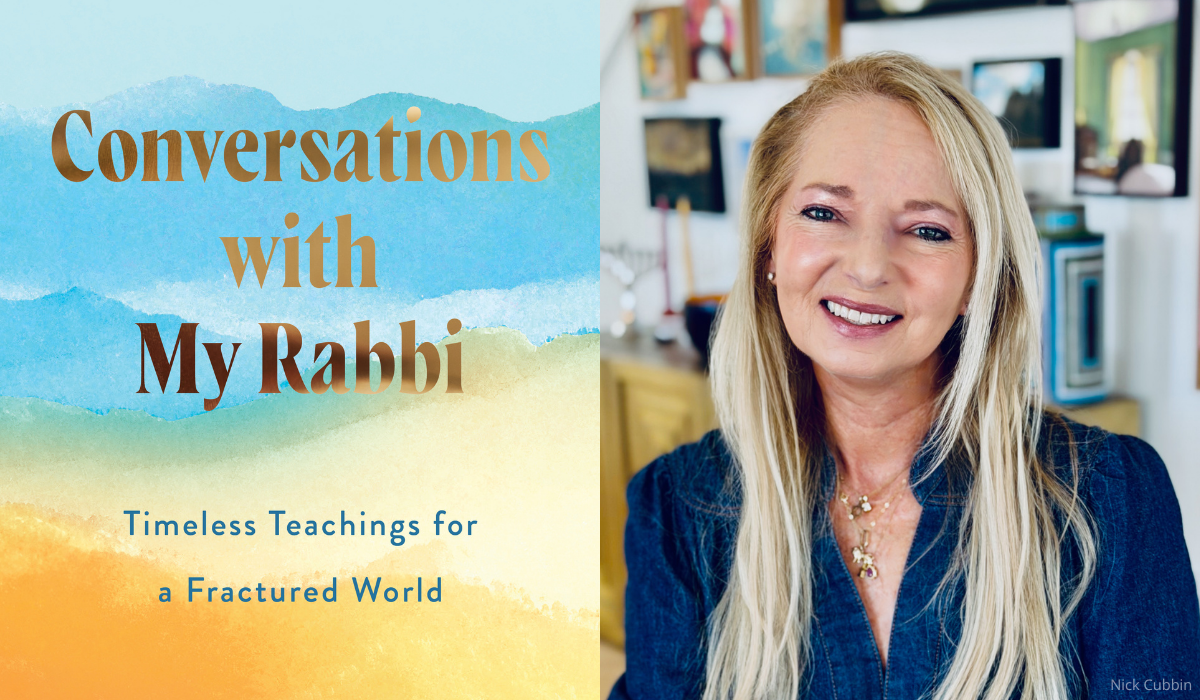
The rabbi’s name was Eli Schlanger. He became one of the most important people in my life, and the friendship that grew from that ICU encounter, from what became known as “Eli’s miracle” and my survival, and years of conversations about God, doubt, and how to live with intention, is what I’ve tried to honor in my new book, Conversations With My Rabbi.
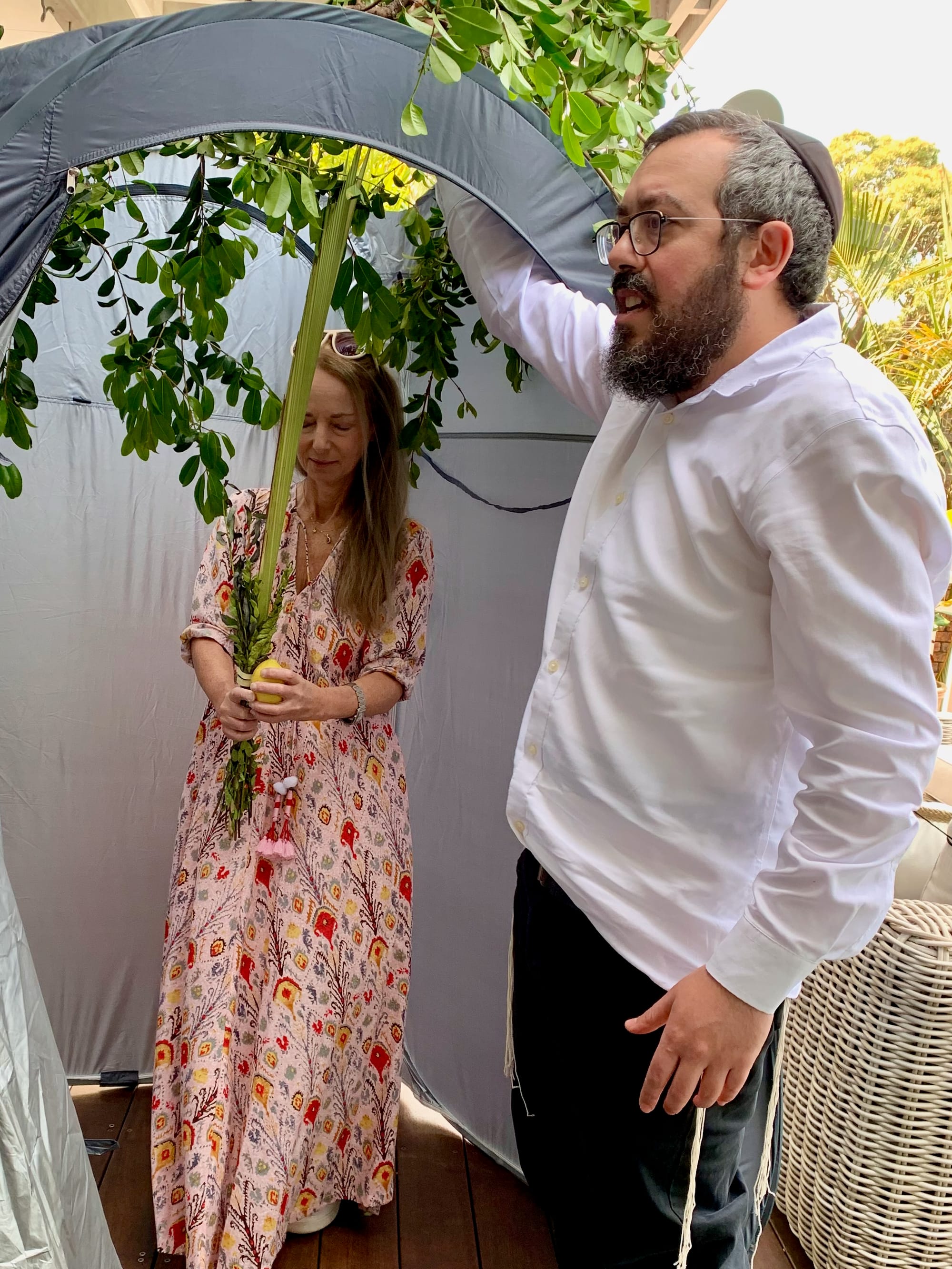
Rabbi Schlanger was murdered on December 14, 2025 at Bondi Beach.
The most unlikely place for the worst terrorist attack on Australian soil. He was just 41 years old.
The story of his tragic murder, and what my life looks like now without him is explored at length in the book. I won’t say much more about that here, because this piece isn’t about his death. But I want to be honest about this second rupture, the loss of someone very dear to me, because it deepened the first one in ways I’m still trying to get to grips with. My near-death experience taught me that the world was far more present, beautiful, tender, and alive than I had previously noticed. Losing Eli taught me how precious and short life can be—which is not a comfort, but a responsibility. You can’t unsee the world as it actually is. You can’t console yourself with cozy platitudes. And you certainly can’t go back to looking, once you’ve really learned to see.
So, what does nearly dying actually change?
The honest answer is less dramatic than people expect.
What it changes is your relationship with time. Before the ICU, time was a resource to be managed: allocated, optimized, never quite sufficient. After it, time became something I wanted to inhabit and enjoy rather than manage. The day is not a set of tasks on the way to a future when things will be better. The day is where the life actually is.
The rupture of nearly dying is not a gift, it’s an interruption—violent, frightening, and, in my case, utterly life-changing. It’s not toxic positivity, a silver lining, or a lesson. But what it interrupts is worth reviewing.
I’m building a different life from the one I was living before September 2022 and the one after December 2025 when Eli was murdered. More Jewish, not in the observance sense, but in the identity sense, having finally claimed something I’d been keeping at arm’s length for most of my adult life. I’m less interested in controlling outcomes and more interested in relishing moments. I hope I’m more present to the people I love, though my daughter might argue with this as she’s been sharing me with my career for her whole life.
Conversations With My Rabbi is a book about God and doubt and the unlikely friendship that grew from that ICU corridor and the grief that followed. It’s the truest thing I’ve ever written. It’s a profoundly universal story about the search for meaning. I didn’t expect to write a deeply spiritual book. But that’s what the rupture produced: a return to the person I had always been and had been enthusiastically running from, waiting for me on the other side of a coma in a Sydney hospital on an ordinary day in September.
The light was extraordinary. It still is, in the moments when I remember to look.
Nikki Goldstein is the author of Conversations With My Rabbi: Timeless Teachings for a Fractured World. To learn more, visit nikkigoldsteinauthor.com.

Please note that we may receive affiliate commissions from the sales of linked products.