Where to Find Your Wildness
Here’s Your Exclusive Look Inside
The riad was in the medina, the historic old part of any Moroccan city, with winding, narrow, cobbled streets, usually inaccessible to cars, nor could they navigate the streets, houses and palaces hidden behind the ornate carved wooden doors set into high clay walls.
There are bustling souks – stalls and shops selling everything from colourful embroidered kaftans, to hand-made ceramics, to food and everything in between. The hustle and bustle never stops, but step through the intricate carved doors of a riad and you might find yourself in a beautiful tiled courtyard, surrounded by orange and palm trees, a pool or water feature in the middle. It can feel like stepping into a paradise, a garden of Eden where you hear nothing but water and birds.
A riad is a traditional Moroccan home, built around an interior garden or courtyard. In fact, the word riad comes from the Arabic word riyad, meaning garden. When the Arabs and the Moors brought their architectural traditions from Al-Andalus to Morocco after the fall of Granada in 1492, the riad became the home of choice for courtiers, aristocrats and the wealthy merchants who travelled the silk road with their wares. Riads gave them privacy and security.
The most beautiful of them, built for the wealthiest, have intricate carved plaster detailing called gebs. The floors, and often the walls, are covered in zellige – hand-made tiles traditionally made in Fes, often laid in elaborate, beautiful patterns. Ceilings in some of the grander riads are hand-painted, and the walls, particularly since the 1960s when the designer Bill Willis brought it back into fashion, are tadelakt – plaster that is polished with layers upon layers of black soap so that it glows in the light of candles lit at night.
There are no windows to the street, instead everything opening on to the courtyard, which should, according to Islam, contain the colour green and water. Often there is a fountain, or pool, in the centre, together with trees and exotic plants like fiddle-leaf or Monstera.
Because no one can see inside a riad from the street, it affords Moroccan women privacy, the ability to be in their home with their heads uncovered. And, because one of the central tenets of Islam is humility, wealth and grandeur are hidden from outsiders to prevent any potential jealousy.
My rented riad is owned by a French woman, a photographer who bought this riad as her home but now lives in China. She has beautiful taste and the riad is exquisitely furnished in a colourful, modern Moroccan style.
A glass ceiling has turned what was once a small courtyard into the living room. There is a galley kitchen that is tiled in traditional green zellige tiles, with a breakfast bar. A low Moroccan sofa, dark wood with hard, chartreuse green velvet cushions, sits along the back wall. On one side is a small dining room with a glass table, and a wall of shelves displaying beaded African sculptures and ceramic vases, on the other an office with a large, wooden mid-century desk and two kilim-covered armchairs.
Upstairs is a large master bedroom with beautiful high carved plaster ceilings, and a wall of closets with hand-carved wooden doors. On the other side is a salon, with a bathroom in between. On the roof is a laundry room, and a large ensuite guest room.
Because there are no views from the rooftop, the owner has chosen to surround the roof with high walls for privacy. There is a pergola on the roof, under which sits a small iron dining table with four chairs, and a Japanese-style sofa.
This riad is tucked at the end of a winding alley on a wide, cobbled street on the outskirts of the medina, lined with hanouts. These little shops sell essential food items: oil, household products, wafer biscuits of every flavour, nuts, seeds, spices, khobz – the traditional Moroccan bread that is freshly baked every day and is so precious that rather than ever being thrown away, men with carts walk up and down the streets in the morning collecting the uneaten bread (I’m still not entirely sure what they do with it). In the hanouts you will also inevitably find yoghurt, eggs and endless triangles of what we think of as Dairylea, what the French call La Vache Qui Rit, and what the Moroccans think of as fromage. They are often sold individually, as are cigarettes, locals lining up to buy them one at a time.
After the tiny beach cottage with its low ceilings and lack of light, the rented riad, although modest, feels like a palace. More than anything else, it feels expansive; it feels like a home in which I can finally exhale.
And exhale I do. As I tiptoe up the stairs on that first night, everything in my life feels surreal. I am unable to believe I am here, unable to believe I am once again in a home filled with light.
I wake up in the morning, feeling light. The stress and fear I’ve been carrying for all these months has gone. Because chronic stress often has little to do with money, or career; instead, it’s the inner conflict between who you authentically are, and who you are pretending to be. When you are living a life that you do not recognise, a life that isn’t really yours, when you are constantly twisting yourself into someone who is more palatable to make others happy, you are in constant survival mode.
I wake up by myself, in a large bedroom with unfamiliar views, and realise I am no longer in survival mode.
I do not have to slip into any roles or change anything about myself. No people-pleasing, muting myself, or shape-shifting needed here in this riad, where I am completely alone.
I haven’t reconnected with my real self yet, but as I lie there, by myself, I know she is in there.
I also know that in order to fully meet her, I have to be on my own.
I first went to Marrakech in 2019 when researching my novel Sister Stardust, set in the late sixties, and fell deeply in love with it. I wanted to run straight back there, but once Covid hit, Marrakech was closed to me for three years. As soon as it reopened, I started going back. I went because the city touched the deepest part of my heart, but also because, as my friend Sarah recently said, I wrote a story filled with exoticism, glamour and escapism, before then deciding to step into that world and create it for myself.
I was entranced with the romance of living in the medina, of living on my own, of forging a new life.
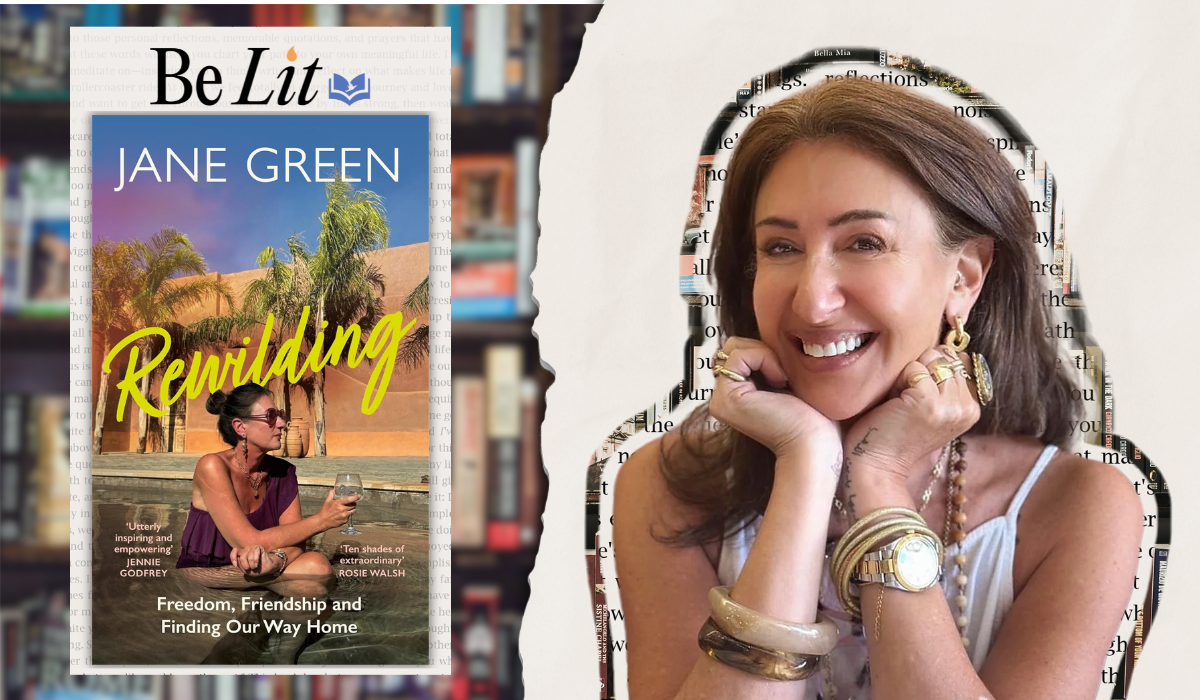
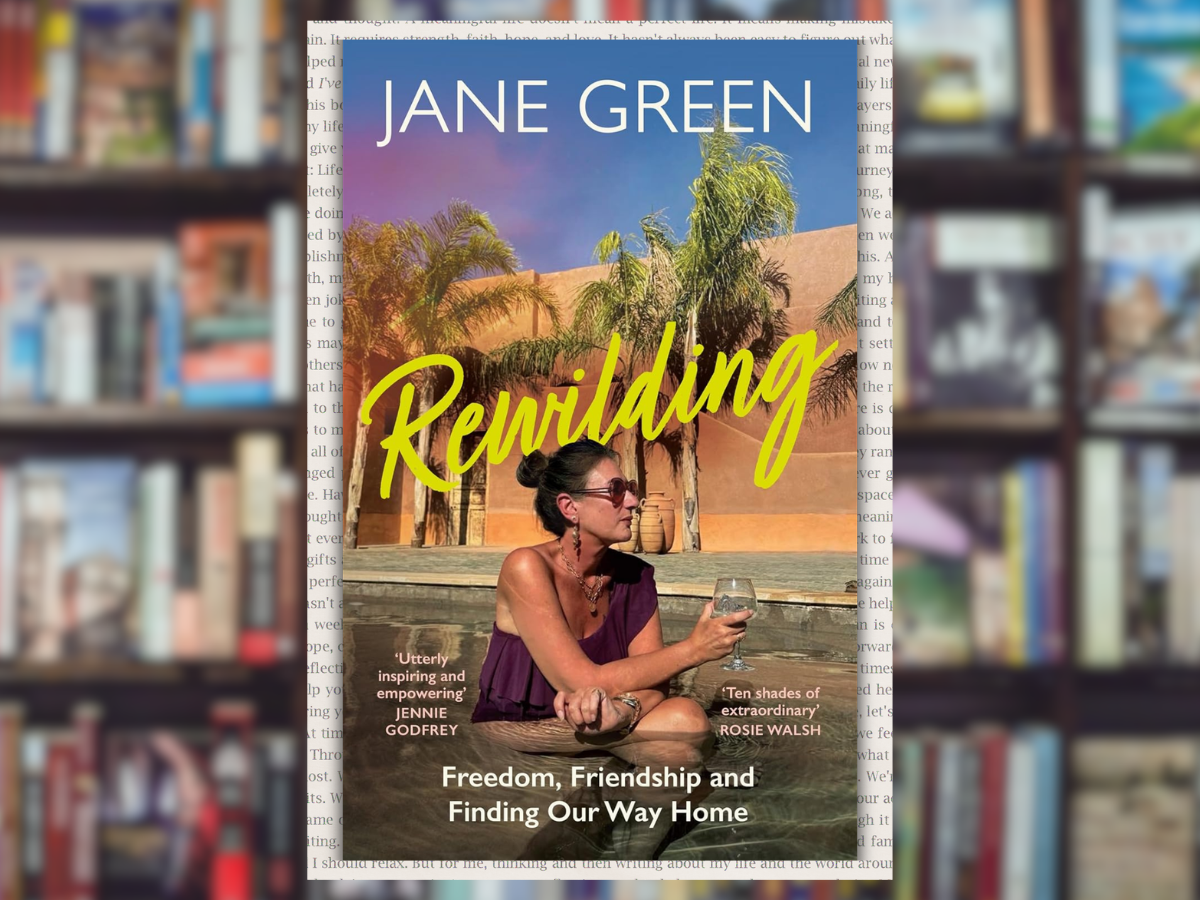
From Rewilding by Jane Green, published by HarperCollins. Copyright © 2026 by Jane Green.
Jane Green is an author, writer, podcaster, and journalist with 18 New York Times Bestsellers, and over 10 million books in print. Learn more at janegreen.com.

Please note that we may receive affiliate commissions from the sales of linked products.