Why Pope Leo XIV Has the Gumption and Perseverance We All Need

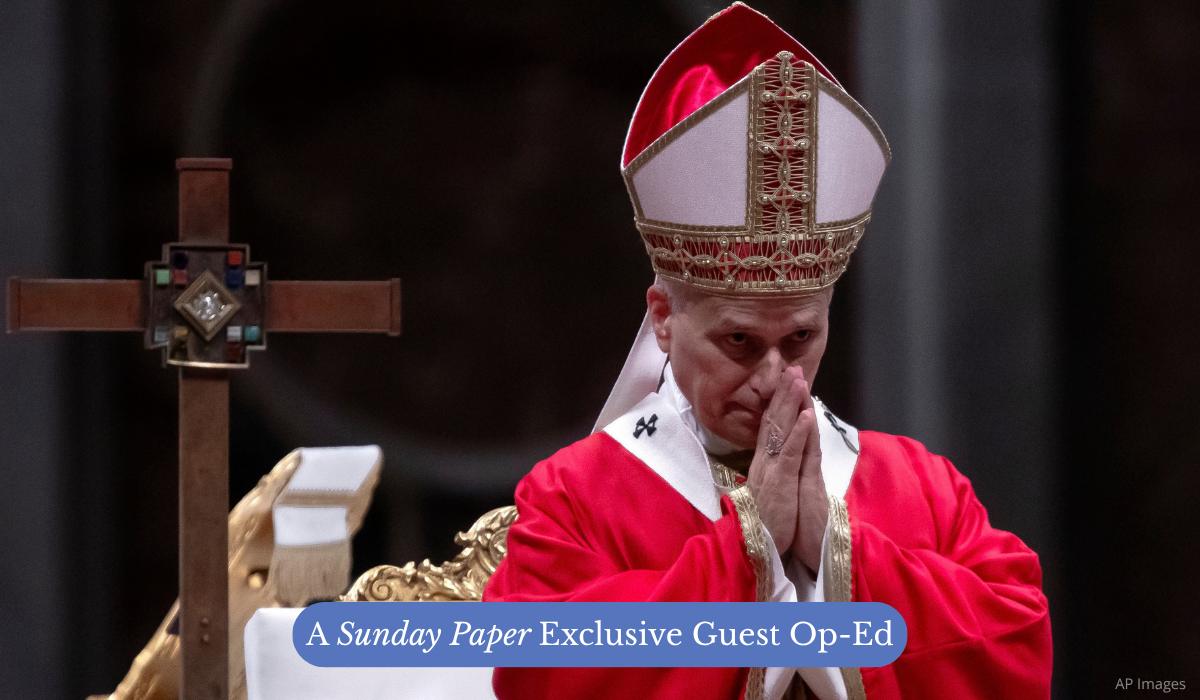
As Pope Leo XIV stepped onto the loggia of St. Peter’s Basilica in May 2025, he smiled and waved as the crowd cheered. Previously Cardinal Robert Prevost, Pope Leo surprised many as the first American pope. He spoke of peace and God’s love. He also greeted the people of Chiclayo, Peru, in Spanish, where he’d previously served as bishop.
Since his election, Pope Leo has earned a reputation for inscrutability, a longstanding trait, according to people who know him well. “I call him the ‘male Mona Lisa,’” said one close friend, “because you never really know what his opinion is.”
It’s true that Pope Leo rarely talks about himself, even to close friends. But over the past year, we've pieced together his life story and gained a deeper look at who he is and how he leads. We’ve interviewed his family, fellow Augustinian friars, classmates, teachers, colleagues, and former adversaries, including priests in Chiclayo.
During these conversations, a picture of a unique leadership style gradually emerged, showing how Pope Leo will try to heal the Church’s political and ideological divides. To give you a sense of this, let’s go back to his time in Peru.
A Tough Start in Chiclayo
In 2014, Pope Francis gave Robert Prevost a tough assignment when he appointed him bishop of the northwestern Peruvian diocese.
Bishops from Opus Dei had run Chiclayo, Peru for more than half a century. But Pope Francis was suspicious of the secretive movement and its close ties to conservative politicians and wanted to curtail its influence. So he handpicked Prevost, an American outsider who had spent a decade in Peru as a missionary, to lead the million-member diocese.
Prevost did not receive a warm reception. Local priests, most of whom were aligned with Opus Dei, were at times openly hostile. Some blasted their new bishop in a WhatsApp group for Chiclayo clergy—messages that Prevost himself could read as a member. Others declined to say his name during prayers for church leaders at Mass and sat silently at meetings, refusing to engage with Prevost or his guests. It went on like this for nearly two years.
As bishop, Prevost could have silenced, argued with, or even punished the dissenting priests. But though he privately lamented his lack of acceptance, he said nothing.
Over the last year, since Prevost became Pope Leo, we’ve learned about his inner and outer workings.
He’s approachable but quiet, and doesn’t bowl people over with charisma, stories, or stirring speeches. He’s careful about expressing emotion. (In all our interviews, we heard only two stories in which he got angry.) He solicits advice from a wide variety of people, listens closely, and changes course if he finds himself mistaken.
Pope Leo is drawn to a kind of practical holiness: when the cathedral ran out of fronds one Palm Sunday in Chiclayo, he grabbed a machete, found the nearest suitable tree, and started cutting. We’re willing to bet he’s one of the few bishops who could handle a machete that deftly—at least we hope so. Peruvians called him “the octopus” because he seemed to have a hand in so many projects.
It’s more than personality that makes Leo a unique leader. He has spent his entire adult life as a member of the Order of St. Augustine, which he led as Prior General from 2001-2013. Modeled after the Apostles, Augustinians are egalitarian—the root of the word friar is “brother.” Unlike other Catholic orders, Augustinian authority is not exercised by issuing commands from on high; it is relational, rooted in fraternal bonds among the friars. In such an environment, power-seeking and selfishness are cardinal sins. As Prevost wrote in his early thirties, “The exercise of authority in any Christian community requires the setting aside of all self-interest and a total dedication to the good of the community.”
In Chiclayo, the Opus Dei priests were right about one thing: Prevost would make major changes. He wanted to implement the model of the Catholic Church he learned as a missionary, in which networks of lay Peruvians helped run parishes and social ministries. In Chiclayo, by contrast, clergy were accustomed to presiding over the laity. They expected deference, not leadership from lay Catholics.
Building a Bridge
In Chiclayo, Prevost carefully began to bridge the gulf between himself and the Opus Dei priests.
First, he assuaged priests’ anxiety by announcing that he would make no immediate personnel moves. He quoted liberally from Pope John Paul II, a hero to conservatives, and kept a large portrait of Jose Maria Escriva, the founder of Opus Dei, hanging in the cathedral's back. He bonded with priests over their shared reverence for Catholic liturgy, attended their priests’ birthday parties and invited them to breakfasts at his residence, where he stood at the grill, cooking pancakes and waffles. He made it clear he was always available: He responded promptly to their emails, calls, and WhatsApps, no matter what time of day or night they buzzed into Prevost’s iPhone.
That’s not to say Prevost changed course, or scaled back his goals for overhauling the diocese. This is an important point about Prevost the uniter: he succeeds not by settling for a middle ground or compromising his ideals, but by showing respect for everyone in the conversation.
Time and again, in Chiclayo and elsewhere, we heard stories of how Prevost brought others along simply by making them feel respected and heard.
As his relationship with Opus Dei thawed, Prevost reached out to progressive Catholics in Chiclayo. One group invited Prevost to attend a ceremony for Archbishop Óscar Romero, a Salvadoran martyr gunned down by government assassins in 1980. After years of hostility from their former bishop, the progressives didn’t know what to expect. To their surprise, Prevost not only came, but stayed, holding a candle and offering a prayer of thanksgiving for Romero. One member of the group said that it felt like, after decades, “the doors of the church were open to us.”
After working on the internal divisions in Chiclayo, Prevost turned his flock’s attention outward: to tens of thousands of Venezuelan migrants pouring into their city with little more than the bags they carried. Together, progressives and conservatives figured out what the migrants needed most, raised money to meet the needs, and worked to counter the anti-migrant sentiment cropping up among some in the city. “The refugees are our brothers—we are children of the same father,” Prevost would repeat.
A Qualified Leader for Today’s Times
Over the last year, as we have spoken with friends and colleagues of Prevost, now Pope Leo, one word has come up again and again: balance—the balance between liberalism and conservatism, obedience and authority; action and contemplation.
Father Fidel Alvarado, an Augustinian who studied with Pope Leo in Peru, told us that his mentor “has always confused the wise and well-read, because they want to know: Is he liberal or conservative?” The answer, Alvarado said, is neither. “He wants a church that responds to the signs of the times.”
The signs of our time are clear: Our world is in crisis. Climate change and artificial intelligence threaten our very existence, and no single country or even continent can tackle these challenges alone. They require global cooperation and leaders who can persuade disparate groups to focus on a common goal.
They require balance, which is something Pope Leo offers our world.
Unfortunately, few moral leaders seem to have the capacity to counter the might-makes-right philosophy that seems so prevalent now. It’s not easy work—it requires patience and listening, a respect for our differences and a recognition that true leadership comes not from above, but from our relationships between each other.
In the first year and a half of his papacy, Pope Leo has shown those qualities: standing up for migrants who have been detained in or deported from the United States, urging his home country to end the Iran War, and calling on Silicon Valley to adopt reasonable safeguards for its world-transforming technology. These are not political positions taken to please certain constituencies. They’re bedrock values for Pope Leo, who believes deeply in listening and respect. For Leo, loving God means loving our neighbors—and working with them to make a better world. As we learned in researching his biography, that’s something he’s done from Chicago to Chiclayo—and now in Vatican City.
Daniel Burke has covered religion for more than twenty years. He is the Senior Editor of Religion & Spirituality at NPR. Scott Detrow cohosts NPR’s All Things Considered, which he broadcast from St. Peter’s Square during the conclave that elected Pope Leo XIV. They’re new book is American Pope: Leo XIV's Road from the South Side of Chicago to Vatican City.

Editor's Note: Every week, The Sunday Paper's team of journalists sift through the news to find what Rises Above the Noise, makes sense of what's happening in the world, and provides hope for your week to come. While we do our best to provide our own informative summary of each piece, some publications require their own subscriptions beyond our control.
Please note that we may receive affiliate commissions from the sales of linked products.