Your Gut Is Trying to Tell You Something. Are You Listening?

From a young age, we’re taught to override our gut’s signals. Hungry? Wait until mealtime. Need to use the bathroom? Hold it until it’s convenient. Over time, we learn to tune out what our bodies are trying to tell us.
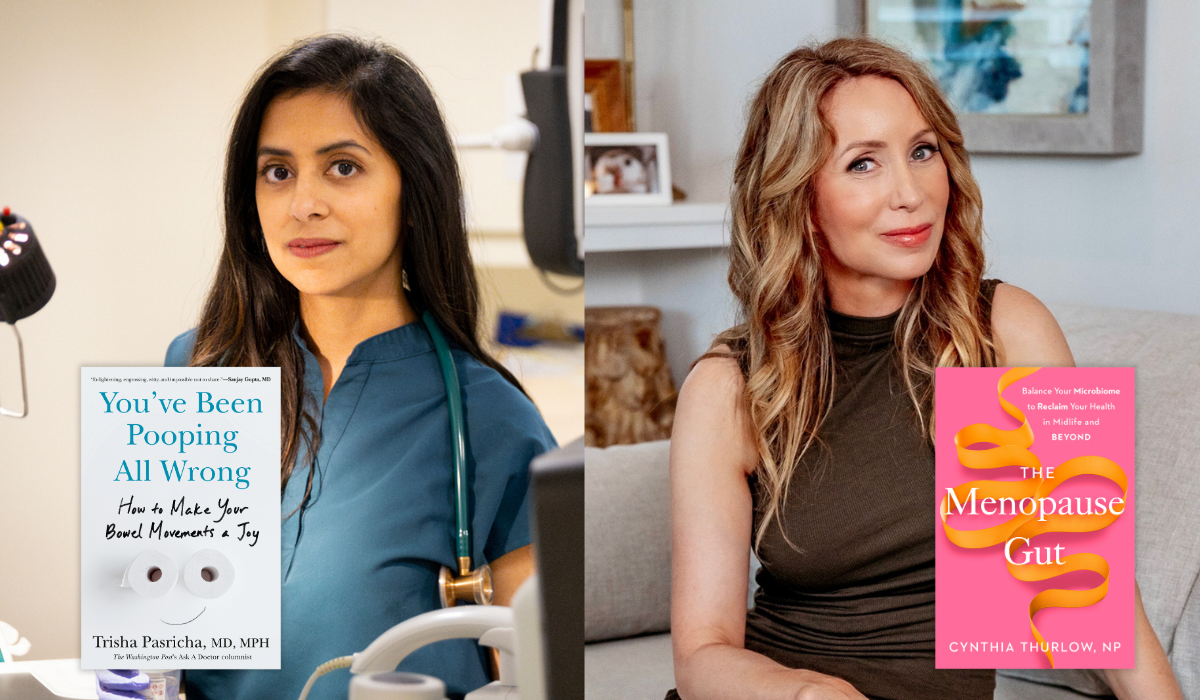
That’s a shame, says Trisha Pasricha, MD, a gastroenterologist and author of You’ve Been Pooping All Wrong. “The gut is constantly talking to us, but not with words,” she says. “It talks to us in ways we really need to re-learn how to recognize.”
In midlife, those signals can get even louder, says Cynthia Thurlow, NP, a nurse practitioner and author of the forthcoming book, The Menopause Gut.
“Hormonal shifts can alter the gut microbiome in ways that affect everything from digestion to inflammation,” she says.
Here, Dr. Pasricha and Thurlow break down six surprising ways your gut may be trying to get your attention, plus what those signals could mean and what to do about each. The best part? Their advice is filled with simple, daily habits that can transform your gut health (and overall health) for the better—and maybe even save your life.
In this article, you’ll learn...
- What it means if you have discomfort every time you eat or have a bowel movement
- Why bloating is common—but not normal
- A gastroenterologist's one simple habit that makes pooping easier (and even joyful!)
- How your pelvic floor muscles impact your bowel movements, and the sneaky signs yours may be dysfunctional
- Early symptoms of colorectal cancer (and the No. 1 way to stay alert to them)
- The surprising connection between midlife bone loss and your gut health
- And more...
Sneaky Signal: You have discomfort or pain every time you eat or have a bowel movement.
If this is you, you’re not alone. One in 10 people have functional dyspepsia, a disorder where you feel uncomfortable when you eat. And about 15 percent of the population has irritable bowel syndrome (IBS), a condition for which the hallmark syndrome is pain or discomfort every time you have a bowel movement. Yet just because these symptoms are relatively common doesn’t mean they’re normal, says Dr. Pasricha.
“So many people—and especially younger people—wait until symptoms become a crisis, like 10 out of 10 pain, before they see a doctor,” she says. “Because these symptoms have become normalized, too many people don’t get the care that they need.”
What to do: See a gastroenterologist, ideally one who specializes in functional dyspepsia and/or IBS. For example, one of the reasons you might experience discomfort associated with eating is that your nerve cells in the small bowel have become hypersensitive and react to triggers in food that people who don’t have this hypersensitivity wouldn’t react to, says Dr. Pasricha.
“The tricky thing about diagnosing this is that the test most gastroenterologists do, an upper endoscopy, will be normal,” she says. “This is also true of IBS. The testing is almost always normal, and very quickly patients can get told that what they’re experiencing is all in their heads.”
This is why it’s important to see a specialist, such as a neuro-gastroenterologist, says Dr. Pasricha, who studies the gut-brain connection.
Sneaky Signal: You sit on the toilet for more than 5 minutes trying to poop.
If this seems like a shockingly little amount of time to spend on the pot, join the club. Yet Dr. Pasricha says spending longer than 5 minutes at a time trying to poop puts you at greater risk of developing hemorrhoids, which are cushions of veins that we all have and that are more likely to become engorged when we sit on an open toilet seat where there’s no pelvic floor support.
“We think the passive pressure of sitting on an open donut of a seat for minutes and minutes, day after day, week after week, year after year, weakens the connective tissue around the hemorrhoids,” says Dr. Pasricha. “When those veins become engorged, it can become a problem.”
In fact, Dr. Pasricha’s lab studied this problem—specifically the impact of smartphone use in the bathroom. “Years ago, we read yesterday’s classified section in the newspaper that was sitting around but today, we’re watching full episodes of The Pitt while we’re sitting in the bathroom,” she says. “And social media apps are designed to suck you in and keep you on the app way longer than you intended.”
What to do: Don’t bring your smartphone into the bathroom with you. Using your smartphone while you go to the bathroom “is the number one thing that’s going to prompt you to spend more time than you otherwise would sitting on the toilet,” says Dr. Pasricha. “In an ideal world—when you experience what I call poophoria—you should be able to pay attention to the call of nature, feel that urge, and just go,” she says. “It should be effortless and happen within about a minute.”
Sneaky Signal: You’ve tried laxatives to help with constipation and they don’t work. Or, you strain to have bowel movements and/or don’t feel like you’re completely “empty” after you’ve gone.
These are signs your pelvic floor muscles could be dysfunctional.
What does the pelvic floor have to do with gut health? When we increase the pressure in our abs to have a bowel movement, our anal sphincters (yes, there’s two—an internal sphincter, which is the inner layer of the anus that’s wrapped in a second layer of muscles called the external anal sphincter) must relax. This allows the anal canal to open to let the poop out, says Dr. Pasricha. Those anal sphincters are part of the pelvic floor muscles along with a muscle called the puborectalis. When there’s pelvic floor dysfunction, those sphincters and/or the puborectalis muscle either don’t relax or they contract while you’re trying to poop.
You can think of the pelvic floor like the cap on a toothpaste tube, says Dr. Pasricha. “Pushing against tightened muscles of the pelvic floor will get you nowhere, even if you have the softest, plushest of stool behind it,” she says.
What to do: Raise your knees above your waist when you poop. Turns out our modern way of pooping (sitting on the toilet with our hips bent at a 90-degree angle) makes the puborectalis muscle tense, which in turn chokes the rectal tube closed. A more natural way to have a bowel movement is to squat, which relaxes the puborectalis and opens up the rectal tube.
“Everyone can benefit from raising their knees above their waist when they poop, whether it’s with a stool, a box, high heels, a trash can—whatever you have lying around,” says Dr. Pasricha.
Still struggling? See a pelvic floor specialist who can do a specialized kind of pelvic floor physical therapy (PT) called biofeedback. During these sessions, a physical therapist uses a set of tools to help give you real-time physiological feedback that can help train you to change how you use your pelvic floor muscles.
Sneaky Signal: Changes in your bowel habits or poop itself, such as new-onset diarrhea, blood in your stool, thinner or thicker stool, and more.
Be honest: Do you look at your poop every time after you go? If you answered “no,” it’s time to start, says Dr. Pasricha.
“Get in the habit of looking at your poop every day so you get a sense of what the range of normal looks like for you,” she says. Why? Colorectal cancer is on the rise, especially among young people, and catching it early—when the disease is most treatable and has the highest survival rate—is key. The best way to catch this type of cancer early is to raise a flag about any changes in your poop.
So, what should you look for?
- New-onset diarrhea
- A change in how thin or thick your poop is
- Blood in your stool, which could be bright red, maroon, or black and tar-like
- Pain in your stomach or lower pelvis
What to do: First, get in the habit of looking at your poop after you go and know what normal looks like for you. If you notice any changes (especially those listed above), make an appointment with your doctor.
Also, keep in mind that if you’re a woman who hasn’t hit menopause yet, there’s a good chance your symptoms will be blamed on your period. “This is very common, and it’s important to push back before you accept that your symptoms are due to your period,” says Dr. Pasricha.
Sneaky Signal: You feel bloated no matter what you eat.
Think that uncomfortable feeling of fullness or tightness in your abdomen toward the end of the day is no big deal? Think again, says Cynthia Thurlow, NP. “Bloating is incredibly common, so a lot of women don’t think twice about it,” she says. “But it’s one of the early signs that you’re developing some changes in your gut microbiome.” For women in midlife, this is often due to the gut microbiome starting to shift in response to changing hormones.
Bloating can also be due to a condition known as leaky gut, which happens when the tight junctions in the lining of your gut weaken, allowing things like food particles, toxins, and bacteria to escape the digestive tract. This can lead to food particles leaking into your bloodstream, explains Thurlow, which can trigger an immune response and cause bloating.
The drop in estrogen women experience during the menopause transition also makes us more prone to leaky gut, says Thurlow. “This is one reason we see more autoimmune conditions in women in middle age,” she says. “On the other side of the intestinal lining is the immune system, which gets provoked when you have leaky gut. When that happens, some women may experience bloating, while others may develop a rash, get nasal congestion, or even experience abdominal cramping.”
If you experience bloating first thing in the morning, it could be a sign of ovarian cancer, says Dr. Pasricha. “Ovarian cancer is considered a silent killer because the signs are usually subtle,” she says. “But one of the signs is new bloating, especially when you wake up.”
What to do: Remember that while bloating is common, it’s not normal, which means it’s something to bring up with your clinician.
If you’ve ruled out something serious, Thurlow recommends going on an elimination diet—a short-term eating plan that removes specific foods suspected of causing digestive issues and/or food sensitivities (most commonly gluten, dairy, grains, sugar, and/or alcohol) for four to six weeks. Start by removing two or three food groups and throughout that time, keep track of your symptoms. Note if they improve (or not) and keep track of how you feel as you reintroduce these food groups to your diet.
Sneaky Signal: You’re diagnosed with osteopenia or osteoporosis.
What causes bone loss as we age? Most people point to diet (not enough calcium) or a decline in hormones in midlife. But Thurlow wants us to know that there’s also a dynamic relationship between the digestive system and skeletal health, known as the gut-bone axis. Translation: What’s happening in your gut directly influences how well you regulate inflammation, absorb the nutrients and minerals your bones need, and optimize hormone signaling—all of which play a role in maintaining bone density.
When it comes to the gut’s role in bone health, fiber may be the secret weapon, says Thurlow—especially for women in midlife, who lose up to 10 percent of bone mass in the first five years after menopause. That’s because fiber feeds your gut bacteria, and when those bacteria break down fiber, they produce short-chain fatty acids. Up until menopause, estrogen and progesterone work to balance bone building and bone breakdown, says Thurlow. After menopause, estrogen and progesterone are low and bone breakdown accelerates. “Short-chain fatty acids help balance that bone breakdown,” says Thurlow. Bonus: Those short-chain fatty acids are anti-inflammatory, which helps explain why they’re good for both gut health and overall health as well.
What to do: Eat a fiber-rich diet. Worried all that extra roughage will lead to digestive woes like bloating, gas, cramping, constipation or diarrhea? Here’s the key, says Thurlow: Track how much fiber you’re currently eating and slowly, gradually increase it.
“If you’re averaging 10 grams of fiber a day right now and go to 25 grams, you’ll be more likely to experience those symptoms,” says Thurlow. “Low and slow wins the race.”
Thurlow also recommends choosing whole foods (like fruits, vegetables, and beans) over fiber-rich bars and powders. And the newer-to-you plant food, the better.
“The gut microbiome loves diversity,” says Thurlow. Never eat bok choy, radicchio, or lentils? Add those to your cart the next time you’re at the store to give your gut microbes the food they’re craving.
Trisha Pasricha, MD, is a physician-scientist at Beth Israel Deaconess Medical Center, assistant professor of medicine at Harvard Medical School, and author of You’ve Been Pooping All Wrong: How to Make Your Bowel Movements a Joy.
Cynthia Thurlow, NP, is a nurse practitioner, host of the Everyday Wellness podcast, international speaker, and author of The Menopause Gut: Balance Your Microbiome to Reclaim Your Health in Midlife and Beyond.
Answer
Breakfast and lunch


Please note that we may receive affiliate commissions from the sales of linked products.