Fierce Love
After my essay last week, a Sunday Paper reader named Wendy wrote me to share a quote that has since become part of my morning prayers.
On his deathbed, she shared, Saint Francis said: “I have done what is mine to do. May Christ teach you what is yours.”
Wow. Sit with that for a moment.
You do not have to have a conversation with Christ, God, Mother Mary, or any higher power to appreciate this statement. But I do encourage you to get quiet and really listen to what comes up for you when you think about it. Use Saint Francis’s words as an invitation to ask yourself, with as much honesty as you can muster: What am I here to do? What is mine?
Some people call this your why. Others call it your purpose, your mission, or your calling. Some will tell you it never changes, but I have found that my mission has evolved as I have evolved. My focus and understanding of why I am here deepens over time.
In my twenties I felt my purpose was to be the best journalist I could be. I wanted to share stories that informed, inspired, and moved people. I wanted to remind us all that whatever we’re going through, someone else has gone through something similar and we’re not alone.
In my thirties, forties, and fifties, my mission became more focused on my family and my children. I wanted to teach them, inspire them, and assure them they were loved in my eyes, in my heart, and in the world. I wanted to remind them they were not alone on this big vast planet of ours.
As my children left the nest, my attention turned more toward my advocacy for Alzheimer's and women's health. I wanted to use my journalism in service of these causes as well. And still, my children remained central to my purpose because advocating for my kids and grandkids runs parallel to advocating for women's health, for solid journalism, and for a world worth living in. For me, all of it is about moving humanity forward.
Now today, after many years of hard-won wisdom, I have finally added myself to my list of priorities. Please do not wait as long as I did to put yourself on your list. I am just glad that I’ve lived long enough to reach this revelation.
These days when I ask God in the early hours what I am here to do, the answer I get back often ruffles me. I expect to hear that I should change the world and continue moving humanity forward one person at a time. I am looking for the voice that urges me to jump into the fray. To fight harder. To use my voice to point out the hypocrisies I see. To rally others. To shout from the rooftops about the war in Iran, about hardworking people who can't get healthcare, about the state of women's health, about the lack of federal investment in science and research, about the fact that a new Census report revealed that Americans 65 and older are now the poorest age group in this country. (Let that land.)
My friends, there is so much to fight for. And I hope you will fight for all of it at the ballot box in just a few weeks' time. But the answer that keeps coming up for me lately doesn't touch on any of those things.
What’s come up instead?
You are here to love and be loved.
If I'm honest, I have met that answer with a growl and with exasperation. I have argued back: that cannot be my only purpose. It’s not big enough. I've got a revolution to join.
But here is what I have slowly come to understand: It turns out that loving and being loved is harder than fighting for women's health or against Alzheimer's. In fact, it is harder than anything I have ever done professionally. Why? Because for so many of us—myself included—it requires dismantling the stories we have told ourselves about whether we are actually worthy of love.
Imagine sitting with the notion that you are here to love and be loved. End of story. For so many people, that statement does not provide comfort. It is a confrontation. It’s a challenge because we have told ourselves that we are not enough on our own and that we have to earn love. We wonder: Who would love me, anyway?
I have asked myself all of those questions. I feel them at my core. That’s why I believe this is not a personal struggle, but a universal one.
Here is another hard truth about love: it can break your heart. It’s heartbreaking to be told by someone that they don't love you and don't want to walk hand in hand with you through life. That they are choosing something or someone else. I know that heartbreak. Most of us do.
But I have come to believe that it is far more heartbreaking to never open yourself up to love at all. To armor yourself so completely against the possibility of loss that you also shut out the possibility of being truly known, seen, and held by another human being. The armor feels safe. But it is its own kind of prison.
Love asks you to be vulnerable and to risk being hurt. It asks you to show up without guarantees. And yes, sometimes it ends badly. Sometimes you give everything and it isn't enough. Sometimes the person you love doesn't love you back. Sometimes love leaves. Sometimes it dies. And still, it is worth it.
Because the alternative—a life lived behind walls, a heart carefully protected, no one allowed close enough to matter—is not safety. That is loss of a different and deeper kind. It keeps us away from one another.
Saint Francis knew this. Saint Clare knew it. And I believe it with everything I have. Open yourself. Heartbreak may come. But it is worth it.
This is why I have always said that the work of parenting is probably the most powerful work being done in our world. If you can raise a human being who feels loved and who can give love, then that human being moves through the world from a completely different place. They see life differently. They see other people differently. They make different choices.
Next weekend, Best Buddies will host its first Eunie’s Buddies conference, which is a gathering of parents of children with special needs coming together to guide and support one another. They want to make the road forward feel less lonely, less scary, and more hopeful. One mother who has walked that road writes for The Sunday Paper today, sharing her story so that another family just starting out might feel less alone.
That is love in action. Not loud. Not celebrated. But profound beyond measure. It is powerful advocacy done from the heart. It is what fighting with love looks like. It moves humanity forward one family at a time.
Extraordinary journalist Connie Schultz also shares her story with us here today . Connie writes about cleaning out her beloved home to make room for new love, for her grandchildren, and for the next chapter of her life. Her husband Sherrod Brown is running for the Senate in Ohio out of love for his state and his country. He is putting his love and his life on the line and letting voters decide if that love is big enough to change their lives. He’s had his heart broken by voters before, but here he is coming back. That is love in action too. The most public kind. The kind that asks everything of you and offers no guarantees.
So what are we to make of the people who seem most incapable of extending love to others? Who treat human life as dispensable? Who see power as the only currency worth having? Who choose to use their voices in the public square to degrade and belittle?
I wonder sometimes what that is really about. I wonder whether they were ever truly loved themselves. Or whether they were loved and couldn't hold it. I don't say this to excuse them. I say it because understanding where cruelty comes from is different from condoning it. And because I believe love—its presence or its absence—shapes us more than almost anything else.
My mother fought for people with intellectual disabilities with a ferocity that changed the world. But underneath that ferocity was love. Pure, deep, personal love for her mother and her sister Rosemary, and then for every person and family who reminded her of them. That love changed laws. It changed institutions. It changed the trajectory of millions of lives. That is what love looks like when it gets off the couch.
Think about the leaders who changed the world. Saint Francis. Martin Luther King. Gandhi. Dorothy Day. Mother Teresa. The Pope. They didn't lead by tearing others down. They led by lifting others up. They didn't win converts through fear or humiliation or name-calling in the public square. They won hearts. They changed minds. They moved history not by making people feel small, but by making people feel called to something larger than themselves.
That is a harder kind of leadership. Much harder.
Leading from a place of love requires something of you that leading from a place of rage does not. Rage is easy. Rage is energizing. Rage doesn't ask you to examine yourself or extend grace to people you disagree with or hold the complexity of a situation that has no easy villain.
Love asks all of that. And more. Love asks you to see the humanity in the other person. To fight hard for what you believe without needing to destroy the person who believes differently. To hold your conviction and your compassion at the same time. To say: I disagree with you profoundly, and yet I still believe you deserve dignity.
That is not weakness. That is the hardest and most demanding form of strength there is.
We have so many examples right now of what leadership looks like when it is driven by grievance and contempt. We see it every day. We feel it in our bodies and it exhausts us and hardens us. It makes us want to fight fire with fire. But adding more fuel to the flames just burns everything down.
The leaders who change the world do things differently. And we can too. In our homes, in our communities, in the way we speak to each other and about each other. In who we choose to send to Washington to speak for us.
So as we inch toward these upcoming elections, I want to offer one more lens. What if we looked at every candidate from this vantage point? Not just their policy positions or their party affiliation. Not just their record or their résumé. But their love. Their love of country and of all people—not just those who voted for them, look like them, think like them, or live like them, but everyone. Do they love the whole? Can you feel it? Does it come through? Do they pause before they speak? What voice are they bringing forward?
A few weeks ago I wrote about fighting harder. Today I want to say something different, and maybe something deeper: love harder. Love your country harder. Love your neighbor harder. Treat others with love. Treat yourself with love. Love is not a soft metric, but the most demanding one there is. It is not a retreat from the fight, but a different and more demanding way to fight it.
Years ago when a friend asked me what made me feel loved, I stumbled with my answer. I'm not stumbling anymore.
What makes me feel loved? Being seen. Being heard. Being accepted for exactly who I am—complicated and simple, tough and tender, imperfect and wild, restless and relentless, funny and yes, sometimes sad. I am still a work in progress, and I feel loved when people see that. When they don't judge it or try to fix it, but accept it as-is. Even celebrate it.
That is what makes me feel loved. And when one feels loved, one feels safe.
When you feel loved, you can rest. You can stop trying to earn love. You can stop running from a place of deprivation, fear, or anger. When you feel truly seen and cared for, you can breathe. You can let go and exhale. You can stop exhausting the people around you and yourself.
Truthfully, I think very few people feel safe today. They don't feel safe in their homes. They don't feel safe in places of worship, in schools, or in government institutions. There is a collective anxiety permeating everything and everyone. No wonder people are lashing out.
In the past when I heard from the deepest parts of my soul love and be loved, I used to argue back. I even misinterpreted it to mean stay the course and keep fighting. But these days the message is different. And I find myself asking: Why now? Why is this coming up for me again at this particular moment?
Perhaps it’s because humanity is threatened in a new way. Because we are so polarized and so afraid of one another. Because anger and rage are rising around the world. Maybe the issues so many people are fighting for—sensible gun control, saving democracy, healthcare for all—can be fought for from a different place. Maybe we are all being asked to adjust our tactics. Maybe instead of seeing others as the enemy, the other, the foe, we are being asked to love and be loved.
Here is what stops me cold when I sit with it long enough: What if this message is not mine alone? What if it has been given to millions of us? What if it is not an individual message but a universal one?
Just writing that is a relief because I know that this mission is not mine alone. It is all of ours. This is a collective call.
We live in a moment when everyone is talking about their individual brand, platform, or following. How many people are watching, clicking, subscribing. I get it. I have participated in it. But I wonder sometimes if that is the wrong question for this moment.
What if we are not here to build individual brands but to contribute to something we all share? What if the obsession with the individual—my brand, my platform, my reach—is part of what is pulling us apart from one another rather than drawing us together?
What if the collective call—the one that comes in the stillness, the one Saint Francis heard, the one that keeps whispering to me in the early morning hours—is not about any one of us? What if it's about all of us? Not my brand. Our humanity. Not my platform. Our shared purpose. Not my followers. Our community.
There are no easy benchmarks for the collective. It’d be hard for the algorithm to optimize it. It would just be about people showing up for each other. Loving and being loved. Doing what is ours to do, together. Maybe that’s the brand the world actually needs right now.
So my friends, if you can, get quiet and listen for that voice within that knows exactly why you are here. Let it guide you forward. Let it remind you of your mission, your calling, and your purpose. Let it tell you where love is asking you to go.
It will not always send you where you expect. It may not feel big enough at first. You may growl at it the way I did. But sit with it. Trust it. And then go do it.
Am I here to love and be loved? Yes. One part of that is easier than the other, which is probably why the message keeps coming back to me. Learning how to be loved— to receive it and feel worthy of it—is the hard work that remains.
I know that allowing love in softens the heart, but that it doesn’t mean we step out of the fight. We are living at a time when I believe we can all do better at loving others and letting others love us too. Love others and allow others to love you. Full stop.
I have done what is mine to do. May Christ teach you what is yours.
Thank you, Wendy, for the quote. And for the challenge it brings with it.
Prayer of the Week
Dear God,
Please open my heart to love and help me feel it surround me. Help me realize that I am worthy of your love just as I am, and that the greatest gift I have to offer this world is sharing that love with others.
Amen.
Also in this week’s issue:
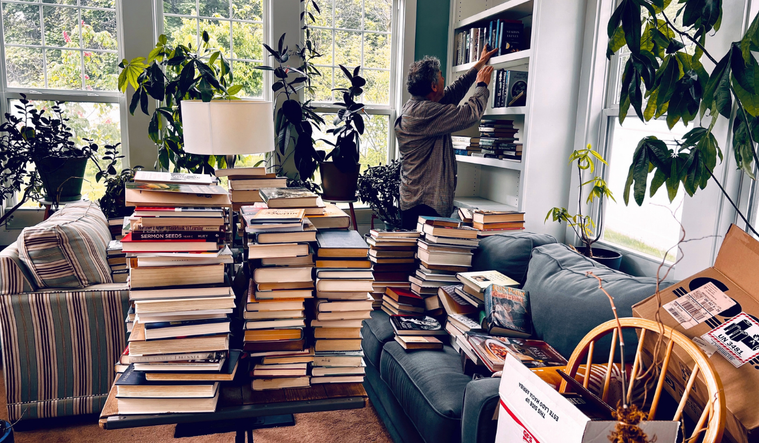
• The House They Leave, The Home They Keep
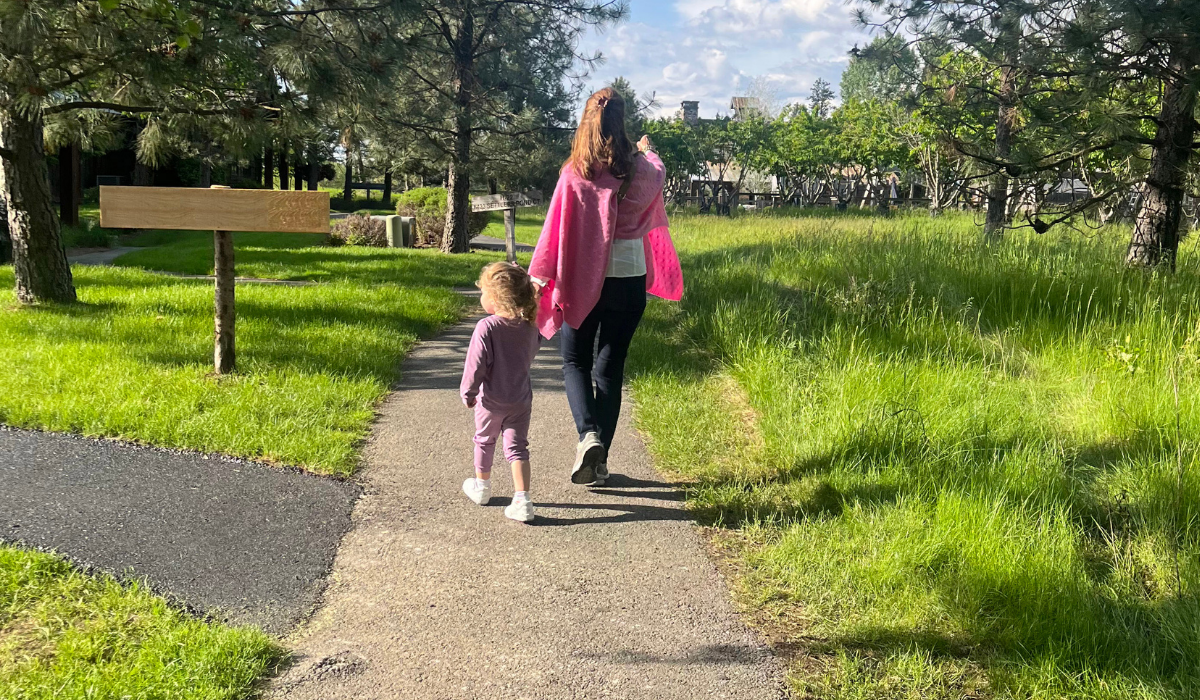
• My Son Opened My World to What Matters
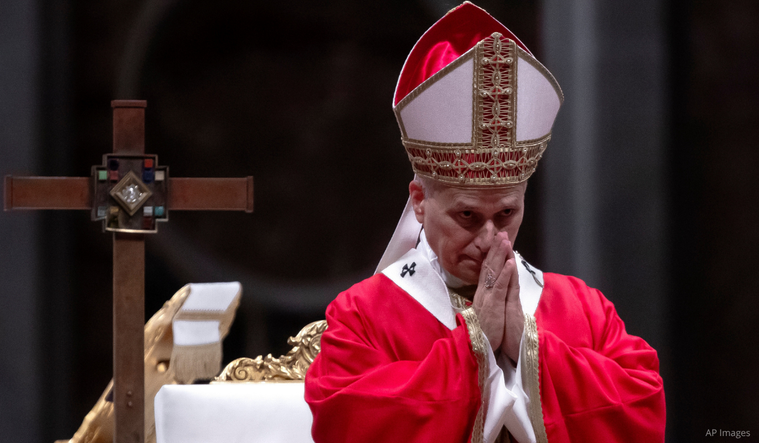
• A Sunday Paper Exclusive Guest Op-Ed: Why Pope Leo XIV Has the Gumption and Perseverance We All Need
Please note that we may receive affiliate commissions from the sales of linked products.