The Stories We Miss

I recently met with a group of young journalists who asked me all sorts of questions about the business and art of storytelling. But even more pressing on their minds: they wanted to discuss how they could get their stories read in this noisy, crowded world.
“How do we break through?” they asked. “How do we get people to pay attention to important news that we know they need to hear?”
That’s the million-dollar question these days in journalism. Everyone is trying to figure it out.
Here is what I told the young journalists in the room: Your goal should be to find the story that is hiding in plain sight. The one that is true and human and real. The one that nobody else is covering. You find that story, and you tell it with everything you’ve got.
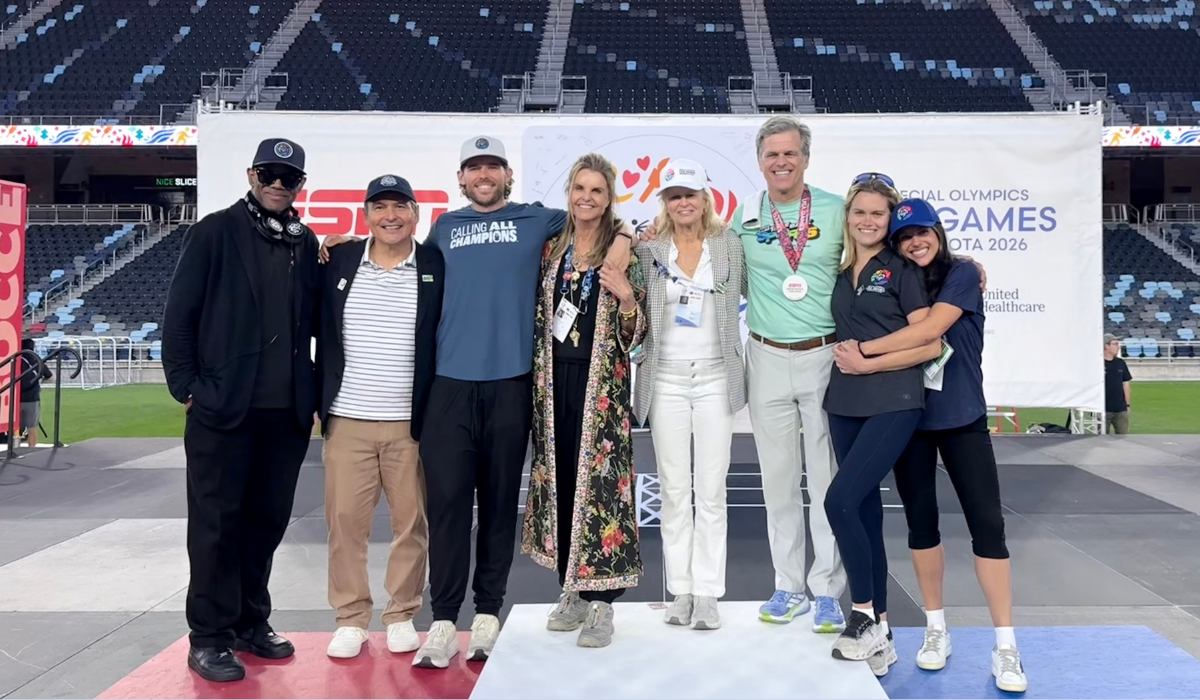
This past week, I traveled to Minneapolis and found exactly that kind of story, but you’ll probably only read about it here.
While I was away, your news feed was probably filled with all of the other noise of the week. Stories about the paint peeling at the Lincoln Memorial reflecting pool and about the ongoing situation in Iran. (It was supposed to be over, but now it seems like it’s back on. By the time you read this, who knows…)
You probably also read stories about the World Cup (you probably know the names of players you'd never heard of before last week—I know I do); the sweep of candidates in New York City’s House primary; and about the new book on the president called Regime Change that's sitting at the top of the bestseller list. Then there were the powerful twin earthquakes in Venezuela that devastated the region, killing thousands and injuring many more. And what about that brutal heat wave in Europe? People have died from it as well. It’s also disrupted travel, caused power grid failures, and forced popular sites like the Louvre and Eiffel Tower to close early.
Some of these are definitely important headlines worth paying attention to. But still, our algorithms are relentless, and the noise from all these competing stories is loud.
That’s why we’ve also gathered news stories that rise above the noise this week, the ones we think are worth your time.
And in the middle of all that, there was another story unfolding that’s so large, true, and full of everything we say we're hungry for—unity, hope, humanity—and that’s hiding in plain sight. But your feed almost certainly didn’t show it to you, which is why I wanted to share it with you today.
I must say, I arrived in Minneapolis feeling quite discouraged. Quite dispirited about the city I live in and the country I love. Everyone I talk to complains about all of it so much that it just gets you down. But then I went to the Twin Cities and everything changed.
What changed? The people around me. The energy I felt. Hope was everywhere, and it was palpable.
As I mentioned last week, I traveled to Minneapolis for the 2026 Special Olympics USA Games. Americans from all fifty states also gathered there to volunteer, to cheer on family members, and to be part of a movement that stands for inclusion, tolerance, and unity. Everywhere I went, people came up to me and said, "Thank you for this movement that your mother started. Thank you for changing my family's life. Thank you for giving me the chance to see the best of what this country can be."
I left with new friends, a full heart, and the absolute certainty that I am part of a community and a country that is hopeful, strong, determined, and very much alive.
And then I found myself feeling something I didn't expect. Angry.
Angry that this story—this enormous, true, healing story of who we actually are as Americans—is not getting out. Angry that we are so consumed by the stories that divide us, that promote fear, and that tell us we hate one another. Meanwhile, this story sits right here in plain sight, told by people who have every reason to give up and yet have chosen instead to show up.
The young journalists I met with all have intellectual disabilities and are part of the Special Olympics Athlete Media Club. They are filing stories every single day about what it is like to live in this country with an intellectual disability, as well as stories about their families and their dreams.
When I asked them what story they most wanted the world to know, they didn't hesitate.
"We want people to know that we are capable. We can graduate high school, go to college, and get a degree. We can get a job. We can get married. We can love and be loved. We have a story to tell, and we want to tell it. Not for sympathy, but to inspire you. To move you. To remind you that we, in the largest sense of we, are so much more united than anyone is telling you."
One of them was RJ Nealon, who runs the journalism club and files stories for SpecialOlympics.org every single day. RJ’s dream is to work at a news organization where he can tell not just his own story about living with an intellectual disability, but the stories of the millions of families who are just like his own. RJ has a voice. He has a point of view. And he has a deadline he meets every single day.
I also met Tommy Holleman from Special Olympics Northern California. He is a Sunday Paper subscriber (he reads it with his mother every week) and is on his way to study journalism in college. And then there was Anna Murray from Special Olympics Kentucky; Michael Kelley from Special Olympics Massachusetts; and Stephen Lepore from Special Olympics Florida. Everyone knows Stephen as “Mr. Hollywood,” and he’s a highly active Global Messenger and Athlete Leader.
I also met Sara Parker and Malcolm Harris-Gowdie, from Florida. Malcolm is an aspiring sportscaster from Port St. Lucie who made history as the first Special Olympics athlete to serve as a credentialed reporter at the Super Bowl.
I challenged all of these young journalists to pitch me stories for The Sunday Paper. I want them to write for us because their voices matter and their experiences are worthy. People want to know more about them and want to help. People want to be part of their stories, which touch hearts and minds and look beyond the noise.
I also met Chris, a young father from South Dakota. Chris’s daughter has never spoken a word, and yet he and his wife have devoted their entire lives—every spare moment, every ounce of energy, every prayer—to making her life better and to making sure she is seen. They’re determined to make sure she feels like she belongs in this world.
Chris is not waiting for a political leader to build a more inclusive world. He is out there building it, on top of his regular job. On top of everything else life asks of him. He’s showing up anyway every single day.
Everyone I talked to in Minneapolis had a story like Chris's. Every parent, every coach, every volunteer, every sibling. All of them are out there doing the work and aren’t waiting for anyone's permission or approval. They’re simply refusing to leave their person behind.
All this made me think of my mother. She started this movement because she saw how her sister struggled. She watched her own mother search desperately for a camp, a program, or a place where her sister Rosemary could belong. That experience broke something open in my mother. And instead of looking away, she built something from the ground up, with her own hands and her own fierce, uncontainable love.
Every parent at the games last week, from every state in this country, is doing the same thing. They see a gap. They feel the ache of it. And they’ve decided to fill it, even though no one has asked them to or has guaranteed it will work.
That is how every great movement begins. Not with a policy. Not with a mandate. But with one person who loved someone enough to refuse to accept the world as it was.
My mother would have recognized every single one of them. And she would have been so proud of them, of their families, of the volunteers, and of my brother Timothy, who keeps this movement moving around the globe (over 170 countries, and growing). At its core, this movement asks something spiritual of each of us.
What matters to you? Who do you see when you look across a room and see someone whose life looks nothing like yours? What do you have in common with an athlete who has spent their whole life being told they can’t do something, and yet trains to do it anyway? What do you share with a father from South Dakota who has devoted his entire life to a daughter who has never spoken a word? With a young man like RJ who files stories every single day because he believes his voice matters and that yours does too?
I'll tell you what you have in common. Everything that actually counts. The longing to be seen. The need to belong. The love that makes you show up even when it's hard (especially when it's hard). The stubborn, beautiful, deeply human refusal to leave anyone behind. The hope that tomorrow will be better than today. (And if you’re still struggling to tap into that hope, please read Ken Burns's essay for us this morning about what’s giving him hope leading into our nation’s 250th anniversary.)
That is the strength of this country. You may not see it in the loudest voices or in the divisive headlines. You certainly won’t see it in the stories our algorithms keep feeding us about how much we hate each other. I wish the stories about the reflecting pool would reflect back to us who we actually are instead of talking about algae.
And who we actually are is this right here. These people. These families. These athletes running toward a finish line while an entire arena gets to its feet. This is what makes us less alone. This is what makes us strong. This is the story hiding in plain sight—and it is the most important story I know how to tell.
As we head into the Fourth of July and our nation’s 250th birthday this week, pundits and politicians will debate all the ways this country has fallen short. They’ll go back and forth about all the things that divide us and the distance between who we are and who we say we want to be.
But I want to offer you something different. I want to offer you Minneapolis. I want to offer you RJ and Chris and every family that traveled from across this country to be part of something that reminded them—and me—that we are not as alone as we feel. That we are not as divided as we are told. That there is a story out there, hiding in plain sight, that is truer and more powerful than anything trending in your feed right now.
Great movements have always begun this way. With ordinary people who showed up. With journalists who told the truth. With communities that decided to build something together rather than wait for someone else to do it. That is the American story I believe in. That is the story I am proud to tell. And it's right in front of you and me. And if you’re still wondering how to exercise your civic duties, I encourage you to read former U.S. archivist Colleen Shogan’s essay for us below this morning.
So when you head out to your Fourth of July celebrations this weekend and someone starts complaining about everything that's wrong with this country, please pause. Take a breath and remind them that perfection was never the intent. Unity was always the goal.
Then tell them about the Special Olympics. Tell them about RJ. Tell them about Chris and his daughter. Tell them about the thousands of Americans who drove from all fifty states to Minneapolis. Not because anyone told them to, but because love brought them there.
Tell them about all the great movements born in this country that brought people together when everything felt broken. We have done this before. And we can do it again. We know how because it’s who we are. I have no doubt in my mind about that, and I hope after reading this, there is no doubt in yours either.
Happy Fourth of July, everyone.
P.S. RJ and his fellow journalists from the Special Olympics Media Club are coming to The Sunday Paper, so watch for their voices here. And when you read them, I hope you’ll really read them. They have something to say that you need to hear.
Prayer of the Week
Dear God,
Help us look beyond the noise of this world to recognize the goodness, dignity, and humanity in one another, and give us the courage to build a world where everyone belongs.
Amen.
Also in this week’s issue:
• Yes, We’re Divided, Says Ken Burns. But There’s More to the Story
• How Do We Truly Engage in Our Civic Duties? We Asked the Former US Archivist
Please note that we may receive affiliate commissions from the sales of linked products.