“Being Broken Didn’t Leave Me Hopeless. It Left Me Relentless.”
“You are so strong, I don’t know how you do it…?”
Since my son was killed, people often ask me where I found the courage and strength to forge a new path, a movement, and an attempt to transform the culture and laws surrounding impaired driving in California.
It’s such a hard question to respond to. Oftentimes, it depends on my mood at that moment.
There’s a saying (one that I hate hearing): “Tragedy makes you stronger.” I’m not sure that’s true. I don’t feel stronger from my tragedies. I feel permanently changed. Because the truth is that I didn’t find courage or strength in the face of my fears; I lost my fear.
There is a difference.
Being unbreakable isn’t about possessing extraordinary strength. It’s about knowing what it feels like to break completely and repair into a different kind of person
Before my world changed, I was like most people. I worried about saying the wrong thing. I worried about walking into rooms where I didn’t belong. I worried about rejection, embarrassment, criticism, failure. I stayed within the invisible boundaries that society quietly teaches us to respect.
Then the unthinkable happened. In 2025 our family lost our home in a wildfire. Months later, on May 4, 2025, we lost our 18-year-old son, Braun, to a repeat “alleged” drunk driver. The woman arrested in his death had a suspended driver’s license from a previous drunk driving arrest, and has been charged with murder. The case is still open and has not gone to trial.
The scale by which I measured every other fear changed forever. The worst has happened. It hit me over the head like a ton of bricks and propelled me into a new person I never asked or tried to be.
When the worst thing that can ever happen to you does happen, you end up with no fear, just courage. It’s heartbreaking and liberating at the same terrible time. You make a choice; it's not easy, doesn’t come naturally, and may be impossible for some. But for me, my choice was to fight—fight for my family, my happiness, my friends and community, and all other victims.
I didn’t realize I was making this choice, but it’s when and where my journey began.
I remember the very first time I was asked to speak at a press conference. I didn’t hesitate. Something deep inside me said yes. Only afterward did I realize what I had agreed to.
The morning of the press conference, two of my closest friends, both incredibly successful executives at the top of their professions, picked me up to support and coach me. I slid into the back seat of the car, frozen. Goosebumps covered my arms. My stomach was in knots. I was clueless about what the future held.
Then I heard what was playing through the speakers: Meditation prompts.
What? They thought I needed to meditate? I looked at them and laughed. “What in the world are we listening to?” I said. “I don’t need meditation. I need a walk-on song!”
We laughed, and in that instant, something shifted inside me. My life is now a “walk-on song.” It wasn’t really about the music. It was about realizing I wasn’t walking into that press conference to protect myself. I was walking into it to fight for Braun.
Before I even understood what I was getting into, I decided the law had failed me, Braun, our family, and many others. I decided to be the one to fix it. Full stop. That simple.
Turns out it wasn’t that simple. I walked into unfamiliar rooms. I sat across from Senators, Assembly people, Prosecutors, District Attorneys, Legislative staff, consultants, and lawyers. Sometimes I was welcomed. Sometimes I was politely dismissed. Sometimes I was told there isn’t time.
I learned something surprising: “No” doesn’t actually hurt. Being ignored doesn’t hurt. Feeling intimidated doesn’t hurt.
So I refused to be quiet until someone listened.
If you had told me two years ago that I would become an advocate fighting to change the attitude surrounding California’s DUI laws, I would have laughed. Becoming an activist or advocate wasn’t on my bucket list. It wasn’t even on my very long list of things I imagined doing with my life. I wasn’t raised, taught, or groomed to lobby legislators.
I didn’t understand committee hearings, appropriations, suspense files, or legislative amendments. The Capitol itself felt intimidating. On my first trip to the Legislature’s office next to the Capitol, known as the Sacramento Swing Space, I didn’t even understand how the elevators worked. There were no buttons, only strange keypads that somehow knew where to send you. Everyone around me seemed to speak a language I didn’t understand.
I walked into those buildings overwhelmed. But I kept going back. Month after month. Meeting after meeting. Eventually, those intimidating hallways became familiar.
The legislators became people. The process became somewhat understandable. Not because I became smarter. Not because I suddenly belonged. But because I realized I had already survived something infinitely harder.
People sometimes mistake fearlessness for confidence. They are not the same. Confidence says, “I know I can do this.” Fearlessness says, “Even if I fail, I’ll survive.”
What was the worst that could happen? People disagreed with me, and some criticized me. Some said, “No, it can’t happen.” There was one person who even shut a door on me, and another who didn’t show up at a meeting. None of those things mattered anymore.
Which is why I kept talking.
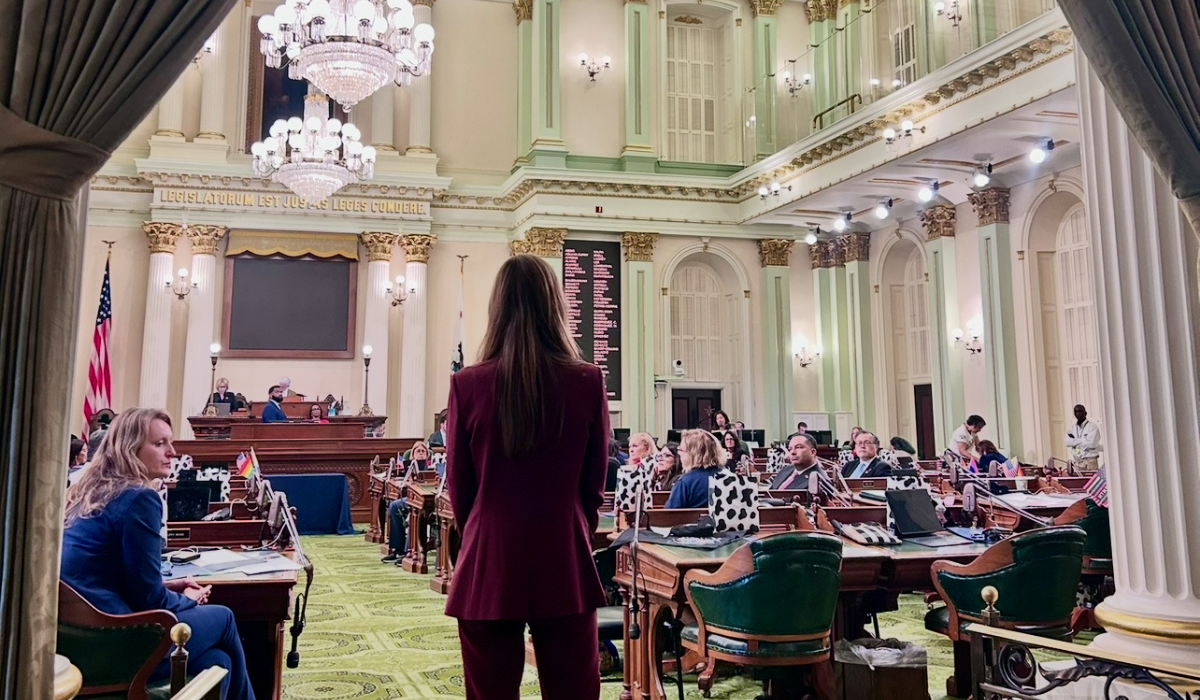
A few weeks ago, I gave my final testimony for SB 907—a bill that proposes to reform California's DUI laws and other driving offenses. I sat at a table positioned well below the committee members, who looked down from the raised dais above. For a fleeting moment, I felt like a schoolgirl in trouble with the principal.
Then I realized it wasn't personal; it was intentional. Almost every hearing room in the California State Capitol is designed this way. The power is elevated.
At one point during my testimony, I publicly challenged the Chairman of the Public Safety Committee because I believed a statement was necessary. I was not going to be intimidated. After it left my mouth, I asked myself, "Who was that?" The answer surprised me. I was acting from conviction and fearlessness.
Grief had quietly unlocked something inside me that I never knew existed. It stripped away my need for approval, my fear of rejection, and my obsession with getting everything right. It left me with something much simpler: a new fearless me.
When you’ve already lived through catastrophe, you stop organizing your life around avoiding pain. You begin organizing it around creating meaning.
You stop asking, “What if I fail?”
You start asking, “What if I don’t try?”
These questions have changed my life.
It has transformed me into an advocate, a writer, and a big dreamer. Not because I wanted a new identity. But because grief demanded one. None of us would ever volunteer for the kind of pain that changes us this way. We cannot choose our catastrophes. We can only choose what we build from their ruins.
On June 30, the bill passed the Public Safety Committee unanimously. This week, on August 6, the California legislature voted to move the bill forward, to (hopefully) a final vote on August 13 to fund the initiative before heading to Governor Gavin Newsom’s desk.
Will the bill, SB 907 (including Braun's Law) that I've spent the last year fighting for—ultimately make it through California's complicated legislative process? Will the state remain stuck in its safe, outdated DUI laws, or will legislators stand up for the residents of this great state?
I honestly don’t know. If it does pass and Braun’s Law lives in perpetuity in California and hopefully the entire country someday, I’ll celebrate. Not because I won, but because future families may be spared the heartbreak ours wasn’t. Because I left it all out on the table, nothing to lose.
But if it doesn’t… Oh boy, watch out, I will not be silent, but I will remember that I have still won. Because “No” is not the end of the story.
“No” is simply an invitation to keep trying. To come back. To have another conversation. To fight one more day. To ask, “WHY? What is the cost of doing nothing?”
Being broken didn’t leave me hopeless; it left me relentless.
I would give anything to have Braun back. I would trade every speech, every hearing, every interview, every bill, every ounce of advocacy if it meant one more day with my son.
But since that isn’t the choice before me, I choose this. Let the grips of destruction liberate me.
I choose to keep showing up, fighting to be a force for good. To have fearlessness and purpose.
Being broken can have a remarkable way of sounding like your own “walk-on song.”
Because what becomes possible when the worst has already happened?
Jennifer Levi is the founder of the Live Like Braun Foundation, which celebrates the spirit and legacy of her son, Braun Levi, whose life tragically ended at the age of 18 by an alleged drunk driver. The foundation keeps Braun’s legacy alive through scholarships, repairing and building public athletic centers, and raising awareness about impaired driving risks. She is also the author of the forthcoming children’s book, The Braunicles. Most importantly, Jennifer is a proud wife, a mother to her daughter, and a dog mom to two very wild pups.
Please note that we may receive affiliate commissions from the sales of linked products.