Magnificent Humanity
Last week, I admitted that I’ve been feeling a bit lonely. I shared that my social circle has contracted in recent years and that I miss having people to dream with, laugh with, and plan with. I confessed that because I’m single and my kids have left, my house is quiet, and sometimes the evenings are long. I also decided that I want to invest more deliberately in adult friendships and start showing up for people the way I show up for my work.
You wrote me back to tell me you felt the same way. So many of you did.
You wrote to tell me that you had lost close friends over politics, over disagreements, and over the slow drift that happens when nobody reaches out often enough. That you’re estranged from children you love, from siblings you miss, and from people you had once been certain would be in your life forever. You told me that you also sit in houses with full calendars and yet feel the particular ache of being surrounded by activity and still somehow being alone.
I wasn’t surprised to hear that so many of you could relate. But I was moved. Because loneliness is the thing we are least likely to admit and the thing we most need to share with each other.
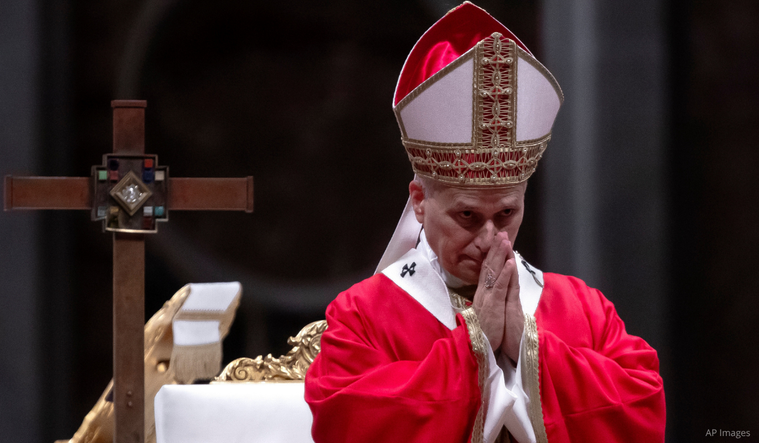
And then this week, the Pope said it better than any of us. Pope Leo released his first encyclical about safeguarding the human person in the time of artificial intelligence. He titled it Magnifica Humanitas. Magnificent Humanity. I read it and I thought, Yes. I’m here for this. I’m here for it now.
The Pope’s message was not what some expected. He did not demonize technology. He did not point fingers at the people building artificial intelligence. He did not gather his robes and turn his back on the modern world. Instead, he invited people in.
At the event launching his first encyclical, Pope Leo invited Christopher Olah, a co-founder of the A.I. company Anthropic, to stand beside him. A tech founder and a spiritual leader in the same room, agreeing on the same thing: that humanity is magnificent, that it is irreplaceable, and that we must not lose sight of it in the age of the machine.
That stopped me cold. Because that is exactly what our future has to look like. Not condemnation. Not demonization. Not taking sides. But invitation. Our future requires people of different faiths, different industries, and different opinions, standing together and saying there is something about being human that no algorithm can replicate, and we need to do everything we can to protect it.
That is the future I want to live in.
The Pope’s warning—and it is a warning offered with love rather than fear—is this: if we lose sight of what makes us human, we lose everything. If we begin to believe that a machine can replace a human heart, a human mind, or a human presence, we are in danger. Not because technology is evil. But because humanity is magnificent. And magnificent things require our attention and our protection.
I wrote about this topic last fall in one of my columns. I wrote about my hope that this age of A.I.—which relieves us all from the pressure of being the smartest person in the room—might free us to go deeper into what actually makes us human. Our empathy. Our intuition. Our ability to sit with someone in their pain and not try to fix it. Our capacity for love that makes no logical sense whatsoever. I didn’t say it as beautifully as the Pope. But I was reaching for the same thing.
Not everyone agrees. Later in the week, I read an article suggesting that Pope Leo's message had landed unevenly in Silicon Valley and that some technologists believe our future lies more in machines than in religion. Some even believe they are building their own version of God using machines, which left me in disbelief. I guess the jury’s still out on what impact Pope Leo’s message can have, but for me, it reinforced my conviction that now is exactly the time to invest more deeply in what makes us human.
Listen, I understand why people want to hunker down right now. I do. I look at the headlines, and sometimes I don’t recognize the world or the city that I’m living in anymore. Los Angeles, once one of the great cities on the planet, is now spoken about with shock and dismay. (We have a mayoral race this coming week that already feels like a reality show.)
The news programs I grew up trusting are gone or on their way out. We live in a world that feels genuinely unsteady in ways that are hard to name and harder to sit with alone.
I get the impulse to close the door, pull the shades, and let the world spin without you for a while. But here is what I’ve learned: unsteady times make me want to connect even more. Being alone in the middle of all of this is so much lonelier than sitting across from another human being and saying, “Do you feel this? Are you scared too? What are you holding onto?”
That conversation—that human, imperfect, necessary conversation—is the one no machine can have with you. And it is the one we need most right now. This week in The Sunday Paper, Parul Somani explores this tension beautifully, reminding us that while artificial intelligence can offer information and insight, it cannot choose our values or tell us how to live a life we won’t regret.
I was talking to my kids the other night, and they said something that has stayed with me. They said that it has never been easier to just stay home. To not go out. To not meet new people. To not connect. To order everything to your door, stream everything to your screen, and never have a reason to leave the house or look a stranger in the eye. They’re right. They’re young, and they feel that sense of loneliness creeping into society too.
What happens to us if we all do that? What happens to humanity if everyone retreats into their corner, their algorithm, or their carefully curated feed that only shows them what they already believe and people who already agree with them? What happens to us if the primary relationship in our lives becomes the one with our screens?
I’ll tell you what happens. We’ll get even lonelier. We’ll get more afraid of each other. We’ll forget that the person on the other side of the political argument is also a person with children. Someone who, like us, worries about their family and has dreams they haven’t given up on and who has a longing for connection that is exactly the same as ours.
We’ll forget that we are magnificent. And we’ll forget each other.
I am not here for that. I want to say that clearly, personally, and without apology. I do not want to spend the next ten or twenty years of my life alone. I do not want to spend it talking primarily to a machine. I do not want to spend it sitting on my couch, watching the world go by on a screen, while real human beings—magnificent, complicated, irreplaceable human beings—are right outside my door.
I want to spend it with people. With you. With the stranger who becomes a friend. With the friend I haven’t called in too long. With the person across the table whose politics make my head spin but whose heart, if I give it a chance, just might break mine open.
That is what I’m here for. That is what The Sunday Paper is here for. Not to confirm what you already think. But to move you toward another human being. To remind you that your story matters and so do others, and that somewhere in the space between the two, something magnificent is possible. The Pope called it Magnificent Humanity.
Amen.
Here is what A.I. cannot do. It cannot welcome you home. It cannot look across a table and see your magnificence. It cannot notice that you seem tired today, or that your eyes lit up when you mentioned your grandchild, or that you needed someone to laugh with more than you needed someone to agree with. It cannot hand you a cup of coffee and mean it. It cannot sit with you in the silence and say, “I am here. You are not alone.” Nikki Goldstein’s essay this week is a reminder of exactly that—after losing her Rabbi in the Bondi Beach attack last year, these moments between human beings are not small. They are everything.
Only people can do that. Only you can do that for someone else. And that is exactly what is at stake right now. We cannot afford to lose it. It is the most magnificent thing we have. You. Me. Us. In moments when you feel powerless, taking what may seem like a small step is often a huge step toward humanity. I know this because I’ve been taking those steps myself.
My daughter has a weekly mahjong game. I joined. My brother lives nearby, and I am so deeply grateful for that. We have set up a standing dinner, just the two of us. Having something and someone to count on, when counting on things feels out of reach, is its own kind of grace.
And then there is my church. Every Sunday, I walk through those doors and see many of the same faces and sing the same songs and hear something that gets me thinking. Sometimes those things end up in this very column. Walking into my church makes me feel loved. Held. Part of something larger than whatever is swirling in my head that week.
Is there anywhere you can walk into and feel loved? Maybe it’s your local coffee shop. Your bookstore. Your church or temple or mosque. Your community center. Your neighbor’s front porch. A mahjong table on a Tuesday night.
Start there. That is not a small thing. That is everything. That is Magnificent Humanity. Right there, in that moment, between you and another person who is just as relieved as you are that you showed up.
It is the most magnificent thing we have. And so, quite frankly, are you.
P.S. I want to know what makes you feel most human. Write to me. I read every comment. And right now, more than ever, I want to hear from you.
Prayer of the Week
Dear God,
Help us recognize the magnificence in one another and in the beautiful world You have created around us. Give us the courage to choose connection over isolation, the humility to be vulnerable, and the wisdom to remember how deeply we need one another and You.
Amen.
Also in this week’s issue:
• What a Near-Death Experience Taught Me About Living
• AI Can Be Your Sounding Board—but It Should Not Choose Your Path
Please note that we may receive affiliate commissions from the sales of linked products.