What We Remember
This past Friday, September 11th, I woke up in New York City.
I usually pop right out of bed when my alarm goes off in the morning. But on this particular day, I just lay there quietly. I'd like to tell you my mind was quiet too, but it wasn't. It bounced to the day ahead, and to this exact day twenty-five years ago.
Mid-thought, I stopped myself to say my morning prayers. I asked God for guidance. I asked for help. And then I asked for prayers for all those whose lives were forever changed on this day a quarter century ago.
Twenty-five years ago feels like forever ago. And also like just a moment ago.
I remember distinctly where I was that historic day. I remember the feeling of shock and horror that went through my body when I heard the news. I remember my office calling me up (on a landline, no less), telling me to suit up and get ready to head into work. I lay there holding my kids tight—not wanting to leave them, not wanting to leave the security of my home—but knowing that my job required me to do so.
Traumatic events have a way of staying in your body and in your brain. They come right back up at a moment's notice, twenty-five years later, in a hotel room, in the city where it happened.
But what also came up for me this past Friday morning were the images and stories from that day and the subsequent days. So many stories. All those New Yorkers who rushed in. Who risked their lives for total strangers. Who didn't hesitate. I closed my eyes and thought of the first responders. The family members searching for hope. The doctors and nurses who were off duty and didn't waste a moment to get to work. The people who suited up in the ensuing days not because anyone asked them to, but because that is who they are.
I lay there thinking about all the people who went to work that morning and never came home. About all the families who were just going about a regular Tuesday and whose lives were changed forever. About the first responders who suffered health issues on September 11th, and who continue to struggle with those issues to this day. (And, as Hillary Rodham Clinton writes in The Atlantic, may we also recognize how the government failed those responders and families affected, and acknowledge how we as a nation still haven’t rushed in to support them.)
I also thought about how life requires us to move forward while still holding grief. And as we hold that grief, we try to balance it with hope. That is what this country did on that day. That is what New York City did. And that is what we are still being asked to do.
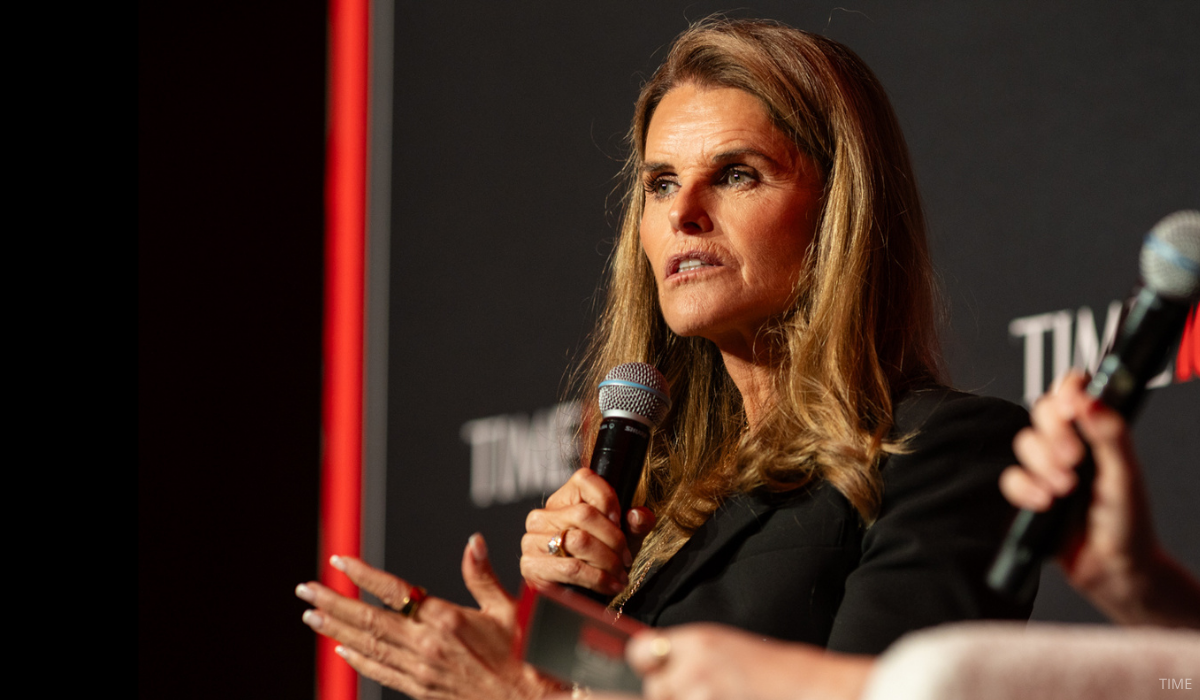
I traveled to New York last week to speak at the TIME Health Leadership Forum. I spoke about women's brain health, Alzheimer's prevention, and my hope that a cure will be discovered in my lifetime.
I also talked about balancing reality with hope. As I sat in the audience, I listened to scientists, doctors, and researchers talk about trying to strike that same balance in their own fields. So many of them described heartbreaking moments when they had to tell a patient: we don't have the medicine that can save your life. We don't have the cure you need. We don't have the donor who can help. And then there were others who said: we have now what we didn't have five years ago. We have different medicines. Different therapies. We have hope because of science, because of research, because of people who used their brain power to help others.
And as I drove through the city that day, and past the 9/11 Memorial, I felt everything all at once. The heartbreak and the hope. The grief and the gratitude. The pull to be here and the strong yearning to go home. I found myself really wanting to go home, while still being so thankful that I’m able to travel and talk about the issues I care so deeply about. My heart broke, but it also soared. That’s life for you.
I was in New York on 9/11 to advocate for brain health. And being in the city, on this monumental anniversary, I understood the cause very clearly.
Our brains hold everything. They hold our memories, including the memory I am sharing with you right now, of a Tuesday morning twenty-five years ago when the world changed. They hold our love, our grief, our hope, our history. They hold our ability to remember who we are at our best, and to call ourselves back to it when we forget.
September 11th is worth remembering. Not only because of the heartbreak, but because of what it revealed about who we are. People rushed in. Ordinary people did extraordinary things. A nation that had been going about its ordinary days stopped and chose each other.
That memory lives in our bodies. It lives in our brains. It lives in the stories we share with those who weren’t even alive on that day. And on this day twenty-five years later, I find myself wondering whether we are still those people.
Because something has shifted in the last twenty-five years. We have seen it play out in ways large and small. When something happens—a tragedy, a controversy, a moment of public failure—too many of us no longer rush in to help. Instead, we pile on. We cancel. We judge from a distance. We reach for our phones not to help, but to weigh in. We perform our outrage and then scroll to the next thing—never having left our couch, never having risked anything, never having offered anything but our opinion. We bounce from one screen or chore to the next, without ever taking a moment to pause and process what has happened. (By the way, I hope you’ll check out Babs Costello’s piece this morning about how we can all create a greater sense of peace and calm in our homes.)
All of this is not who we were on September 11th, 2001. And it makes me wonder: what happened? How did we go from a nation of people who ran toward one another—who ran toward the burning buildings—to a nation where the default response to someone else's pain or failure is often to add to it?
I don't think the type of people who rushed in that day are gone. In fact, I know they are not. I saw glimpses of them this week in the scientists I met who are fighting for cures they may never live to see. I saw it in the doctors delivering hard news with grace. I saw it in the ordinary New Yorkers who still carry that day in their bodies and their hearts. I saw it in the airport when my flight got delayed for hours. A young man named Hernan saw me struggling and asked if he could help me. He said he was raised by his stepfather who was in the Navy and who taught him to help solve other people’s problems, not add to their burdens. Hernan said to me, “Look, life is hard for people, and I know I can use my abilities and my brain to help solve problems and help make life just a bit easier for others.” Wow!
Here’s the truth: I think we have to choose consciously, deliberately, every single day, what kind of people we want to be and which kind of nation we want to be. Do we want to be the one that rushes in? Or the one that piles on?
That choice is in front of us right now in our communities, in our politics, and in the way we treat each other online and off. And here is why brain health is at the center of that choice for me: if we lose our brains—be it to Alzheimer's, to neglect, or to the thousand ways we fail to care for the organ that makes us who we are—we lose everything I just described. We lose our stories. We lose our history. We lose our ability to pass on to our children and grandchildren the memory of who we were when it mattered most.
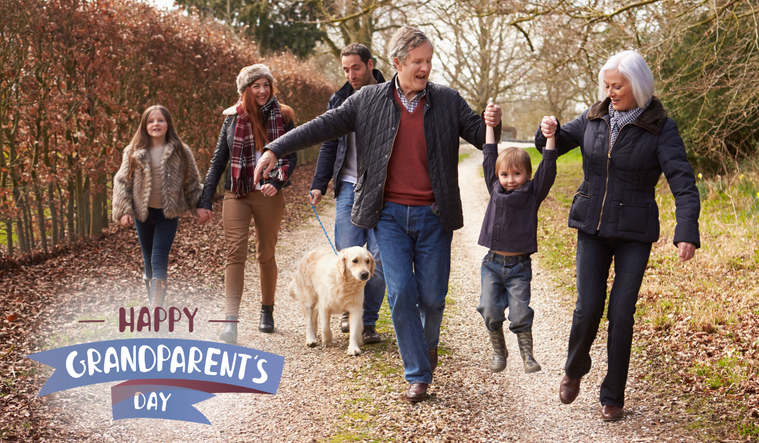
Speaking of which, happy Grandparents Day to all my fellow grandparents. One of the big reasons that I try to take care of my brain is so that I’m around long enough to enjoy my kids and grandkids and pass down stories about their family. In fact, my granddaughter Lyla always reminds me to do cognitive training. She says, “Mama G, let’s do the memory exercises together. I have a young brain and you have an old brain and I can help you.” Now her sister Eloise is also getting proficient at memory games. Without a doubt, the time I spend with my grandkids is good for my heart and my mind. (And as if I needed another reason to be with them, the essay below reminds us just how much both generations benefit from spending time with each other.)
That is why brain health matters. Not as a medical statistic. As a human imperative. So care for your brain. Nurture it. Fight for it. Because everything you love, everything you remember, it’s all housed there. It’s worth protecting, just like you protect those you love and yes, even those who don’t know yet.
It shouldn’t take a terrorist attack on our country for goodness to rise. It shouldn't take a friend's life-altering diagnosis for us to recognize the gift of our health and our lives. And I hope—with everything I have—that it will not take a loved one getting Alzheimer's for you to think about your brain health.
Our future lives in our families. In our communities. In our neighbors. In making them all feel safe in the country they call home. So does our ability to build that future and to remember where we came from and hold onto who we are.
So take care of your brain. It’s holding everything worth saving.
P.S. I have never been more grateful to be alive in this complicated, heartbreaking, soaring country. Rush in when you can. It matters more than you know.
Prayer of the Week
Dear God,
Help us remember who we are at our best, give us the courage to rush in when others need us, and fill our hearts with hope, compassion, and grace.
Amen.
Also in this week’s issue:
• A Happy House, Not a Perfect One: This 77-Year-Old Social Media Sensation is Redefining “Home”
Please note that we may receive affiliate commissions from the sales of linked products.